
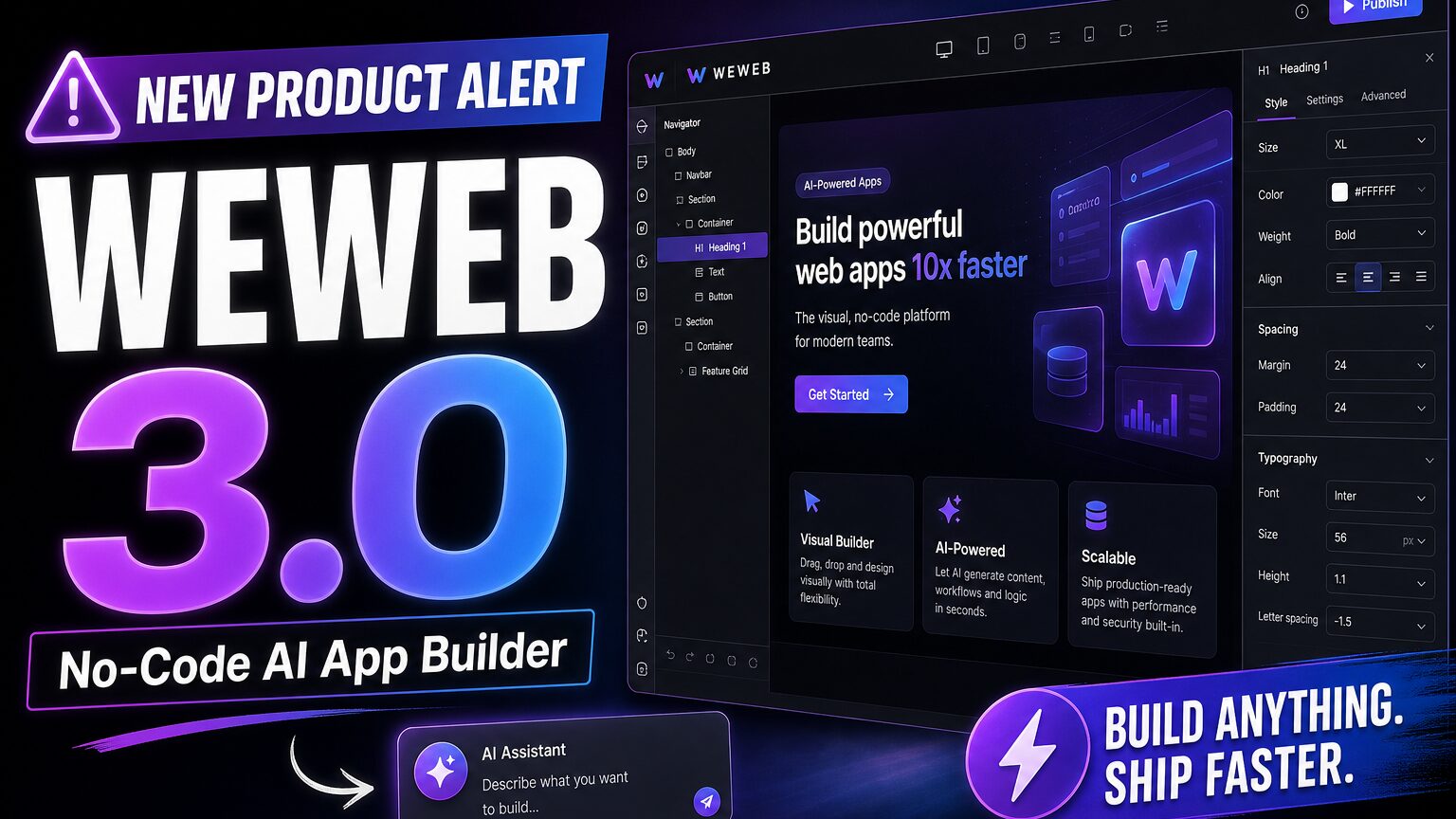

WeWeb 3.0 launched on Product Hunt on May 21, 2026, landing at #3 Product of the Day with 276 upvotes and 86 comments. The platform positions itself as a transparent alternative to fully automated AI app builders — one that hands control back to the builder rather than hiding logic inside a black box.
Topics: Website Builder, Artificial Intelligence, No-Code
What WeWeb 3.0 Does
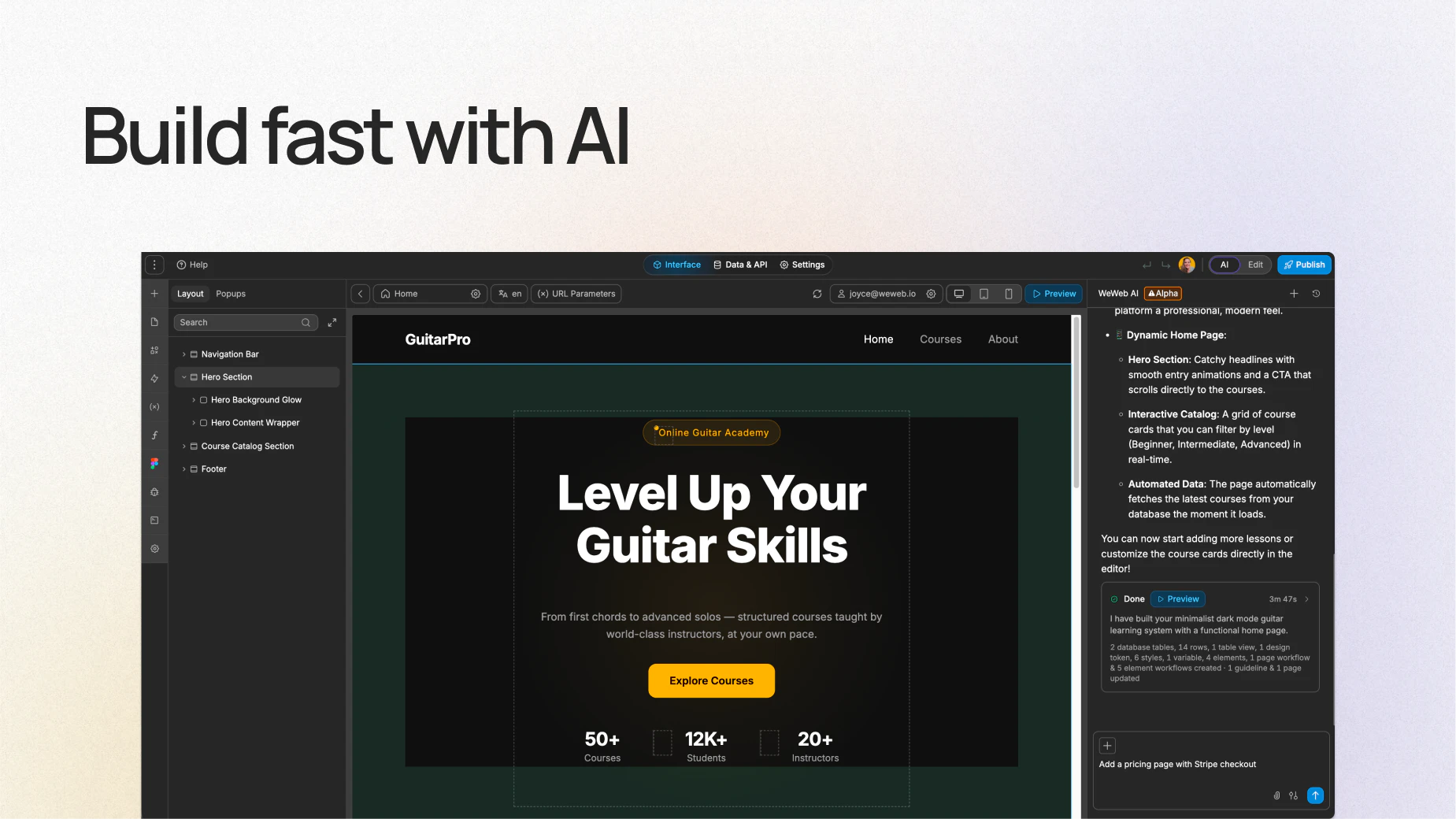
WeWeb is an AI-powered app builder that combines a prompt-based generation layer with a fully featured no-code editor underneath. Users describe an application in natural language, the AI scaffolds screens, workflows, and database structures, and then every element is immediately accessible inside a visual editor for refinement.
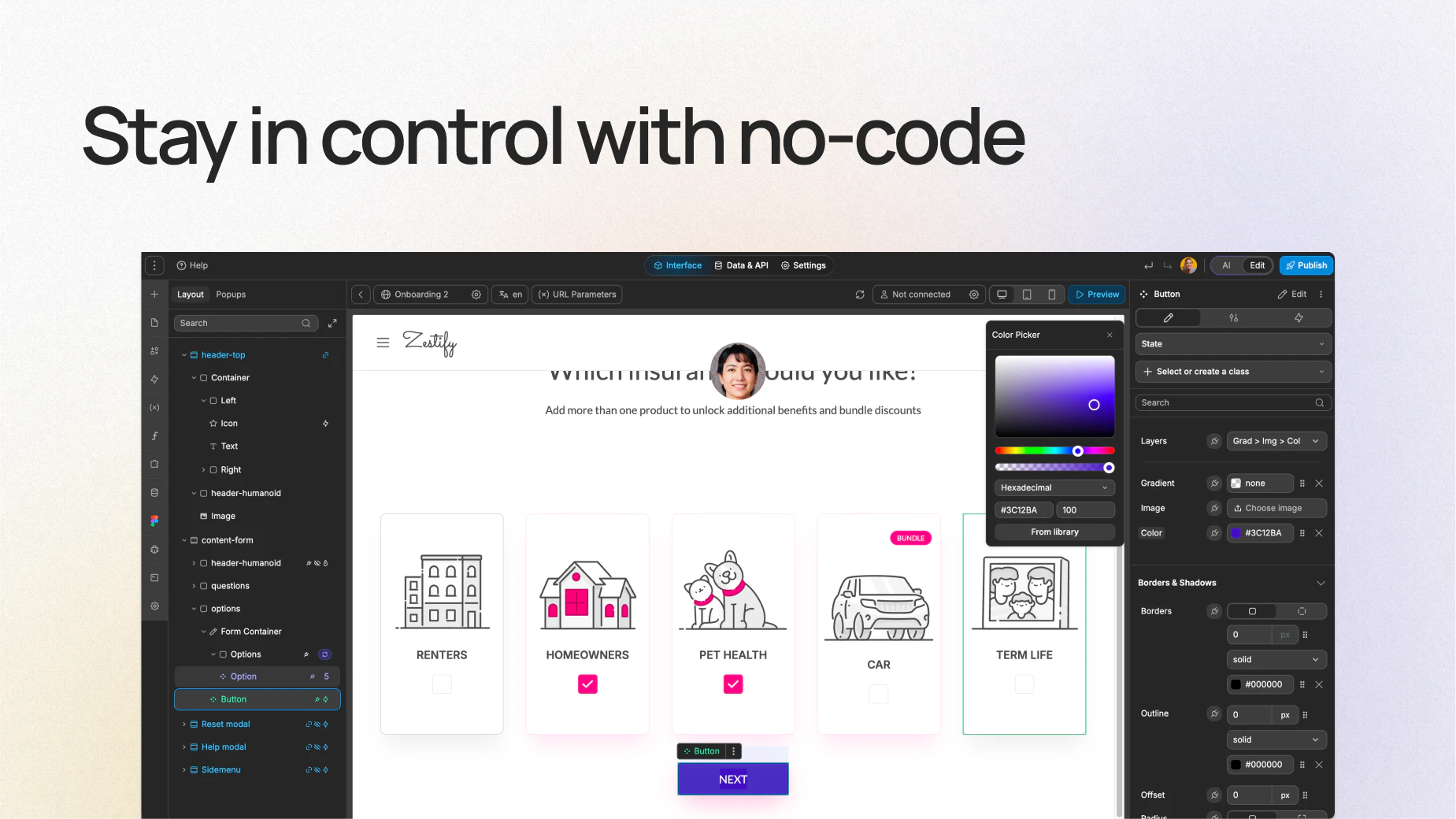
The core pitch is transparency. Where many AI app builders generate output that is difficult or impossible to modify without reverting to code, WeWeb 3.0 ensures that the generated structure maps directly to editable components. Non-technical founders, operations teams, and product managers are the stated audience — people who want the speed of AI generation without losing the ability to adjust details post-generation.
The platform integrates database management, workflow logic, and front-end design into a single environment. According to the WeWeb team, the goal is to eliminate the handoff friction that typically exists between an AI generation step and a human editing step.
Key Features
- AI App Generation: Describe an application in a prompt and receive a scaffolded build with screens, data structures, and basic workflows already in place.
- Full No-Code Editing: Every AI-generated element is editable in a drag-and-drop visual editor, with no requirement to read or write code to make changes.
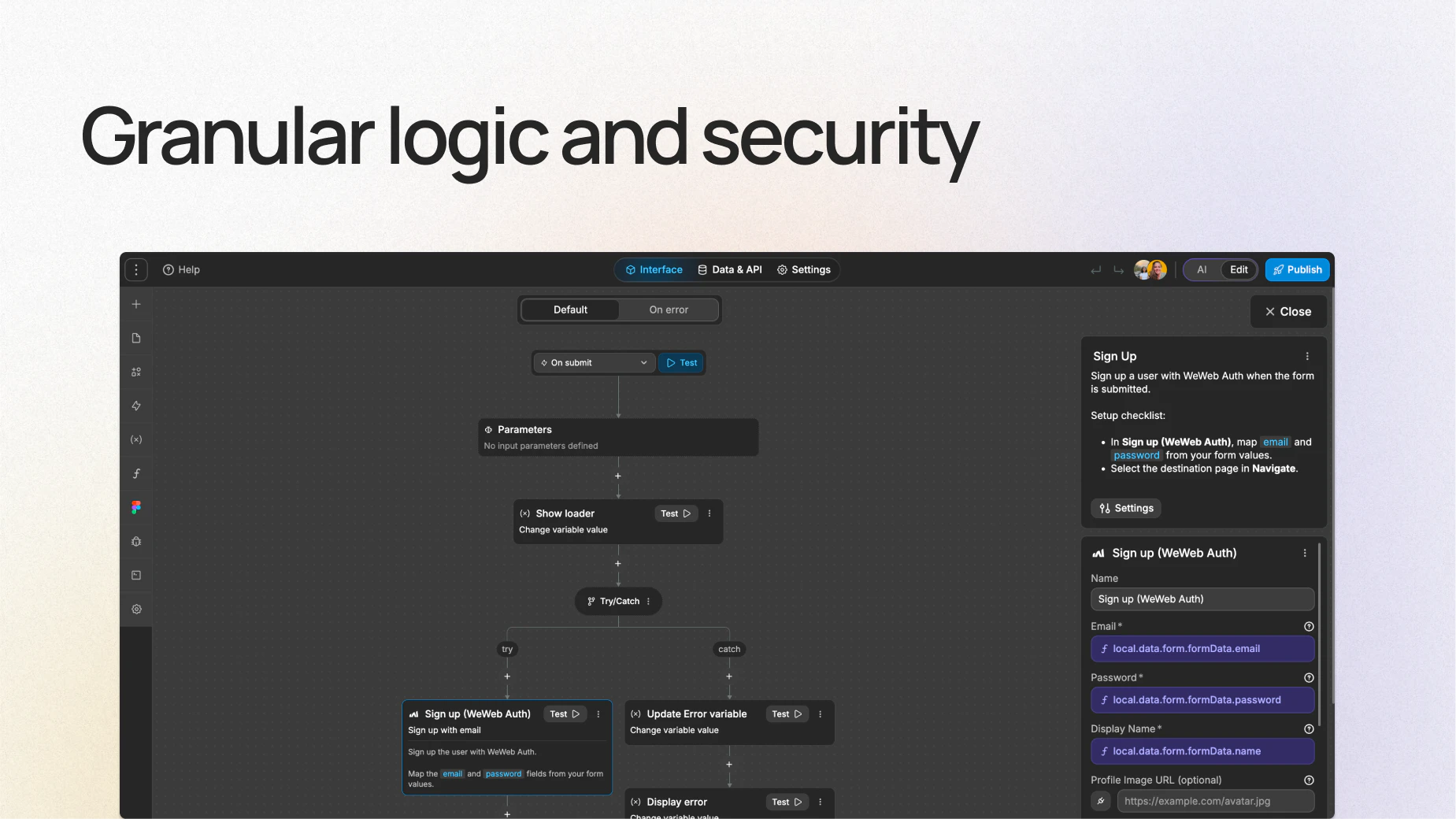
- Workflow Builder: Logic and automation can be built visually, covering conditional flows, API calls, and data manipulation without writing scripts.
- Database Management: Built-in database tooling allows teams to define, populate, and query data directly within the platform.
- Transparent Architecture: The platform surfaces what the AI has built in plain terms, so users can audit and understand the application structure at any point.
- Responsive Design Controls: Layouts can be adapted for different screen sizes without separate mobile-specific builds.
Pricing
WeWeb offers a free tier for exploration and early-stage projects. Paid plans scale based on usage, the number of published applications, and access to advanced features such as custom authentication and API integrations. Pricing details are available at weweb.io, and prospective users are encouraged to review current tier limits before committing, as platform pricing in the no-code category tends to shift with product maturity.
For teams evaluating total cost of ownership, WeWeb’s model should be compared not just against monthly subscription fees but against the developer hours it displaces. At scale, the value calculation depends heavily on how frequently the no-code editor covers the required use cases without custom code extensions.
How It Compares to Alternatives
Bubble remains the most established no-code app builder for complex web applications. It offers deep logic capabilities and a mature plugin ecosystem, but carries a steeper learning curve and an interface that many newcomers find difficult to navigate. WeWeb’s AI-first approach lowers the entry barrier, though Bubble’s raw capability ceiling is arguably higher for complex enterprise use cases.
Glide targets a slightly different segment — primarily mobile-friendly apps built on top of spreadsheet data sources. It is faster to deploy for simple use cases but is more constrained when application logic grows. WeWeb is better suited to teams that anticipate needing more sophisticated data relationships and workflows over time.
Retool is aimed at internal tooling for technical teams and leans heavily on SQL and JavaScript familiarity. It is a strong choice for developer-adjacent operators, but is less accessible to fully non-technical users. WeWeb occupies the space between Retool’s power and Glide’s simplicity, making it a credible middle-ground option for mixed teams.
For a broader look at AI-powered business tools in this space, the Automated Sales Machine resource covers how teams are integrating platforms like WeWeb into operational workflows.
Who Should Use WeWeb 3.0
WeWeb 3.0 is most valuable for non-technical founders building internal tools or customer-facing web applications, operations teams that need to move quickly without developer dependencies, and small product teams that want to prototype and iterate without engineering bottlenecks. It is also a reasonable fit for consultants and freelancers delivering custom app builds to clients who will need to self-manage after handoff.
Teams that require deeply custom front-end behavior, heavy native mobile performance, or integrations with legacy enterprise systems may find the platform’s constraints limiting. WeWeb is, at its core, a web application builder — mobile-native experiences and offline functionality remain outside its primary design scope.
Pros and Cons
- Pro: Transparent architecture means users always understand what the AI built and can modify it without reverting to code.
- Pro: Single-environment approach reduces context switching between design, logic, and data tools.
- Pro: Lower learning curve than Bubble for teams without technical backgrounds.
- Pro: AI generation step accelerates early-stage development significantly.
- Con: Platform maturity is still developing relative to established alternatives like Bubble, meaning edge cases may surface in complex builds.
- Con: Pricing at higher usage tiers can become a meaningful line item for small teams shipping multiple applications.
- Con: Not suited for native mobile applications or performance-critical front ends.
- Con: Vendor dependency risk is real — applications built entirely within WeWeb are not easily portable to other environments.
Verdict
WeWeb 3.0 makes a credible case for a segment of the no-code market that has been underserved: builders who want AI speed without sacrificing editorial control. The transparency argument is genuine and meaningfully differentiates it from tools that generate opaque output. For the right user profile — non-technical, web-focused, and willing to work within a managed environment — it is a strong option worth serious evaluation. Teams with complex requirements or a need for full data portability should pressure-test the platform thoroughly before committing at scale.