

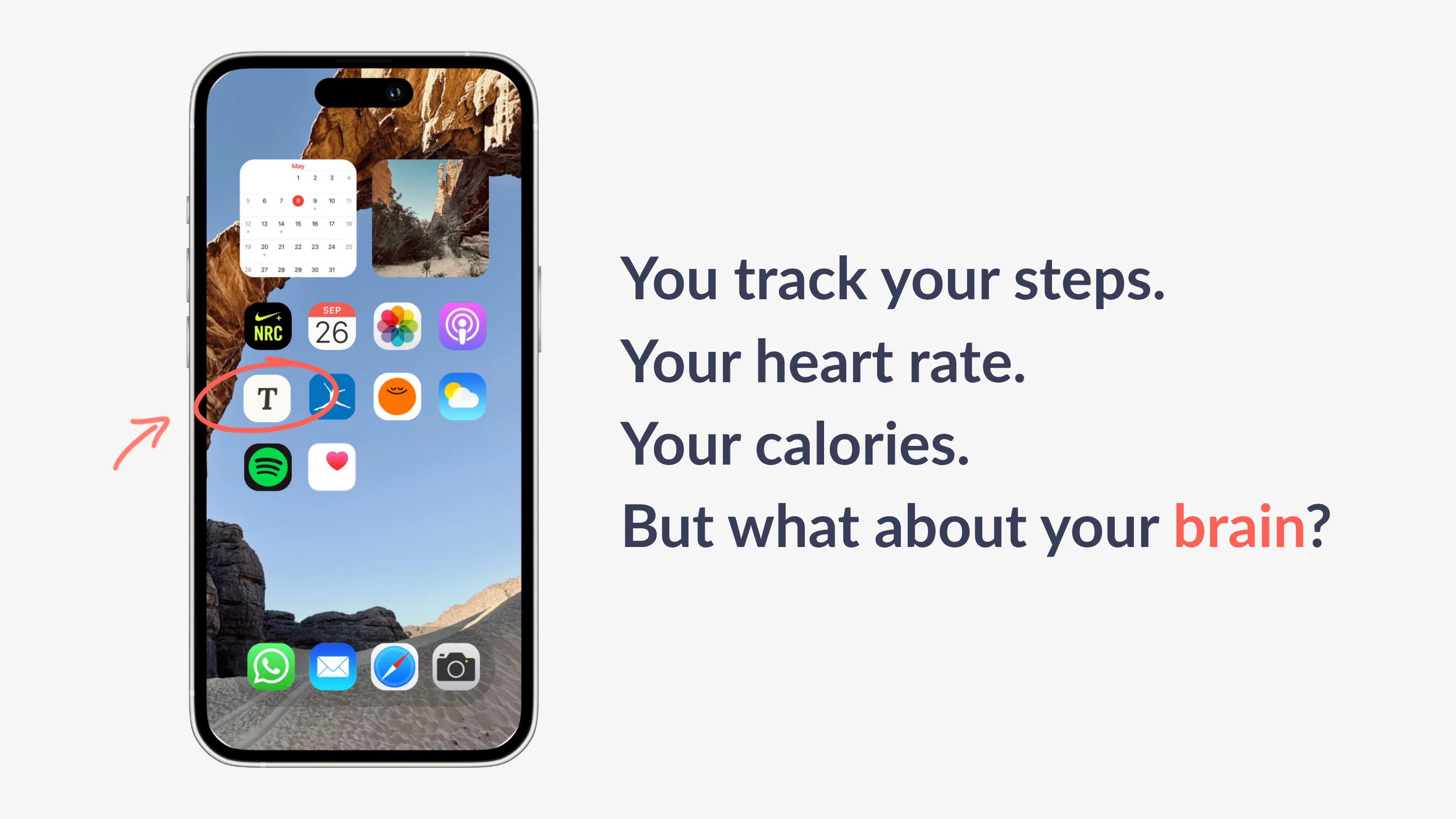
You track your steps. You monitor your heart rate. You log your calories. But your brain — the organ that governs every decision, every creative leap, every moment of focus — remains largely invisible to most consumer health tools. Tacet, a new Android app that ranked #10 Product of the Day on Product Hunt on May 21, 2026, wants to change that. It promises a daily cognitive fitness score derived entirely from the way you tap your phone. No headset. No lab visit. No extra hardware. Just your fingertips and a passive algorithm trained on neuroscience research from Leiden University.
The pitch is ambitious. The science behind it is genuinely interesting. The questions worth asking are equally real.
Topics: Android, Health and Fitness, Productivity, Tech
What Tacet Does
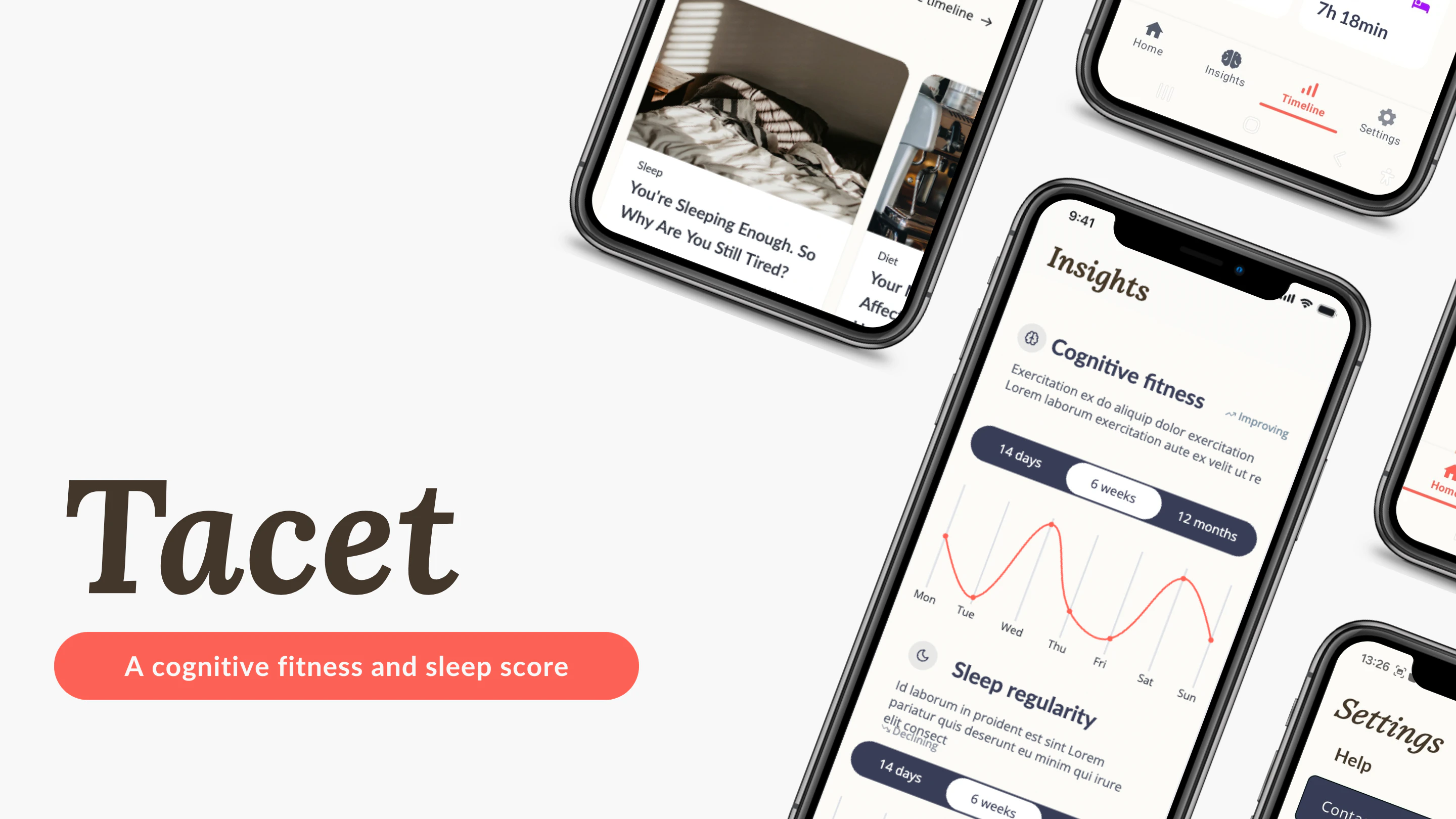
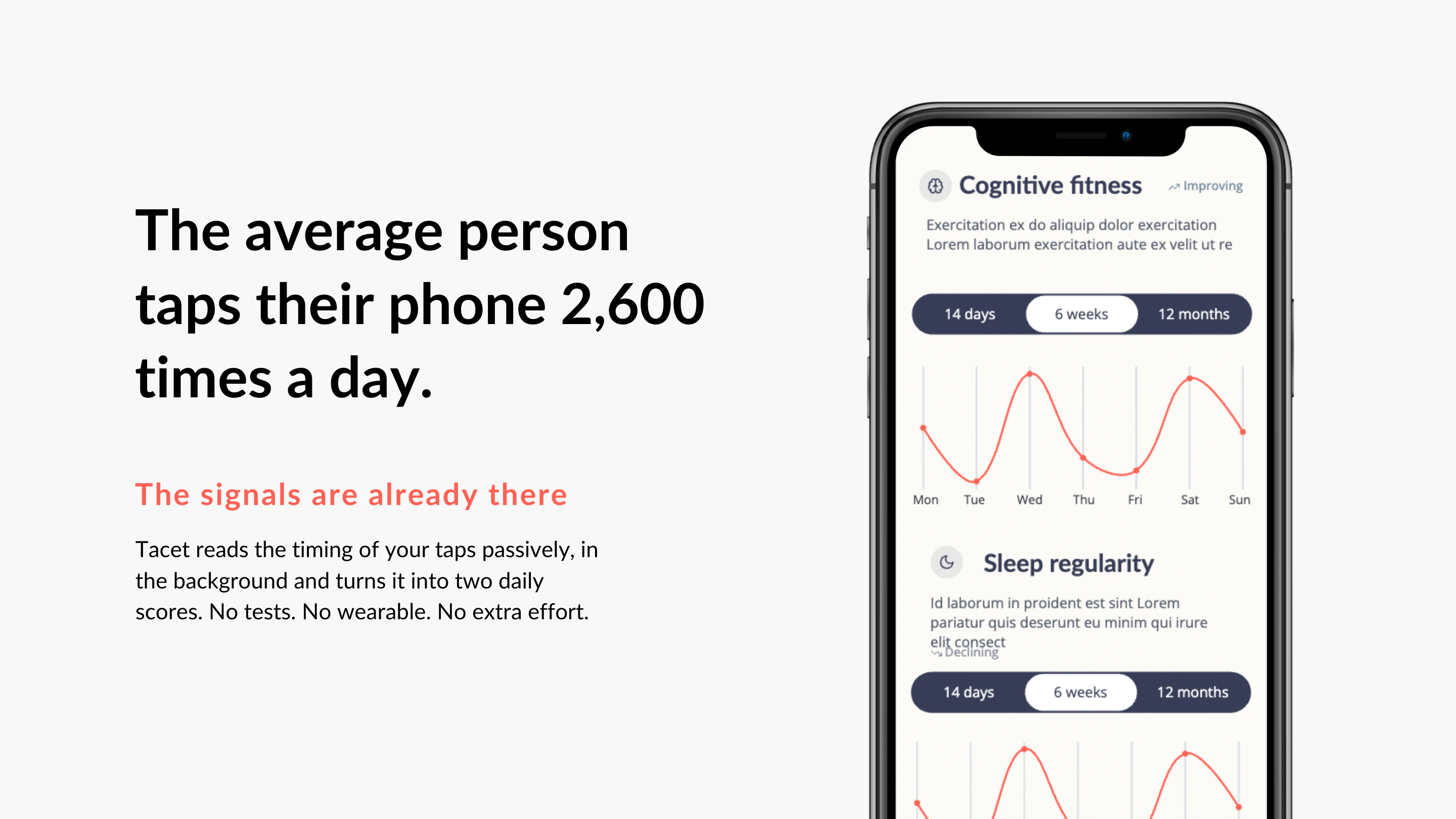
Tacet positions itself as a brain monitor for cognitive health. Once installed on an Android device, it runs in the background and studies the micro-timing of how a user interacts with their phone — the intervals between taps, the rhythm of swipes, the cadence of typing. From those patterns, it derives two core outputs: a daily cognitive fitness score and a sleep quality metric. Neither requires the user to complete a dedicated test or wear anything new. The tracking is entirely passive, embedded in the natural flow of phone use.
The app’s interface presents scores in a clean format, allowing users to observe trends over days and weeks. The goal is to give people a longitudinal signal about their mental performance — whether cognitive sharpness is declining after poor sleep, recovering after rest, or fluctuating under stress.
How the Tap-Timing Signal Works
The scientific foundation Tacet cites is psychomotor vigilance research, a field that has long recognised a link between cognitive state and motor reaction times. Studies have shown that sleep deprivation, fatigue, and certain neurological conditions measurably slow and destabilise motor timing. Leiden University has contributed research in this area, and Tacet claims its algorithm draws on that body of work.
The core hypothesis is this: when the brain is rested and alert, finger movements during phone interaction are rhythmically consistent. When the brain is fatigued, stressed, or cognitively impaired, that rhythm becomes subtly irregular. By capturing those micro-variations passively and at scale, the app argues it can construct a reliable proxy for cognitive state.
This is not science fiction. Motor biomarkers have been studied in clinical contexts, including early screening for Parkinson’s disease and monitoring of neurological recovery. However, applying the same principle to everyday smartphone tapping — across wildly different apps, use contexts, and individual typing styles — introduces significant noise. The research Tacet references is credible, but scaling a laboratory-validated signal to real-world consumer behaviour is a non-trivial leap.
Key Features
- Passive cognitive score: No active tests required. The app collects data continuously from normal phone use.
- Daily cognitive fitness score: A single number summarising estimated brain performance for the day.
- Sleep quality tracking: A secondary metric correlating tap behaviour with rest patterns.
- Trend analysis: Historical charts enabling users to spot patterns over time.
- Neuroscience-backed algorithm: Built on psychomotor vigilance research from Leiden University.
- No additional hardware: Works entirely through the existing smartphone sensors and interaction data.
Platform and Pricing
Tacet is currently available exclusively on Android. There is no iOS version at launch. Pricing details have not been prominently published alongside the Product Hunt listing, which suggests either a freemium model or a free early-access phase. Prospective users should verify current pricing at tacet.app before committing.
Alternatives Worth Comparing
Tacet is entering a small but growing space. The most hardware-centric competitor is the Muse headband, an EEG-based brain sensing device that provides meditation and cognitive feedback through actual neural signal detection. It is far more technically rigorous but costs several hundred dollars and requires deliberate, scheduled sessions — the opposite of passive monitoring.
BrainHQ takes an active training approach, offering evidence-based cognitive exercises designed to improve specific mental skills. It has substantial peer-reviewed research behind it but requires daily active engagement rather than background observation.
Standard sleep trackers — from Oura Ring to Apple Watch — offer sleep quality data through physiological sensors. They are better validated for sleep specifically but offer no intraday cognitive performance signal.
Tacet’s unique position is the combination of zero hardware cost and passive monitoring. That is a genuinely differentiated angle, provided the signal quality holds up under real-world scrutiny. For business owners and entrepreneurs managing demanding cognitive loads, keeping tabs on mental performance is as strategically relevant as any productivity system. Resources like Automated Sales Machine help professionals systematise their workflows — Tacet could slot alongside such tools as a health-side input to performance management.
Pros and Cons
- Pro: Genuinely passive — no behaviour change or extra hardware required.
- Pro: Rooted in real neuroscience research from a credible academic institution.
- Pro: Addresses a gap that wearables and sleep trackers do not fill — intraday cognitive state.
- Pro: Zero marginal cost of data collection once installed.
- Con: Tap-timing as a consumer cognitive proxy is novel and not yet independently validated at scale.
- Con: Android-only at launch excludes a large portion of potential users.
- Con: Pricing transparency could be improved before asking users to commit.
- Con: Real-world signal quality across diverse usage patterns remains an open question.
Verdict
Tacet is one of the more intellectually interesting apps to appear on Product Hunt in recent months. The idea of treating smartphone interaction as a passive window into cognitive health is not arbitrary — it draws on legitimate psychomotor research — and the zero-hardware approach is a genuine accessibility win compared to EEG headsets or clinical assessments. Reaching 118 upvotes and a #10 ranking on launch day suggests the concept resonates widely.
The honest caveat is that the gap between “laboratory-validated signal” and “reliable daily consumer metric” is wide, and Tacet has not yet published the independent validation data that would close it decisively. Early adopters willing to engage with that uncertainty will find a genuinely novel health tracking tool. Users who need clinical-grade reliability should wait for more published evidence before treating the score as actionable health data.