
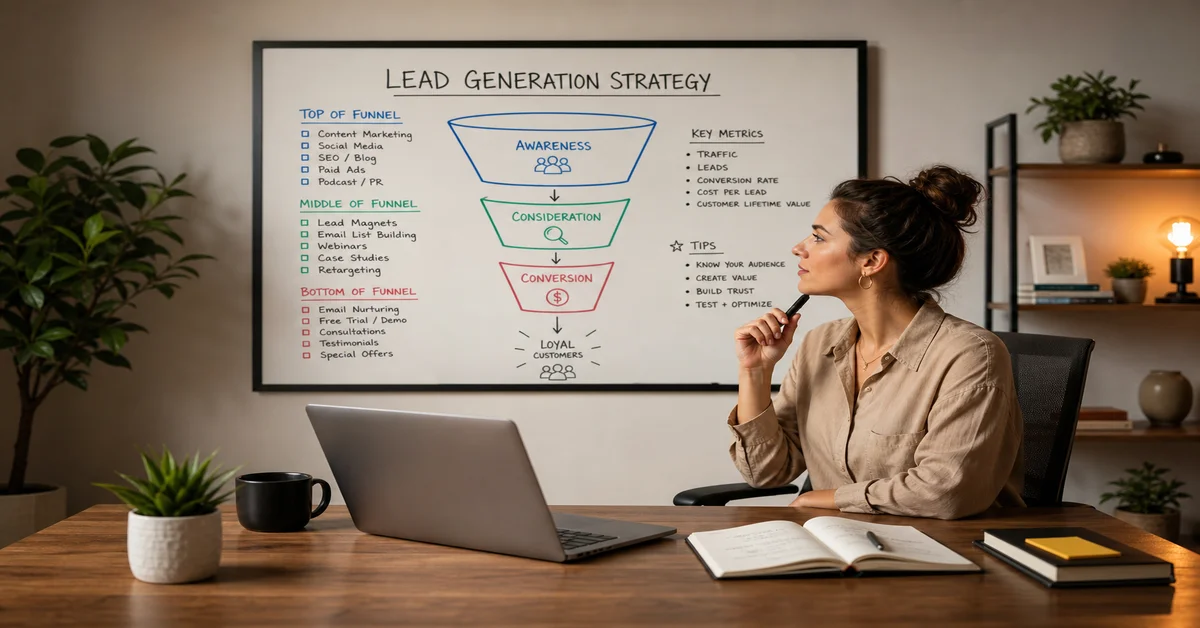

TL;DR: The best ideas for lead generation combine inbound content marketing, automation-powered follow-up, and relationship-driven outreach into a unified system — not isolated tactics. Small businesses that build a repeatable lead generation engine consistently outperform those chasing one-off campaigns. Ready to build yours? See how Automated Sales Machine turns these ideas into pipeline on autopilot.
The Lead Generation Problem Most Small Businesses Get Wrong
Most small businesses treat lead generation as a campaign — something you run when the pipeline gets thin, then shut off when things pick up. That’s the first mistake. According to HubSpot Research, generating quality traffic and leads is the #1 challenge reported by marketers, year after year. Not because they lack ideas — but because they lack a system.
The businesses that consistently win on lead volume build a multi-channel engine that works in the background. They don’t depend on any single source. When referrals are slow, content kicks in. When content is slow, automation follows up with cold prospects. When advertising cost-per-click rises, SEO carries the load.
This guide covers 25 proven ideas for lead generation across five strategic categories — content, digital advertising, automation, relationships, and AI — so you can build that engine, not just run isolated campaigns.
Why Most Lead Generation Fails
- No follow-up system: 80% of sales require five or more follow-up touches, but most businesses stop after one or two.
- Wrong traffic source mix: Depending on a single channel (e.g., only Facebook ads) creates fragility.
- No lead qualification gate: Filling the pipeline with unqualified contacts wastes sales time and inflates churn.
- Speed-to-lead failure: Research consistently shows that leads contacted within 5 minutes of inquiry are dramatically more likely to convert than those contacted after 30 minutes.
The 25 ideas below are organized by strategic category. Pick 3-5 to implement immediately, then add more as each channel matures.
Content Marketing Ideas for Lead Generation That Actually Work
Content marketing remains one of the highest-ROI ideas for lead generation for service businesses and B2B companies. It compounds over time — unlike paid ads, which stop the moment you stop paying.
1. SEO-Optimized Blog Posts Targeting Buyer-Intent Keywords
Write content that answers the questions your ideal clients are already searching. Buyer-intent keywords include phrases like “best CRM for real estate agents,” “how to automate email follow-up,” or “CRM software for small business.” These searchers are in research mode and often one conversation away from a purchase decision. Publish one to two pillar articles per week, each targeting a specific long-tail keyword, and build internal links between related posts to increase authority.
2. Lead Magnets: Checklists, Templates, and Calculators
A lead magnet is a free resource exchanged for a contact’s name and email address. The best lead magnets solve a specific, immediate problem. For a marketing platform like Automated Sales Machine, strong lead magnets include a “CRM Migration Checklist,” an “Email Automation ROI Calculator,” or a “Sales Follow-Up Script Template.” Gate these assets behind a simple form — and immediately trigger an automated email sequence that nurtures the contact toward a demo or discovery call. Start building your lead magnet funnel with Automated Sales Machine.
3. Case Studies With Specific Outcome Data
Case studies are among the most persuasive ideas for lead generation in the consideration stage. A prospect evaluating your service wants proof that your solution works for someone like them. Format each case study with: (1) the client’s situation before, (2) the specific intervention you made, and (3) the measurable outcome in numbers. “Reduced no-show rate by 38% in 60 days” outperforms “improved their scheduling process” every time.
4. Webinars and Live Q&A Sessions
Webinars generate leads and simultaneously position your brand as an authority. Promote the event with paid social and email to your existing list, then gate registration behind a form. During the webinar, answer real questions and make a time-sensitive offer at the end. Record it and repurpose the recording as on-demand content for ongoing lead capture.
5. Podcast Appearances on Niche Shows
Being interviewed on a podcast your ideal client listens to is one of the most underutilized ideas for lead generation. Podcast audiences are deeply engaged and trust their hosts’ recommendations. Research shows that podcast advertising has among the highest intent-to-purchase rates of any digital medium. Pitch yourself as a guest with a specific topic angle, deliver genuine value, and drive listeners to a dedicated landing page with a strong offer.
Digital Advertising and SEO Ideas for Lead Generation
Paid and organic search together represent the highest-volume lead generation channel for most small businesses. The key is targeting intent — reaching people who are actively searching for what you offer.
6. Google Search Ads Targeting High-Intent Queries
Unlike display ads, Google Search ads reach people who are actively searching for solutions. Target keywords that signal purchase intent (“CRM software for dental offices,” “email marketing platform small business”) rather than informational queries. Set tight geographic targeting, use callout extensions, and direct traffic to a dedicated landing page — never your homepage. Track cost-per-lead, not just cost-per-click.
7. Retargeting Campaigns to Re-Engage Site Visitors
Only 2-4% of first-time website visitors convert. Retargeting ads re-engage the other 96% after they leave. Set up pixel-based retargeting on Google, Meta, and LinkedIn to serve targeted ads to people who visited specific pages (e.g., your pricing page or a service landing page) but didn’t convert. Use different creative and messaging for each audience segment based on the page they visited.
8. Local SEO and Google Business Profile Optimization
For service businesses with a geographic service area, local SEO is one of the highest-ROI ideas for lead generation. Optimize your Google Business Profile with complete information, photos, and active response to reviews. Build local citations (directory listings) and publish location-specific landing pages targeting “[service] in [city]” keywords. Per Search Engine Journal, Google Business Profile listings appear in over 60% of local search results for service queries.
9. YouTube SEO and Video Content
YouTube is the second-largest search engine in the world. Creating tutorial, explainer, and comparison videos that rank for relevant keywords drives qualified traffic to your site. Include a clear call-to-action in each video directing viewers to a lead magnet or demo booking page. Video content also builds the trust and familiarity that accelerates the buying decision.
10. LinkedIn Outreach for B2B Lead Generation
LinkedIn remains the most effective platform for B2B ideas for lead generation. Rather than blasting connection requests, focus on micro-personalized outreach. Reference a specific post the prospect wrote, a mutual connection, or a company milestone. According to LinkedIn Marketing Solutions, personalized InMails have a 300% higher response rate than generic outreach. Pair this with LinkedIn content that establishes authority and drives inbound connection requests.

Automation-Powered Ideas for Lead Generation
The biggest leverage point in any lead generation strategy is automation. Manual follow-up is inconsistent, slow, and doesn’t scale. A properly configured CRM and marketing automation platform ensures that every lead is followed up with — instantly and persistently — regardless of your team’s bandwidth.
11. Missed Call Text-Back Automation
When a potential client calls your business and no one answers, they typically move on to the next result in their search. A missed call text-back system automatically sends a text to the caller within seconds: “Hi, we missed your call! When’s a good time to connect?” This single automation can recover 30-60% of missed-call leads. Automated Sales Machine includes this feature natively — book a demo to see it in action.
12. Automated Email Drip Sequences
A drip sequence is a series of pre-written emails sent automatically based on a trigger (form submission, link click, or time delay). Design sequences for different lifecycle stages: lead magnet download, demo no-show follow-up, trial expiration warning, and post-purchase upsell. According to the Salesforce State of Sales Report, sales teams that use automated follow-up sequences close 30% more deals than those relying on manual outreach alone.
13. SMS Marketing and Appointment Reminders
SMS open rates average 98% compared to 20% for email. For appointment-based businesses, automated text reminders dramatically reduce no-shows. For retail and e-commerce, SMS promotions drive higher immediate conversion than email. Integrate SMS into your lead follow-up sequences for a multi-channel approach that reaches contacts where they’re most likely to respond.
14. Chatbot Lead Capture on Your Website
A website chatbot engages visitors 24/7, answers common questions, and captures contact information before the visitor leaves. Program your chatbot to qualify leads by asking about budget, timeline, and specific needs — then route hot leads to immediate human follow-up and warm leads into an automated nurture sequence. This works particularly well on high-traffic pages like your homepage, pricing page, and service pages.
15. Referral Automation Programs
Word-of-mouth is the oldest form of lead generation — and it’s still among the most effective. Automate the referral process by triggering a referral request email after a positive client interaction (post-purchase, positive review, or service delivery milestone). Make the referral process frictionless: a single-click link that pre-populates a message they can send. Offer a meaningful incentive — account credit, a gift card, or a discount on their next invoice.
Relationship-Driven Ideas for Lead Generation
Some of the most valuable ideas for lead generation don’t involve technology at all — they involve building genuine relationships that produce warm introductions and trusted referrals.
16. Strategic Partnership and Co-Marketing
Identify non-competing businesses that serve the same client base as you. A CRM platform for dental offices might partner with dental supply companies, billing software providers, or practice management consultants. Build formal co-marketing arrangements: joint webinars, co-branded content, or simple referral agreements. Each partner becomes a consistent source of pre-qualified introductions.
17. Community Involvement and Local Sponsorships
For location-based service businesses, community visibility drives lead generation in ways that can’t be replicated digitally. Sponsor local events, youth sports teams, or chamber of commerce gatherings. The ROI is measured not just in immediate leads but in brand recognition that pays off in referral conversations months later.
18. Speaking at Industry Events and Conferences
Speaking on stage at a conference or industry event positions you as the expert — instantly and credibly. Build a signature talk around a specific problem your ideal client faces, deliver real value, and make a clear offer at the close. Even virtual speaking engagements generate warm leads who are pre-sold on your expertise before the first conversation.
19. Customer Success Stories as Social Proof Engines
Your existing clients are your best salespeople — if you activate them systematically. Create a structured process: request a review after a major milestone, film a 60-second testimonial video, ask for a LinkedIn recommendation, and feature them in a case study. Each touchpoint compounds your social proof and generates referrals organically.
Advanced Ideas for Lead Generation Using AI and CRM
The most sophisticated ideas for lead generation leverage AI and CRM data to identify, prioritize, and engage prospects with the right message at the right moment.
20. Lead Scoring to Prioritize Your Hottest Prospects
Not all leads deserve equal attention. Lead scoring assigns numerical values to prospect behaviors (email opens, page visits, demo requests) and demographics (company size, industry, job title). Your sales team focuses on leads above a scoring threshold, while automated sequences nurture lower-scored contacts until they’re ready. This dramatically improves sales efficiency and conversion rates.

21. AI-Powered Personalization in Email and Outreach
AI tools now enable true one-to-one personalization at scale. Rather than “Hi [First Name],” personalization means referencing a prospect’s specific business challenge, recent news, or content they’ve engaged with. Personalized email subject lines have 26% higher open rates. Personalized calls-to-action convert 202% better than generic ones, according to research from Gartner’s Marketing Research division. Automated Sales Machine’s AI-powered outreach tools make this level of personalization achievable without a dedicated marketing team.
22. Pipeline Analytics to Identify Drop-Off Points
Most businesses lose leads not at the top of the funnel, but in the middle — where the follow-up process breaks down. Use your CRM’s pipeline analytics to identify where prospects are stalling or going dark. If 60% of leads who request a demo never show up, your confirmation and reminder sequence needs work. If proposals consistently go unaccepted after a 14-day delay, your objection handling process needs revision. Data-driven iteration compounds your conversion rate over time.
23. Predictive Lead Generation Using Intent Data
Third-party intent data platforms identify companies that are actively researching solutions in your category — even before they’ve contacted you. When a prospect company is looking at competitor websites or reading industry reports on your topic, intent signals tell you to reach out now, while purchase intent is high. This approach dramatically improves outbound prospecting efficiency.
24. Automated Review and Reputation Management
For local service businesses, online reviews directly impact lead generation. A one-star increase in average rating can increase revenue by 5-9%, according to findings published by Harvard Business Review. Automate review requests via SMS or email after each completed job or service delivery. Route negative feedback to a private resolution process before it hits public platforms. More five-star reviews mean higher local search rankings and more inbound calls.
25. All-in-One CRM Platform as Your Lead Generation Hub
The most important of all ideas for lead generation is the infrastructure decision: consolidate your tools. A fragmented tech stack — separate email, CRM, scheduling, and SMS platforms — creates data silos, missed follow-ups, and reporting blind spots. An all-in-one platform connects every lead touch point: web form → CRM → automated email + SMS sequence → appointment booking → post-appointment follow-up → review request. Every lead gets the same consistent experience, regardless of how they entered your funnel.
How to Qualify, Nurture, and Convert Your Leads
Generating leads is only half the battle. The other half is the qualification and conversion process — ensuring that the leads you generate have genuine purchase intent and that your sales process is engineered to close them.
Build a Qualification Framework
Use a structured qualification framework to evaluate every lead against four criteria:
- Budget: Do they have the resources to pay for your solution?
- Authority: Are you speaking with the decision-maker or influencer?
- Need: Is there a genuine, urgent business problem your solution solves?
- Timeline: When are they looking to make a change?
Leads that don’t meet your threshold on these criteria should go into a long-term nurture sequence — not be handed to your sales team to chase manually.
The 5-Touch Follow-Up Rule
Research consistently shows that most sales require at least five follow-up touches after initial contact. Most businesses give up after one or two. Build a follow-up sequence that spans at least 14 days using a combination of channels: email, SMS, phone, and LinkedIn. Each message should add value (a relevant resource, a case study, a timely insight) rather than just repeating “checking in.”
Speed-to-Lead: The Most Underrated Conversion Lever
Inbound leads need to be contacted fast. Studies consistently show that the odds of making contact with a lead decrease dramatically within the first five minutes of inquiry — and the odds of qualifying a lead are 21x higher when contacted within the first minute versus the first half-hour. Automated Sales Machine’s instant lead notification and automated response system ensures no lead waits more than 60 seconds for initial contact, regardless of your team’s availability.
Start Building Your Lead Generation Engine Today
The businesses that win on lead volume don’t run more campaigns — they build better systems. The 25 proven ideas for lead generation in this guide give you the full strategic playbook. The next step is implementation.
Automated Sales Machine brings together CRM, email automation, SMS follow-up, missed-call text-back, appointment scheduling, and review management into a single platform — specifically designed for small businesses, agencies, and service companies that need a complete lead generation engine without the complexity of managing 8-10 separate tools.
Book a free demo of Automated Sales Machine and see how these ideas for lead generation work together as a unified system that runs in the background — booking appointments, following up on leads, and growing your pipeline on autopilot.