


Small business owners are finally ditching fragmented, "duct-taped" tech stacks. The trend has shifted toward centralized systems that actually talk to each other. This guide explores the most efficient platforms for consolidating your operations, drawing on data from the US Chamber of Commerce and industry leaders. We want to help you scale without the heavy penalty of per-contact pricing models.
1. Automated Sales Machine (ASM) replaces your entire duct-taped tech stack with a unified AI operating system.
Small businesses often fail to scale because they get trapped in a cycle of paying more as they grow. Most software providers penalize your success. They bump up your monthly bill every time you add a lead or a team member. We built ASM to shatter that model. Our digital marketing platform for small businesses provides an all-in-one marketing platform that replaces your CRM, funnel builder, and email tool for a predictable monthly fee. By offering unlimited contacts marketing and unlimited users, we ensure your overhead stays flat while your reach expands.
Growth shouldn’t be expensive.
We built this environment to be visual and no-code. You can build professional websites and sales funnels without touching a line of code. Beyond simple storage, our advanced AI agents handle lead nurture and appointment booking around the clock. Your business stays open 24/7. It captures and qualifies leads even while you sleep. If you are tired of juggling five different subscriptions just to send an email and host a landing page, it is time to consolidate. You can access the ASM All-in-One AI Operating System today to see how a unified workflow removes the friction from your daily operations.
Source: Automated Sales Machine
2. Use Salesforce Agentforce to deploy autonomous AI agents for campaign creation.

Salesforce has pivoted heavily toward autonomous technology to help smaller teams compete with enterprises. Their Agentforce tool allows you to deploy AI agents that do more than just answer basic questions. These agents actively nurture leads, identify specific revenue opportunities, and trigger follow-ups within your existing database. Research from Salesforce shows AI is currently the number one priority and challenge for marketers, making these tools a necessity rather than a luxury.
AI isn’t coming. It’s here.
The platform uses "Agentforce Segmentation" to scan customer data and automatically group individuals based on their likelihood to buy. This allows for 1:1 personalization at a scale that was previously impossible for a small team. By integrating your sales and marketing into what they call a "unified revenue engine," you eliminate messy handoffs between departments. While powerful, keep in mind that legacy systems often involve complex pricing tiers. If you want a more streamlined way to handle your database, you might consider the best HubSpot alternative for small business to avoid those escalating costs.
Source: Salesforce
3. Optimize for local discovery by automating your Google Business Profile and reviews.

Image source: emailtooltester.com
For brick-and-mortar or service-based businesses, local search visibility is the primary driver of new customers. The US Chamber of Commerce notes that 88% of shoppers read reviews before making a purchase. Manually asking every customer for feedback is exhausting and usually gets forgotten. By automating your review requests through your digital marketing platform for small businesses, you ensure a steady stream of social proof hits your Google and Facebook profiles without manual effort.
Claiming and optimizing your Google Business Profile is a zero-budget strategy that puts you at the top of the "Map Pack." When you use AI assistance to respond to these reviews, you signal to search engines that your business is active and responsive. This significantly boosts your local SEO rankings. At ASM, we integrate this directly into our lead and pipeline management tools. A closed deal automatically triggers a review request. This creates a self-sustaining growth loop where every happy customer helps you find the next one. Reviews build trust. Trust builds sales.
Source: CO- by US Chamber of Commerce

4. Adopt Keap to combine CRM with advanced e-commerce checkout capabilities.
Keap focuses on the transition between a lead showing interest and a customer completing a purchase. Many businesses use separate tools for their CRM and their checkout pages, which creates a data silo. When these systems are duct-taped together, you often lose track of which marketing efforts actually resulted in a sale. Keap addresses this by integrating payment links directly into your sales pipelines. This makes it a popular small business CRM choice for those needing native billing.
This integration allows you to automate the entire lifecycle of a customer. For example, a lead can sign up for a quiz on your landing page and be automatically moved into a sales sequence that ends with a direct payment link. Using high-converting pages that feed data straight into lead scoring models helps you identify which prospects are most likely to convert. These tools are effective for managing the sales process. However, as your list grows, contact-based pricing can become a significant burden on your monthly budget. We hate growth taxes.
Source: Thryv
5. Leverage Brevo to unify email marketing with WhatsApp and SMS outreach.
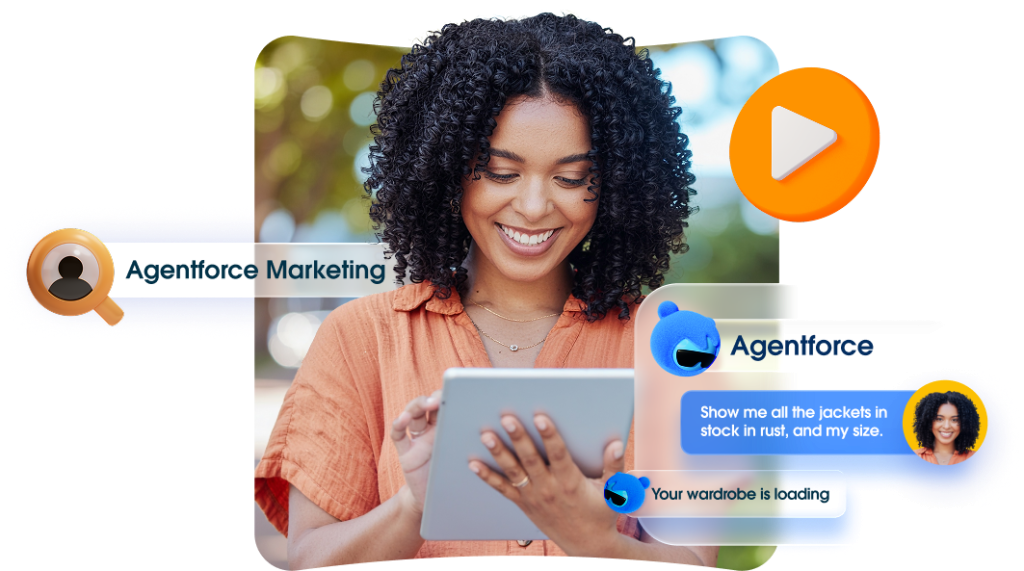
Image source: salesforce.com
Relying solely on email can be a limitation for modern brands. Consumers are increasingly active on mobile messaging apps. Brevo allows small businesses to move beyond basic inbox marketing by integrating SMS and WhatsApp into a single customer relationship workflow. Meeting users where they are (often on their mobile devices) can result in significantly higher response rates compared to traditional email alone. This is essential marketing automation for SMBs looking to increase engagement.
For those just starting out, they offer free tiers with daily sending limits. It is a low-risk way to test your messaging strategy. Using multi-channel drip campaigns ensures that if a lead misses an email, they might still engage with a well-timed text message. While Brevo provides a solid entry point, our platform goes a step further by putting those messages into a single unified inbox for business. You never have to check three different apps to see what a customer said. One inbox, one login.
Source: EmailToolTester
6. Utilize Microsoft Clarity to understand user behavior through heatmaps.
Traffic is useless if your website is confusing. Microsoft Clarity is a powerful tool for understanding exactly how visitors interact with your funnels. By using session recordings and visual heatmaps, you can see where people are clicking, where they are getting stuck, and what elements they are ignoring entirely. This data is vital for improving your conversion rates and ensuring your marketing spend isn’t being wasted on a broken user experience.
One of the most useful features is the ability to identify "dead clicks," which are areas where users click expecting an action, but nothing happens. Eliminating these friction points and clarifying your navigation can lead to immediate improvements in sales. You can integrate these insights with Google Analytics to see the full journey from the original traffic source to the final page exit. Understanding this behavior is the first step toward building a high-converting machine. You can find more details in this Free Marketing Tools Guide. Stop guessing. Start watching.
Source: EmailToolTester
7. Scale content creation with Canva and Google Gemini for high-quality visuals and copy.

Image source: fedex.com
Small business owners often struggle to keep up with the relentless demand for fresh content. By combining Canva with Google Gemini, you can produce professional-grade marketing assets in a fraction of the time. Canva allows you to create eye-catching graphics for social media, ads, and email headers without the need for a professional graphic designer. Using pre-built templates and centralized brand kits ensures that your visual identity remains consistent across every platform.
On the copywriting side, Google Gemini serves as a powerful assistant for generating blog posts, social captions, and email drafts. This AI integration can significantly speed up your weekly content production, allowing you to focus on strategy rather than staring at a blank page. According to FedEx, utilizing these online tools helps small businesses maintain a competitive presence online without the overhead of a large creative department. Efficiency matters most.
Source: FedEx
8. Thryv offers unified growth tools tailored for specific service industries.
Generic software often fails to address the unique needs of service-based businesses like contractors or law firms. Thryv stands out by offering unified growth tools specifically tailored for these sectors, which can significantly improve internal adoption rates. Instead of juggling a dozen different logins, you can centralize client communication, appointment booking, and payment processing into a single dashboard. This reduction in administrative overhead allows your team to spend more time serving clients.
"Fragmented data is the silent killer of small business efficiency. When tools don’t talk, profit walks."
A major benefit of this approach is the ability to manage the entire customer lifecycle, from the initial lead capture to final invoicing, within one ecosystem. According to a case study by Thryv, over 100,000 businesses have used their platform to streamline operations. When your CRM and billing tools are natively connected, you eliminate the risk of missing a payment or losing track of a follow-up. Using an all-in-one marketing platform ensures that these transitions are smooth for both the business owner and the customer. Centralization wins every time.
Source: Thryv
Calculating the True Cost of a Duct-Taped Tech Stack
Many small business owners fall into the trap of choosing "free" or cheap individual tools, only to realize later that their tech stack is costing them thousands in hidden fees. To find your true cost, start by adding up the monthly subscriptions for your separate small business CRM, email marketing service, funnel builder, and booking software. The financial drain is often much higher than anticipated when these costs are siloed.
Beyond the monthly bill, you must factor in the "Integration Tax." This is the time lost trying to make different software programs communicate using middleware like Zapier. When these connections break, data is lost and sales are missed. Legacy systems often impose a "Growth Tax," where your bill doubles simply because you reached a new tier of email subscribers or added a team member. We believe unlimited contacts marketing is a financial necessity for fast-growing companies. It is common sense.
Switching to a unified AI Operating System eliminates the need for expensive middleware and reduces technical friction. By choosing a solution with a flat monthly rate, you protect your margins. You can scale your operations and add new team members without fearing a sudden spike in software expenses, allowing you to reinvest that capital into actual lead generation. A digital marketing platform for small businesses should empower your growth, not tax it. We pick flat pricing every time.
Three Essential Workflows to Automate First
To see an immediate return on your software investment, you should prioritize three key workflows. First is lead capture. Every visitor who interacts with your site or ads should be instantly added to your CRM and lead tracking and receive an immediate automated follow-up via SMS or email. Speed to lead is the most important factor in conversion. If you wait an hour to respond, the prospect has likely moved on to a competitor. Utilizing marketing automation for SMBs ensures no lead is left behind.
Second, automate your appointment booking. Use a unified calendar that allows prospects to schedule calls based on your real-time availability. The system should automatically trigger reminders to reduce no-shows and update your sales pipeline without manual intervention. This keeps your calendar full while removing the back-and-forth of scheduling emails. These tools are often integrated into a high-quality digital marketing platform for small businesses to ensure a smooth transition from lead to scheduled call. Booking should be easy.
Third, implement automated review requests. According to CO- by US Chamber of Commerce, 88% of shoppers say they read reviews before making a purchase. Automating the process of asking happy customers for feedback boosts your local SEO rankings effortlessly. When these three workflows are centralized in one platform, your data remains consistent across all customer touchpoints, providing a clearer picture of your business health and long-term customer value.
Transitioning to a Unified Digital Marketing Platform
When moving away from fragmented tools, look for platforms that offer unlimited contacts marketing and unlimited users. This ensures your tech costs remain predictable as you grow, rather than being penalized for your success. A unified inbox for business is another non-negotiable feature. It allows your team to manage SMS, email, and social media DMs in one place, preventing important messages from being buried in a cluttered personal inbox or a separate app.
Visibility is also crucial for sales growth. You should utilize a drag-and-drop Kanban board to track leads through your sales cycle. This visual representation allows you to see exactly where deals are stalling and which marketing channels are providing the best return on investment. If you are currently overwhelmed by the complexity of enterprise software, look for a hubspot alternative for small business to find a solution that offers premium automation features without the steep price tag. Modern marketing automation for SMBs should be accessible and intuitive.
The real goal of transitioning to a digital marketing platform for small businesses is to simplify your operations. By hosting your websites, courses, and marketing automation on a single platform, you reduce the number of potential failure points. This centralized approach not only saves money but also provides a "single source of truth" for your customer data. Having an all-in-one marketing platform means you can focus on building relationships instead of managing software updates and broken integrations.
| Feature | Duct-Taped Stack | ASM AI OS |
|---|---|---|
| Pricing | Per Contact/User | Flat $150/mo |
| Integrations | Complex Middleware | Native & Built-in |
| CRM Capacity | Limited Tiers | Unlimited Contacts |
| AI Agents | Expensive Add-ons | Core Operating System |
Key Takeaways
- Ditch duct-taped systems to save on hidden integration costs and "growth taxes."
- Consolidate CRM, funnels, and email into one visual, no-code AI operating system.
- Prioritize flat-rate pricing with unlimited contacts and users ($150/mo) to protect margins.
- Automate lead capture, appointment booking, and review requests to scale efficiency.
Frequently asked questions
What is the best digital marketing platform for small businesses?
The best platform is one that consolidates CRM, automation, and sales funnels into one AI Operating System. Look for a solution like ASM that offers unlimited contacts and users for a flat monthly fee. A platform that integrates AI agents for 24/7 lead handling provides the highest ROI for small teams.
Why should I stop using individual tools for CRM and email?
Individual tools create "data silos" where customer information is fragmented and inconsistent. Duct-taping multiple tools leads to higher costs due to multiple subscriptions and expensive integration software. A unified system allows for better automation, as the CRM and email tool share the same database in real-time.
Does a unified platform support unlimited contacts?
Most legacy platforms charge per contact, but modern AI Operating Systems like ASM offer unlimited contacts. Unlimited contacts allow you to scale your marketing list without worrying about a sudden spike in software costs. This model is essential for small businesses that rely on large lead-generation campaigns.
How does automated reputation management help local SEO?
Automated systems ensure every customer is asked for a review, increasing the volume of social proof. Frequent, high-quality reviews are a major ranking factor for Google’s local search algorithm. A unified platform can automatically respond to reviews, further signaling to search engines that the business is active.
Stop wasting time and money on disconnected tools and start building a scalable foundation for your brand. You can start a free trial today to experience how a unified AI operating system can transform your sales process and eliminate technical headaches.