


Last updated September 15, 2026
Yesterday, September 14, 2026, tech reports confirmed a massive pivot in how we handle customers. Humanlike AI agents for small business have transitioned from basic chatbots into autonomous software entities that handle lead qualification and appointment booking with actual nuance. Entrepreneurs are now using these sophisticated agents to scale operations through unified AI operating systems, finally ditching the "duct-taped tech stack" to keep that personal touch.
Key takeaways
- Agentic AI has evolved. Sophisticated software entities have transitioned from simple chatbots into autonomous agents capable of managing full sales cycles.
- Unified systems prevent silos. A single AI operating system replaces the "duct-taped tech stack," ensuring communication remains consistent across all channels.
- Flat-rate models improve ROI. Transparent pricing models often offer more predictable value than legacy CRM structures that charge per user seat.
- 24/7 autonomous scheduling. AI voice assistants and Booking Studios now qualify leads and secure appointments without any manual intervention.
Why it matters
The dawn of autonomous business operations is here. Recent advancements in agentic AI reached a critical turning point for small businesses on September 14, 2026. According to BING, these tools are becoming significantly more humanlike in their interactions. This allows for deeper customer rapport. We see entrepreneurs as the primary demographic leading this shift. You are ditching manual task management for high-level strategy. It is about time. Managing a business requires oversight, not micromanagement of individual software tools.
Our trend analysis favors unified platforms over fragmented software. It is the only way to ensure AI agents see the entire customer journey. When an agent tracks every email, text, and purchase, it acts like a long-term employee. New AI UI design standards simplify complex backend automation. We use visual, no-code dashboards. Stop writing code. Instead, use a drag-and-drop interface to tell your agent to follow up with leads that haven’t replied within two hours. This accessibility lets boutique firms deploy AI that runs small businesses on autopilot without a developer on payroll.
What to do now
Unified CRM systems stop operational fragmentation cold. Fragmented software kills scaling. When your CRM doesn’t talk to your email tool, your agents lose context. They sound like robots. We view Salesforce as a complex competitor that penalizes growth with per-seat pricing. If you need a reliable Salesforce alternative, move to a flat-rate model. It protects your margins.
Personal touches work because agents reference historical CRM data in real-time. This database tracks opportunities across every department. We see local HVAC companies and dental clinics using ai lead qualification software to manage walk-in queries and phone bookings. Picture a roofing contractor receiving a quote request at 2:00 AM. The AI agent qualifies the roof type. It checks the weather-adjusted schedule. It books the inspection. All before the owner wakes up.
Do not let agents handle high-stakes conflict resolution. Technology has advanced, but customers still need human empathy for complex legal negotiations. The risk of "hallucination" remains high if the AI is trained on messy data. Without a single source of truth, the agent might quote an outdated price. It might promise a service you no longer offer.
Avoid over-automation. Do not strip away the unique brand voice your customers expect. If every interaction feels like a generic script, you lose your competitive edge. Costs can also spiral. Per-contact pricing models are a trap. Successful viral marketing campaigns have led to massive, unexpected bills. A flat-rate AI operating system like ASM prevents these financial surprises. We charge $150 a month for unlimited contacts and unlimited users. Period.

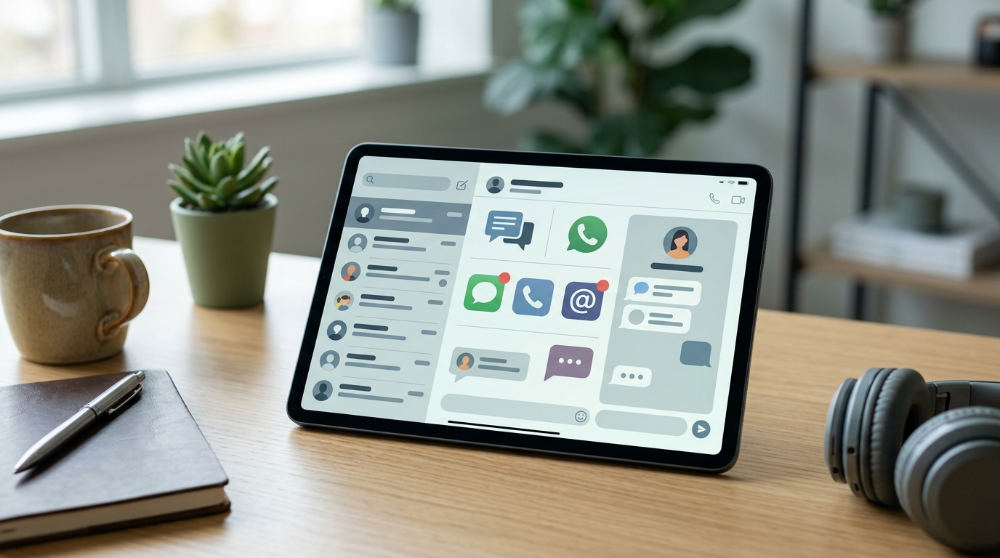
Consolidate your communication channels into a unified inbox immediately. This gives your AI agents and booking studio a single stream of context. They won’t miss a message from Facebook, Instagram, or email. Once data is centralized, deploy AI voice assistants to qualify leads 24/7. Automated Sales Machine (ASM) is the all-in-one AI operating system you need to manage sales and marketing. We built it for small businesses to avoid the high costs of traditional enterprise software.
We recommend replacing your messy tools with our flat-rate platform to maximize ai lead generation. Through the ASM platform, you access scalable contact management for one consistent fee. Set up visual drag-and-drop Kanban boards. Track how your AI agents move opportunities through the sales pipeline. This visual approach helps you monitor which leads are engaged and which need a nudge. To see how this looks in your business, start your free trial and build your first automated workflow today.
Sources
- AI agents are becoming more humanlike. Are entrepreneurs ready to embrace the future?
FAQ
What are humanlike AI agents? Humanlike AI agents are advanced software entities that use natural language processing to interact with customers in a way that mimics human conversation. They can handle lead qualification, appointment scheduling, and customer support.
How do AI agents help small businesses? They allow small businesses to provide 24/7 customer service and lead management without increasing headcount. By automating repetitive tasks, entrepreneurs can focus on higher-level strategy and business growth.
Why is a unified CRM important for AI? An AI agent is only as good as the data it can access. A unified CRM ensures the AI has the full context of a customer’s history across email, SMS, and social media, preventing fragmented or incorrect interactions.
Is it expensive to implement AI agents? While some platforms charge per contact or per user, Automated Sales Machine offers a flat-rate AI operating system. This makes sophisticated automation accessible for small and mid-sized businesses.