
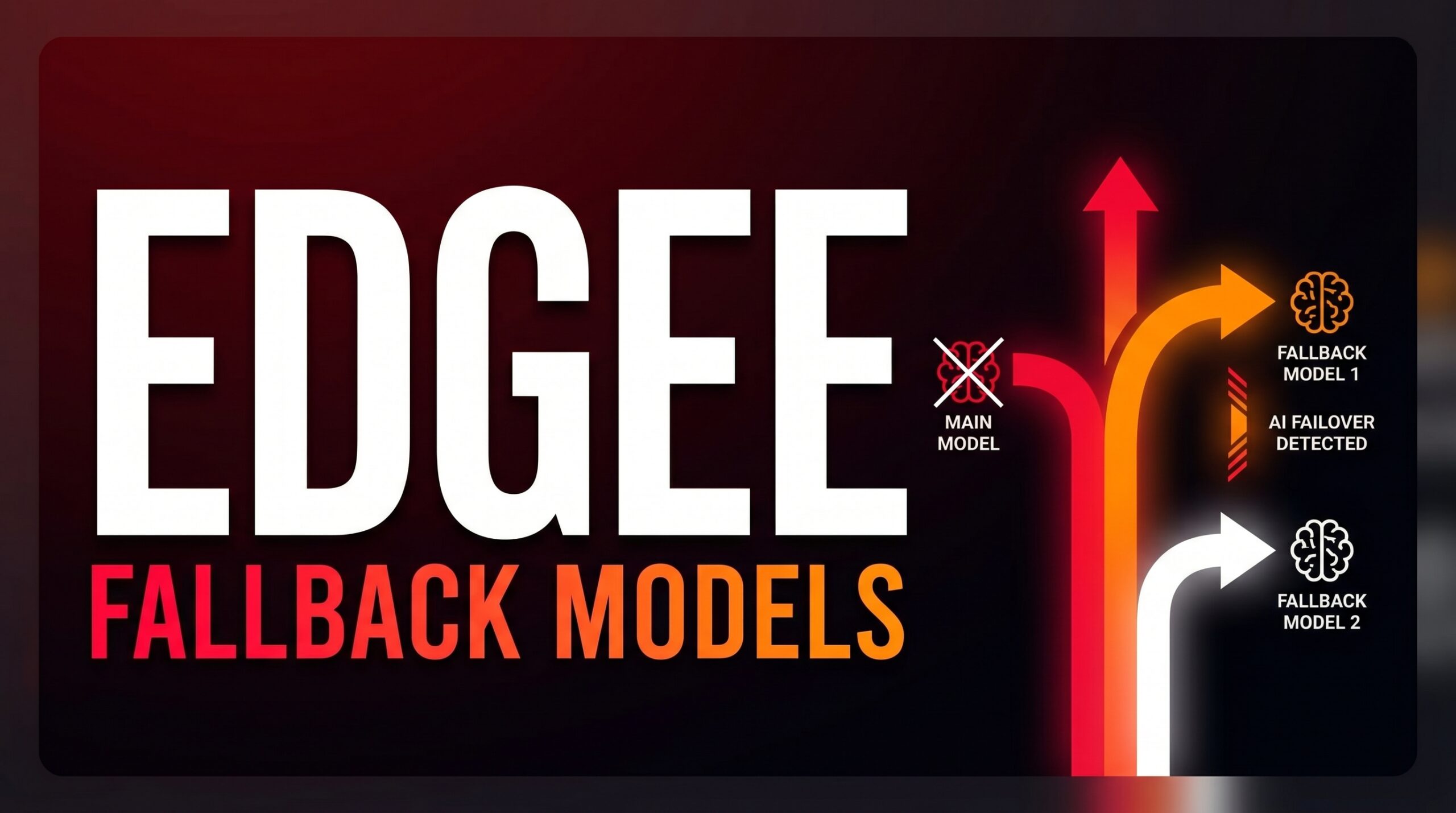


Edgee Fallback Models — Claude Code that never stops It addresses a genuine and growing reliability need among developer teams. Understanding ai model fallback routing is now a core concern for any team that relies on AI coding tools.
176 upvotes · #5 Product of the Day — View on Product Hunt
Every developer team using Claude Code has hit the same wall: Anthropic goes down, a rate limit kicks in, or a monthly plan runs dry — and suddenly the AI coding assistant that your team built a workflow around is just gone. The session dies. The momentum dies with it. For small teams shipping on tight timelines, that interruption is not a minor inconvenience. It is a measurable productivity loss that compounds across sprints. This is the specific problem that Edgee Fallback Models is designed to solve, and it does so through automatic ai model fallback routing that happens without any code changes on the developer’s end.
Topics: Productivity, Software Engineering, Developer Tools
Edgee Fallback Models landed on Product Hunt on May 24, 2026, earning 176 votes and reaching fifth place on its launch day. That reception reflects real demand in the developer tools space — teams are actively looking for ways to make their AI coding infrastructure more resilient.
AI Model Fallback Routing: How Edgee Works
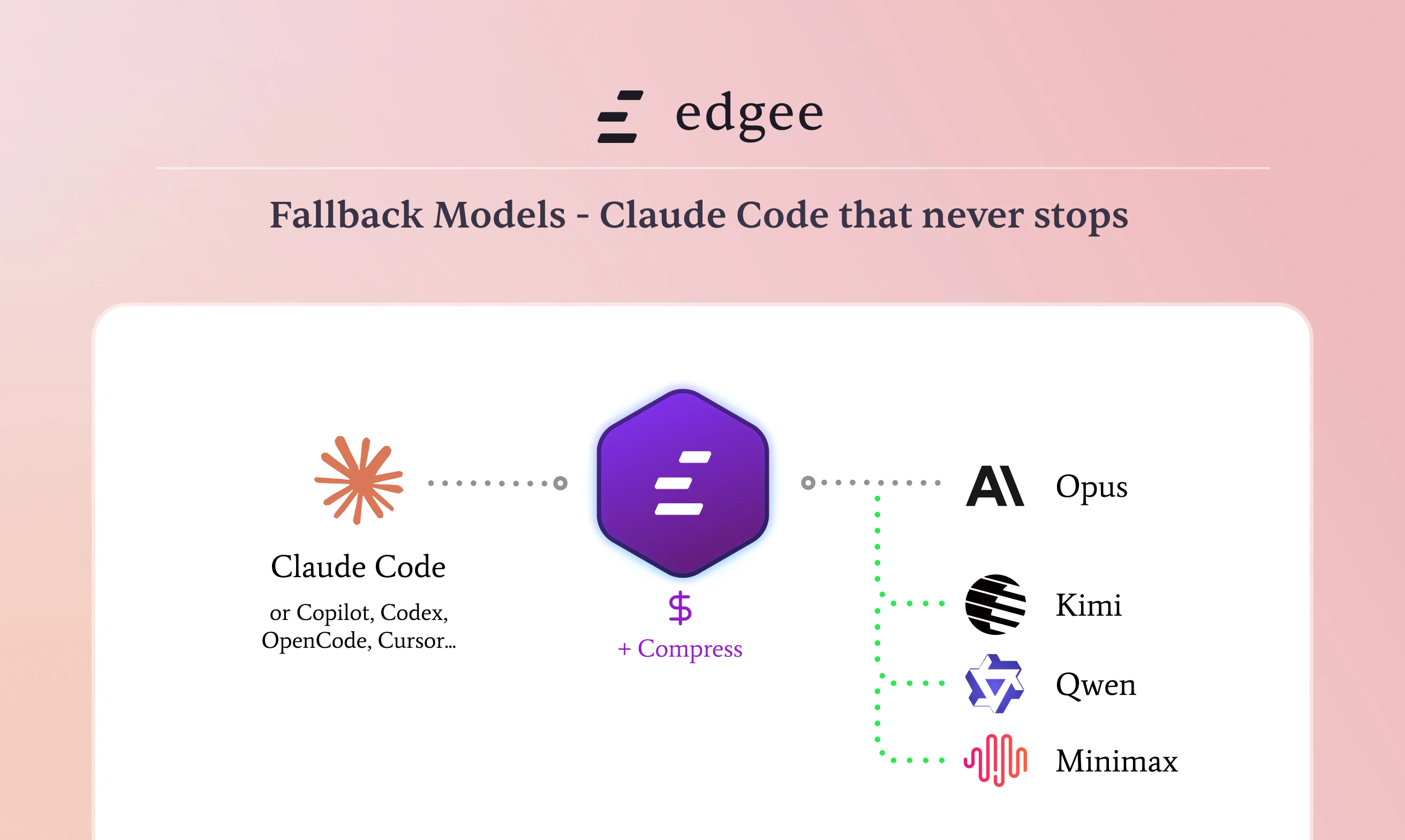
The core mechanic is straightforward: Edgee sits between your Claude Code session and the underlying model APIs. When Claude becomes unavailable — whether because Anthropic is experiencing an outage, your account is rate-limited, or the cost of running Claude has exceeded a threshold you have set — Edgee’s routing logic intercepts the request and redirects it to a configured alternative model.
The supported fallback targets include Kimi K2.6, Gemma, GLM, and Qwen. These are not obscure or experimental models; they are actively maintained, capable alternatives that can handle code-related tasks with reasonable fidelity. The practical quality difference between these models and Claude will vary depending on the complexity of the task — fallback does not mean identical output.
Beyond third-party model providers, Edgee also supports one-click routing to your own cloud infrastructure. If your organization has accounts with AWS Bedrock, Google Vertex AI, or Azure OpenAI, you can configure Edgee to fall back to models hosted within those environments. This is a meaningful option for organizations that have compliance requirements around where their data is processed.
The zero-code-change claim is central to Edgee’s value proposition. From the developer’s perspective, the Claude Code interface remains the same. The routing happens at the infrastructure layer, not in the application layer.


Who This Is For
Edgee Fallback Models is most clearly useful for two groups. The first is small development teams that have made Claude Code a core part of their daily workflow and cannot absorb the disruption of unplanned downtime. The second group is organizations that are scaling their AI coding tool usage across multiple developers and are starting to hit rate limits or cost ceilings on their Anthropic plans. For these teams, this routing capability is not just a reliability feature — it is also a cost management mechanism.
Edgee is less obviously useful for individual developers who use Claude Code occasionally and can tolerate a brief outage. If downtime is a minor inconvenience rather than a workflow-breaking event, the added complexity of configuring a fallback layer may not be worth it.
Pricing
Pricing details were not confirmed in the Product Hunt listing at the time of this post. Edgee describes the product in a way that implies a routing layer model — meaning the tool manages where requests go rather than billing for model usage directly. Whether there is a free tier, a usage-based fee, or a flat subscription is not explicitly stated. Prospective users should contact Edgee directly or consult their documentation to get current pricing before making an adoption decision.
How It Compares
The AI gateway and routing space already has several established players.
- LiteLLM is the most technically comprehensive alternative. It is open-source, supports a broad model catalog, and self-hosting is free. The enterprise hosted version runs around $250 per month. LiteLLM handles load balancing and cost tracking alongside routing. For teams with engineering bandwidth to configure and maintain a self-hosted instance, LiteLLM offers more control. Edgee’s advantage is the lower setup friction and its specific focus on the Claude Code use case.
- OpenRouter provides access to more than 300 models through a single API with a free tier and a 5.5% fee on credits consumed. It is flexible for teams that want model variety, but it is not specifically designed around Claude Code continuity or the fallback-first use case that Edgee targets.
- PortKey.ai is an enterprise-grade AI gateway starting at $49 per month, with features that overlap significantly with Edgee including fallback routing and observability. PortKey is generally aimed at larger engineering organizations.
Pros and Cons
- Pro: Addresses a real and recurring pain point for teams dependent on Claude Code
- Pro: Zero code changes required — routing happens at the infrastructure layer
- Pro: Supports multiple fallback targets including Kimi K2.6, Gemma, GLM, Qwen, Bedrock, Vertex, and Azure
- Pro: One-click Bedrock/Vertex/Azure integration is useful for teams with existing cloud agreements
- Con: Pricing is not publicly confirmed, which creates friction for buyers evaluating total cost
- Con: Fallback models will not produce identical outputs to Claude — quality differences are real and task-dependent
- Con: LiteLLM offers comparable routing capabilities at no cost for self-hosted deployments
- Con: Early-stage product with limited public documentation at the time of this post
Verdict
Edgee Fallback Models is a focused, sensibly designed tool for a specific problem that a growing number of development teams are running into. The promise of seamless ai model fallback routing without code changes is genuinely useful, and the inclusion of major cloud provider backends alongside open-weight models gives it flexibility that pure third-party routing tools lack.
The main uncertainties are pricing and output consistency. For teams evaluating this category of tool, the honest recommendation is to trial Edgee alongside LiteLLM or OpenRouter and benchmark both the routing reliability and the output quality across your actual workloads before committing.
Frequently Asked Questions
Does Edgee Fallback Models require changes to existing Claude Code integrations?
According to the product description, Edgee is designed to require zero code changes. The ai model fallback routing layer intercepts requests before they reach the model API, acting as a transparent proxy so model APIs, so the developer-facing interface remains unchanged. You configure the fallback targets through Edgee’s settings, and routing happens automatically when Claude is unavailable or rate-limited.
What models can Edgee route to when Claude is unavailable?
Edgee supports routing to Kimi K2.6, Gemma, GLM, and Qwen as third-party fallback targets. It also supports one-click routing to your own Bedrock, Vertex, or Azure accounts for teams with enterprise requirements.
How does Edgee compare to LiteLLM for ai model fallback routing?
LiteLLM is a more technically comprehensive, open-source gateway that supports a wider range of models and can be self-hosted for free. It requires more configuration effort to set up and maintain. Edgee’s main differentiator is its specific focus on Claude Code continuity and its lower-friction setup. For teams without dedicated DevOps bandwidth to run a self-hosted gateway, Edgee’s managed approach may offer a better tradeoff, assuming its pricing is competitive.
Check out Edgee Fallback Models on Product Hunt or visit the official Edgee Fallback Models website to learn more.