

All in One CRM: Proven Platform That Eliminates Your Fragmented Tech Stack
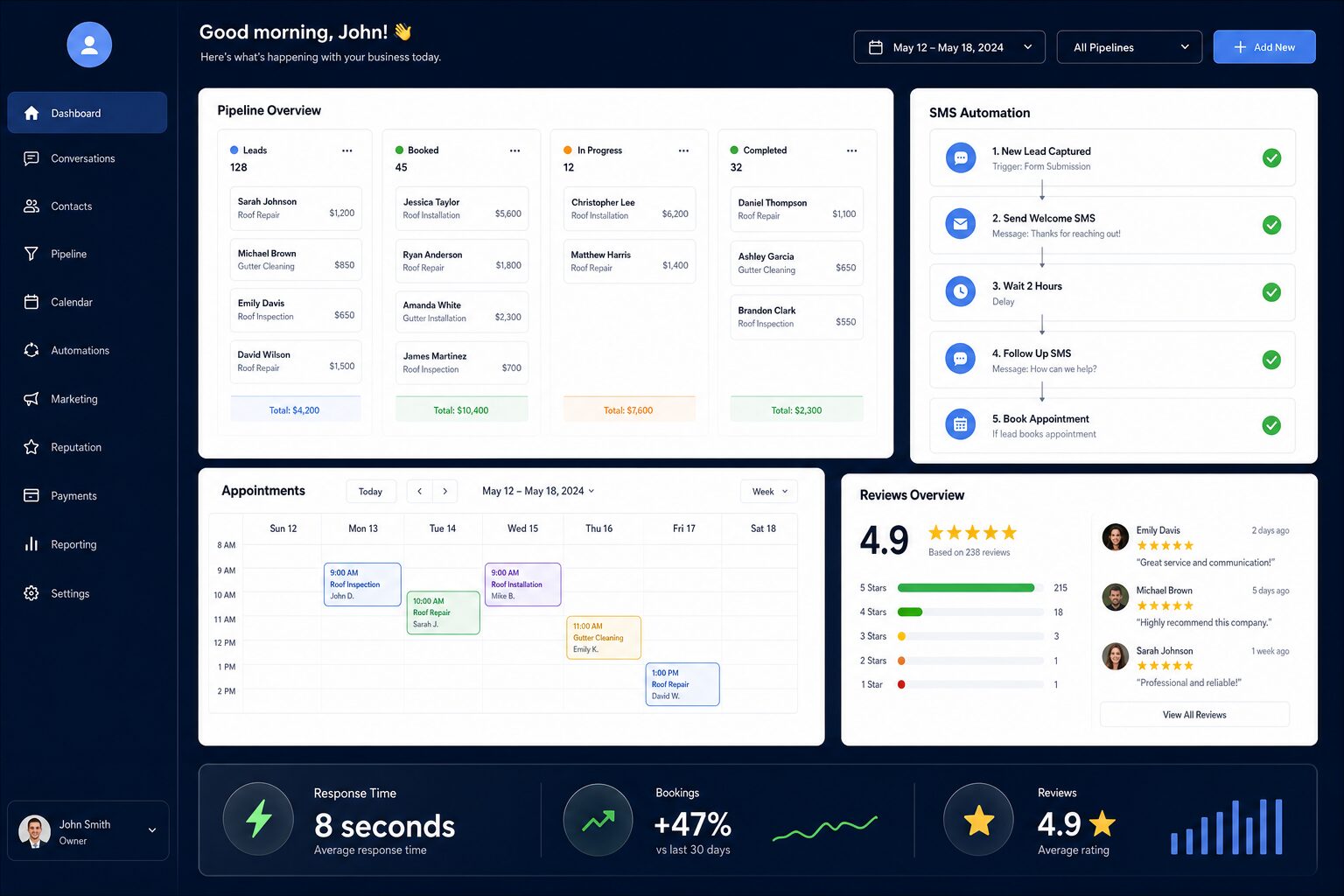
An all in one CRM consolidates your pipeline management, marketing automation, appointment booking, reputation management, and communications into a single platform — eliminating the fragmented tech stack that costs service businesses leads, time, and revenue every day. Automated Sales Machine delivers an all in one CRM purpose-built for service businesses, replacing five to ten disconnected tools with one unified system that works on autopilot. Ready to replace your entire stack? Book a free ASM demo and see the platform in action.
What Is an All in One CRM?
An all in one CRM is a unified platform that combines customer relationship management with the full operational stack a service business needs to attract, convert, and retain clients. Unlike traditional CRM software that manages contacts and pipelines in isolation, an all in one CRM integrates lead capture, marketing automation, appointment booking, SMS and email communication, reputation management, and performance analytics under one roof.
The distinction matters. A standard CRM tracks contacts and deals. An all in one CRM acts on them — firing follow-up sequences, booking appointments, requesting reviews, and routing incoming communications automatically. The system does not wait for a sales rep to take action. It executes the workflow the moment a trigger fires.
For service businesses — dental practices, fitness studios, real estate teams, HVAC companies, med spas, and home services — the all in one CRM model solves a specific, expensive problem: the fragmented tech stack. The average service business manages five or more separate tools to handle what an all in one CRM delivers natively. That fragmentation creates data gaps, manual handoffs, missed follow-ups, and invisible revenue leaks.
The All in One CRM vs. Point Solutions
Traditional point solutions force you to build a stack: one tool for email, another for SMS, a third for booking, a fourth for reviews, a fifth for pipeline tracking. Each integration introduces friction, each tool requires its own subscription, and each handoff creates a gap where leads fall through.
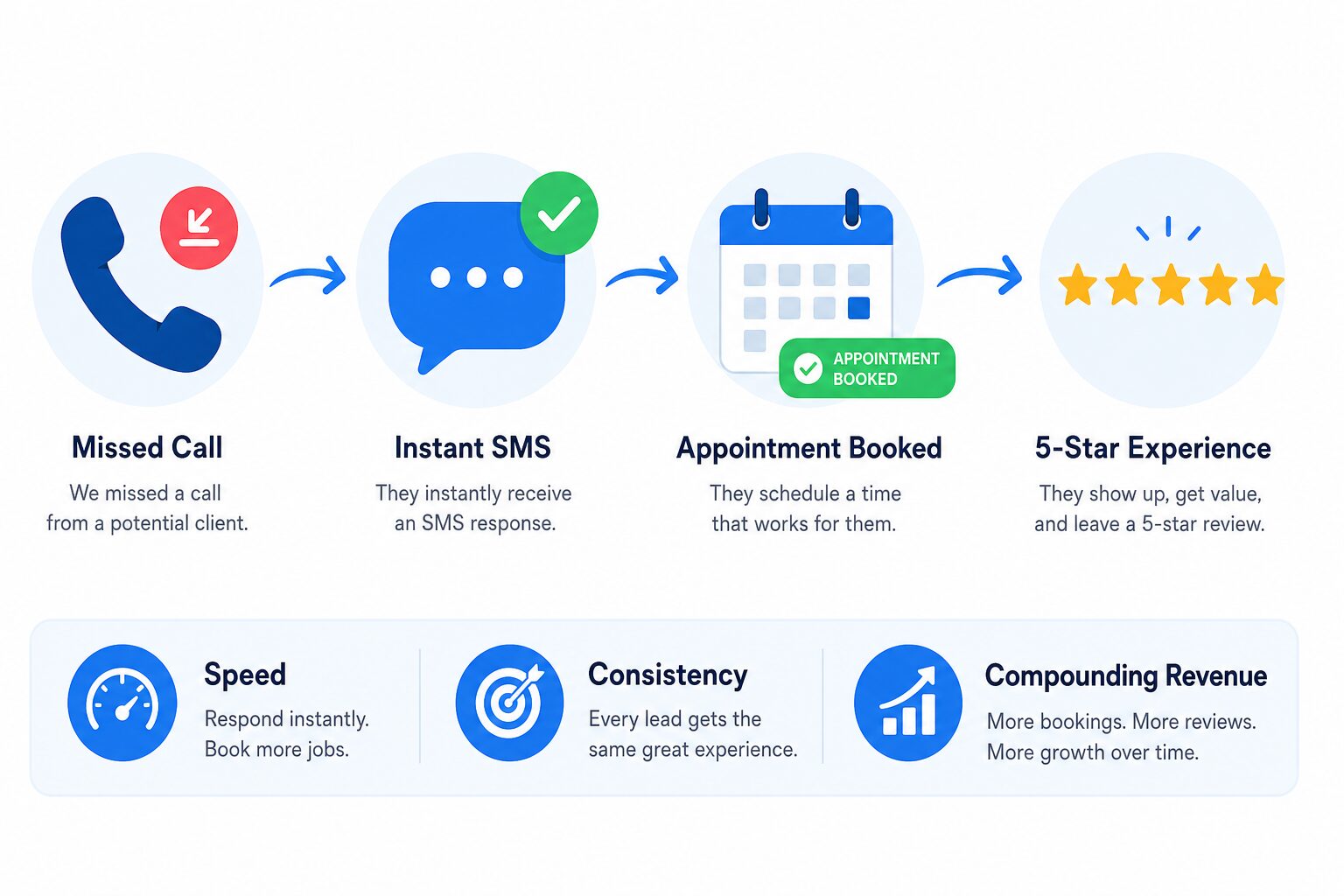
An all in one CRM eliminates every one of those gaps. The pipeline, the automation engine, the inbox, the booking calendar, and the reputation engine all operate on the same contact record. When a lead calls and doesn’t reach you, the all in one CRM fires an immediate text-back. When an appointment is booked, it triggers a pre-visit sequence. When the job is complete, it sends a review request automatically.
That is the operational difference between an all in one CRM and a conventional point-solution stack: the former runs as a single coordinated system. The latter requires a human to connect the dots at every step.
Why Fragmented Tools Cost Service Businesses Real Revenue
The cost of a fragmented tech stack is not abstract. It shows up in the metrics that directly determine revenue: lead response time, conversion rate, appointment no-show rate, and review volume. Each one degrades when the tools responsible for driving it are disconnected.
According to Gartner, CRM systems generate an average return of $8.71 for every $1 invested — but that return depends entirely on adoption, automation depth, and system integration. A CRM that sits in isolation, disconnected from your booking calendar and communication tools, cannot generate that return. It becomes a contact database, not a revenue engine.
Research from Salesforce’s State of Sales report found that high-performing sales teams are 2.8 times more likely to use AI-powered CRM tools than underperformers. The implication is direct: the platform itself — not just the process — determines sales outcomes. An all in one CRM with native automation closes that performance gap at the infrastructure level.
According to McKinsey & Company, 71% of consumers expect personalized interactions with businesses — and 76% report frustration when those interactions are generic. A fragmented stack cannot deliver personalization at scale. An all in one CRM can, because every action the system takes is informed by a complete, unified contact record.
The hidden cost of fragmentation compounds over time. Every missed call that doesn’t trigger an automatic text-back is a lead that may never re-engage. Every appointment with no automated reminder sequence has a statistically higher no-show rate. Every completed service delivery without an automated review request means fewer Google ratings this month. An all in one CRM converts those passive missed opportunities into automated revenue events.
Core All in One CRM Features That Drive Measurable Results
The all in one CRM model is only as powerful as the features it natively integrates. The following components are what separate an enterprise-grade all in one CRM platform from a basic contact manager with bolt-on add-ons. Automated Sales Machine delivers all of these natively — no third-party integrations required.
Missed Call Text-Back
Every missed call is a warm lead. The all in one CRM fires an SMS to the missed caller within seconds of the call dropping — before they dial a competitor. This single automation recovers leads that a manual follow-up process would lose. For HVAC companies, plumbers, and home services operators who miss calls during jobs, missed call text-back is the highest-ROI feature in the entire all in one CRM stack.
AI Appointment Booking Bot
The all in one CRM’s AI booking bot handles inbound lead conversations 24 hours a day, seven days a week. When a prospect submits a form, sends a DM, or responds to a campaign, the bot qualifies them, presents available time slots, and books the appointment directly into the calendar — without a human in the loop. For dental practices, fitness studios, med spas, and coaching businesses, this automation alone eliminates a full-time front desk function. Explore the full AI capabilities available through ASM’s AI feature suite.
Automated Review Requests
The all in one CRM triggers review requests via SMS and email immediately after a service is delivered. The timing is automated, the message is personalized, and the request goes out at the moment when customer satisfaction is highest. Businesses running automated review sequences generate three to five times more monthly review volume than those relying on manual requests. More reviews mean higher Google ratings, stronger local SEO, and more inbound leads — all powered by the all in one CRM running in the background.
Multi-Step Follow-Up Sequences
The all in one CRM builds multi-channel, trigger-based follow-up sequences that execute the same workflow for every contact, every time — without manual intervention. A lead that books a consultation receives a confirmation email, a 24-hour reminder SMS, a morning-of reminder, and a post-appointment follow-up. A lead that does not book receives a re-engagement sequence at programmed intervals. The all in one CRM eliminates the human dependency that makes manual follow-up inconsistent.
Unified Inbox
Every inbound communication — SMS, email, Facebook Messenger, Instagram DM, Google Business Messages — arrives in a single unified inbox inside the all in one CRM. No switching between apps. No missed messages buried in a separate channel. Every conversation is visible, traceable, and assigned to the right contact record automatically. For multi-location businesses and agencies managing multiple client accounts, the unified inbox delivers operational control that no point-solution combination can match.
Pipeline and Opportunity Management
The all in one CRM’s visual pipeline tracks every active lead from initial contact through close. Stage changes trigger automated actions — a lead moving to “consultation booked” fires a preparation email; a lead moving to “proposal sent” starts a follow-up sequence. The all in one CRM doesn’t just track where deals are. It acts on where they are. See the complete feature set on the ASM all-features page.
How All in One CRM Automation Works in Practice
Understanding the all in one CRM feature list is straightforward. Seeing how those features work together in a real service business workflow is where the ROI becomes tangible.
Consider a dental practice. A patient’s appointment ends. The all in one CRM automatically fires a thank-you text within the hour and appends a Google review request link. Three days later, if no review has been posted, the all in one CRM sends a follow-up email. Simultaneously, the system checks whether the patient has scheduled their next appointment. If not, it fires a re-booking sequence at 30, 60, and 90 days. The all in one CRM executes this entire workflow for every single patient — no front desk action required.
Consider a real estate team. An inbound lead comes through the website contact form at 11 PM on a Saturday. The all in one CRM’s AI bot responds within seconds, qualifies the lead with a structured conversation, and books a Monday morning showing consultation directly into the agent’s calendar. By Monday morning, the agent walks into a confirmed appointment — with a lead that would have gone cold if the response had waited until business hours.
Consider an HVAC company. A technician misses a call during a service job. The all in one CRM fires an immediate text-back: “Sorry we missed you — we can get someone out to you today. What’s the best time?” The caller responds, the all in one CRM books the appointment, and the job is scheduled before the technician finishes the current call. The missed call became a booked job because the all in one CRM closed the response-time gap automatically.
These are not hypothetical use cases. They are the default behaviors of an all in one CRM with automation configured correctly. The system runs the workflows. The business collects the revenue.
Measuring All in One CRM ROI: The 30-60-90 Day Framework
Every all in one CRM implementation produces measurable results. The question is which metrics to track and at what intervals. The following 30-60-90 day framework gives service businesses a structured way to quantify the ROI of their all in one CRM investment.
Day 1 to 30: Speed and Response Metrics
In the first 30 days after activating an all in one CRM, the most immediate changes show up in lead response time and first-contact conversion rate. Track these two numbers before and after activation. For most service businesses, average lead response time drops from hours to seconds. First-contact conversion — the percentage of inbound leads that book an appointment on first contact — increases when AI booking automation handles the response.
Also track call abandonment rate during this window. The missed call text-back feature converts some percentage of calls that previously went unanswered into booked appointments. That conversion rate is a direct, calculable dollar figure tied to the all in one CRM activation.
Day 31 to 60: Retention and Consistency Metrics
In the second 30-day window, shift your all in one CRM measurement focus to appointment no-show rate and re-booking rate. Automated reminder sequences reduce no-shows. Automated re-booking campaigns convert past clients into repeat revenue. Both of these metrics reflect the all in one CRM’s ability to drive consistency — executing the same workflow for every contact regardless of staff capacity.
Reputation metrics become measurable in this window as well. Track monthly review volume and average Google star rating. Businesses running automated review request sequences consistently see these numbers improve within the first 60 days of all in one CRM activation.
Day 61 to 90: Revenue and Compounding Metrics
By day 90, the all in one CRM’s compounding effects are visible in revenue metrics. Lead-to-appointment conversion rate reflects the cumulative impact of faster response times and consistent follow-up. Average transaction value reflects upsell sequences running inside the all in one CRM. Customer lifetime value reflects the retention improvements driven by automated re-engagement campaigns.
The 90-day measurement snapshot is also when the all in one CRM’s organic search impact begins to appear. The review volume generated in days one through sixty starts compounding into Google ranking improvements — particularly for local service businesses where review quantity and recency are direct ranking signals.

Industry-Specific All in One CRM Applications
The all in one CRM model is not a generic business tool. Its highest-value applications are specific to the operational challenges of individual service verticals. The following breakdowns identify which all in one CRM features deliver the most impact in each industry.
Dental Practices
For dental practices, the all in one CRM’s highest-value features are AI appointment booking and automated review requests. Front desk capacity is the binding constraint for most dental offices. The all in one CRM’s booking bot handles inbound appointment requests outside of business hours, reduces front desk call volume, and captures leads that arrive via web form or SMS. Automated review requests after each completed appointment drive consistent Google review growth — the most critical local SEO factor for practices competing for “dentist near me” searches.
Fitness Studios and Gyms
The all in one CRM’s re-engagement and retention sequences are the core value driver for fitness businesses. Member churn is the industry’s primary revenue leak. The all in one CRM tracks membership status, fires win-back campaigns to inactive members, and runs automated check-in and milestone sequences to increase engagement and reduce cancellation probability. AI booking automation also eliminates friction for trial class bookings — converting social media traffic into booked slots without human intervention.
Real Estate Teams
Speed is the single most important variable in real estate lead conversion. An all in one CRM that responds to inbound inquiries in seconds — regardless of the time of day — captures buyers and sellers that manual follow-up processes lose. Multi-step nurture sequences keep leads engaged across weeks and months. The all in one CRM’s pipeline tracking gives team leads full visibility into every active opportunity, and automated follow-up sequences ensure no prospect goes cold due to inconsistent outreach.
HVAC and Home Services
Missed call text-back is the highest-ROI feature for HVAC, plumbing, electrical, and home services operators. These businesses miss a significant percentage of inbound calls during active jobs. Without an all in one CRM, those missed calls are lost leads. With an all in one CRM firing automated text-backs within seconds, a meaningful percentage of those callers convert to booked appointments before they dial a competitor. Seasonal campaign automation — pre-summer AC tune-up sequences, pre-winter furnace check campaigns — also generates consistent recurring revenue on autopilot.
Med Spas and Aesthetics Practices
Med spas operate in a high-consideration, high-value service environment where the all in one CRM’s consultation workflow automation drives the most ROI. The booking bot captures inquiry conversations and routes qualified leads to booked consultations. Post-treatment follow-up sequences maintain client relationships and generate repeat bookings. Review automation builds the social proof volume that drives new client acquisition for aesthetic services — where Google ratings and before/after testimonials are primary trust signals.
All in One CRM Buyers Guide: Matching Features to Your Vertical
Evaluating an all in one CRM requires matching the platform’s feature depth to the specific operational challenges of your service vertical. The following decision framework helps service businesses identify which all in one CRM capabilities should be non-negotiable in their evaluation.
Must-Have All in One CRM Features by Vertical
HVAC, plumbing, home services, real estate: Missed call text-back is a must-have, not a nice-to-have. These businesses operate in environments where inbound calls arrive unpredictably during active work. An all in one CRM without automatic missed call response is a lead generation platform with a permanent leak.
Dental, med spa, fitness, coaching: AI appointment booking automation is the core requirement. If the all in one CRM cannot handle inbound booking conversations and add appointments to the calendar without human intervention, it is not meeting the full-stack definition. Confirm that the booking automation handles both the conversational lead capture and the calendar integration natively.
Any local service business: Automated review generation is a non-negotiable feature of a legitimate all in one CRM. Google ratings directly influence local SEO rankings and conversion rates on the Google Business Profile. An all in one CRM that does not automate review requests is leaving compounding organic traffic on the table every week.
Multi-channel businesses and agencies: Unified inbox is critical for businesses managing inbound from SMS, email, social DMs, and Google Business Messages simultaneously. An all in one CRM without a unified inbox forces staff back into the multi-platform context-switching that the all in one CRM was supposed to eliminate.
What to Verify Before Committing to an All in One CRM
Before selecting an all in one CRM platform, confirm these five capabilities directly in the product demo — not the marketing materials:
First, confirm that the all in one CRM’s automation builder supports multi-step, conditional sequences — not just simple autoresponders. A real all in one CRM executes different workflow paths based on contact behavior, not just time delays.
Second, confirm that the all in one CRM unifies all inbound channels in a single inbox. Ask the demo representative to show SMS, email, and a social DM arriving in the same view simultaneously.
Third, confirm that the all in one CRM’s reporting connects automation activity to revenue outcomes. Vanity metrics — email open rates, SMS delivery rates — are not sufficient. The all in one CRM should surface lead-to-appointment conversion, appointment-to-close rate, and review generation volume as native reports.
Fourth, confirm the all in one CRM’s onboarding and support model. Platform depth is irrelevant if the implementation support is inadequate. An all in one CRM that never gets fully configured does not generate results.
Fifth, confirm integration requirements. If your business runs critical workflows in external tools, confirm whether the all in one CRM offers native integration or requires a paid middleware layer. Best-in-class all in one CRM platforms minimize third-party dependencies — the point is consolidation, not expansion.
Frequently Asked Questions
What does an all in one CRM actually replace?
An all in one CRM typically replaces four to eight separate tools: a standalone CRM, an email marketing platform, an SMS tool, a scheduling or booking app, a review management tool, a live chat or inbox aggregator, and sometimes a landing page builder or funnel tool. The all in one CRM handles all of these functions natively, eliminating the subscription costs and integration complexity of running each tool separately.
How long does it take to see results from an all in one CRM?
Most service businesses see measurable results from an all in one CRM within the first 30 days of activation — specifically in lead response time and missed-call recovery rate. Review volume improvements typically appear within 60 days. Revenue-level compounding — higher conversion rates, lower no-show rates, increased repeat bookings — is measurable at the 90-day mark.
Is an all in one CRM better than using best-in-class individual tools?
For service businesses, yes — and the reason is operational cohesion, not individual feature comparison. Each individual tool in a fragmented stack may outperform the equivalent feature in an all in one CRM in isolation. But the all in one CRM wins because its features operate on the same data, trigger each other automatically, and require zero manual integration to function as a system. The integration overhead, data gaps, and context-switching cost of a best-in-class stack exceed the feature parity advantage for most service business operations.
How much does an all in one CRM cost compared to a fragmented stack?
A typical service business running a fragmented stack — separate CRM, email platform, SMS tool, booking software, review management tool — pays $300 to $600 per month across subscriptions. An all in one CRM consolidates all of that functionality at a lower total cost, while eliminating the setup and maintenance overhead of managing multiple vendor relationships and integrations. The cost advantage of an all in one CRM compounds as tool count grows.
Does an all in one CRM work for small service businesses with no marketing team?
An all in one CRM is most valuable for small service businesses without dedicated marketing staff — because it automates the workflows that would otherwise require headcount. The missed call text-back, AI booking bot, and automated review requests all execute without a marketing team managing them. The all in one CRM acts as the marketing and sales operations layer for businesses that cannot afford to hire one.
Ready to Replace Your Entire Stack? Start Getting All in One CRM Results Today
The all in one CRM model delivers one outcome above everything else: it stops the revenue leak. Every missed call that goes unanswered, every lead that falls through a manual follow-up process, every past client who never received a re-booking sequence — all of that is recoverable with an all in one CRM running on autopilot.
Automated Sales Machine is the all in one CRM built specifically for service businesses. Every feature in the platform — missed call text-back, AI appointment booking, automated review requests, multi-step follow-up sequences, unified inbox, visual pipeline — is designed for the operational reality of dental practices, fitness studios, real estate teams, HVAC companies, med spas, and home services operators who need results, not complexity.
See how Automated Sales Machine delivers measurable results for service businesses — book your free demo today and watch the all in one CRM work in real time.