
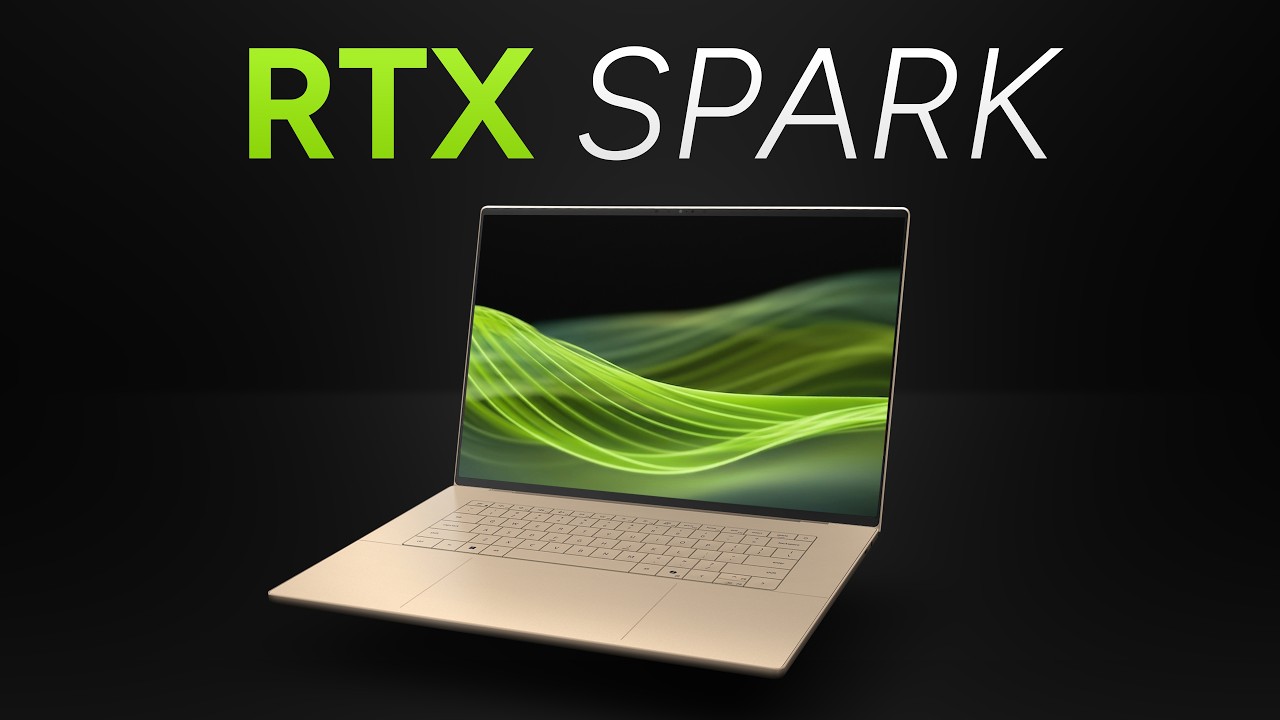

TL;DR: Local AI agents — software that runs large language models entirely on-device without cloud connectivity — are rapidly becoming the default architecture for modern AI deployments. In 2026, 42% or more of developers now run LLMs locally, driven by purpose-built hardware from Apple, Qualcomm, and NVIDIA that delivers 4–13x faster response times than cloud AI. For businesses using sales and marketing automation tools, this shift means faster lead response, lower operating costs, and tighter control over sensitive customer data.
Are local AI agents the future of computing? The evidence in 2026 says yes — and this video makes that case in detail. The coming wave of on-device LLMs is no longer a developer experiment. Whether you run a dental practice, a fitness studio, or a marketing agency, the hardware revolution happening inside laptops and phones right now has direct implications for how you automate sales, marketing, and customer engagement.
Watch: Are Local AI Agents the Future? Inside the Coming Wave of On-Device LLMs
What Are Local AI Agents — and Why Are They Suddenly Everywhere?
Local AI agents are autonomous software programs that run large language model inference directly on a device — a laptop, a phone, or a dedicated edge server — without routing requests to a cloud data center. The compute happens where the data lives, not somewhere in AWS or Google Cloud.
Three years ago, running a meaningful LLM locally was a weekend project for GPU enthusiasts. That era is over. According to RunLocalAI’s 2026 State of Local AI report, three platforms now dominate for local inference at production quality: NVIDIA/CUDA, Apple/MLX, and AMD/ROCm. A used RTX 3090 runs Llama 3.3 70B at usable speeds. Apple Silicon ships as a serious inference platform straight out of the box.
The numbers are decisive. Zylos Research reports that 42% or more of developers now run LLMs locally — up from a small minority just 18 months ago. The drivers are consistent across every survey: privacy, cost, and latency.
The Hardware Making It Possible: Apple, Qualcomm, and NVIDIA Lead the Charge
The local AI revolution is inseparable from a hardware revolution. On-device inference used to require a purpose-built gaming rig. In 2026, it runs on the chip in your pocket or the laptop on your desk.
The benchmarks are striking:
- Apple M4 chip: Runs a full 7B reasoning model at 60 tokens per second — faster than you can read the output.
- Apple M5 Pro/Max: Delivers 307–614 GB/s of memory bandwidth — competitive with cloud inference endpoints for many real-world workloads.
- Apple Neural Engine (A18 Pro / M4): 38 TOPS of dedicated neural processing built into consumer hardware at no premium.
- Qualcomm Snapdragon X Elite: 45 TOPS NPU shipped in Copilot+ PCs with a mature developer SDK.
- Modern smartphone NPUs: 40–50+ TOPS across flagship devices — real-time, privacy-preserving AI without a data center in the loop.
The result: running a full AI agent loop that required a cloud API call in 2024 now happens in milliseconds on your laptop. As NerdChips documents, the race for on-device AI supremacy is reshaping every hardware roadmap across the industry. Apple is leveraging its Neural Engine as a user-facing selling point. Qualcomm is bringing phone-class efficiency to PCs. NVIDIA is pushing inference hardware from data centers to consumer desktops.
Privacy and Speed: The Two Biggest Advantages of Running AI Locally
Two advantages dominate every serious analysis of on-device AI for business use: latency and data sovereignty. Both have direct consequences for how you run automation workflows.
Latency: The Hidden Cost of Every Cloud API Call
Every call to a cloud LLM carries a tax that’s easy to underestimate: network round-trip time. Analysis from DEV Community puts the cloud LLM latency penalty at 150–400ms of pure network overhead — before a single token is generated. Across an agentic workflow with five or ten tool calls, that’s seconds of dead wait time per customer interaction.
Local inference eliminates that tax entirely. Digital Applied’s 2026 benchmarks show on-device time-to-first-token running 4–13x faster than cloud LLM endpoints across comparable tasks. For a sales automation workflow that depends on instant lead response, that speed difference translates directly to conversion rates.
Data Sovereignty: What Stays Local, Stays Private
For businesses handling customer data — leads, CRM records, appointment histories, purchase behavior — the privacy case for local AI is direct. IBM Community’s compliance analysis frames the issue plainly: cloud-based LLMs operate within an ecosystem organizations “cannot fully audit” and are “not positioned to govern.” Local LLMs eliminate that exposure — inference stays on the device and customer data never traverses external networks.
For regulated verticals — dental practices, med spas, health services — this is not an abstraction. It is a compliance imperative that local AI agents address by design.
What This Means for Sales and Marketing Automation
The on-device AI shift has a concrete implication for business owners running CRM and marketing automation: the cost and latency structure of AI-powered workflows is about to change fundamentally.
Today, most AI-powered sales automation tools route their intelligence through cloud APIs — meaning per-token costs on every lead follow-up, every AI-generated email draft, every automated pipeline stage trigger. As Zylos Research confirms, roughly 70–80% of AI agent queries do not require frontier cloud models at all. They can be handled locally by smaller models without sacrificing output quality — meaning the majority of your AI automation costs could eventually be dramatically reduced.
The winning architecture in this environment is hybrid: run routine automation tasks locally for speed and cost efficiency, escalate complex reasoning to cloud models when truly needed. The Deep View’s analysis makes this clear: “Neither pure cloud nor pure local wins in every scenario.”
Automated Sales Machine is built for exactly this environment. As an all-in-one AI CRM and business automation platform, Automated Sales Machine consolidates CRM workflows, AI appointment booking, missed-call text-back, voice AI, and sales pipeline management — eliminating the tool sprawl that creates both technical debt and runaway AI API costs. Explore ASM’s AI automation tools to see what’s powering real business workflows right now.
The businesses that win the next phase of AI adoption will not necessarily be those with the biggest cloud budgets. They will have the best automation infrastructure — flexible enough to route tasks intelligently as the local AI wave arrives. See the full Automated Sales Machine platform to understand what genuine consolidation looks like in practice.
Key Takeaways
- Local AI is production-ready in 2026: Platforms like Apple Silicon, NVIDIA/CUDA, and AMD/ROCm now support serious LLM inference without cloud dependencies — this is no longer experimental.
- Consumer hardware crossed the threshold: Apple M4 runs 7B models at 60 tokens/second; Qualcomm Snapdragon X Elite hits 45 TOPS — both on devices your team already uses daily.
- Speed advantage is measurable: On-device AI delivers 4–13x faster time-to-first-token versus cloud, eliminating the 150–400ms network latency tax per API call.
- Most agent queries do not need the cloud: 70–80% of AI agent tasks can run on smaller local models without quality loss — a direct path to lower AI operating costs for routine automation.
- Privacy is structural: On-device inference keeps customer data off external networks — non-negotiable for dental, med spa, healthcare, and other compliance-adjacent verticals.
- Hybrid architecture wins: The smartest deployments route routine tasks locally and escalate complex reasoning to cloud models — not an all-or-nothing choice.
- The platform layer matters more, not less: As AI routing grows more sophisticated, all-in-one CRM and automation platforms that consolidate tooling deliver more value — not less.
Video Transcript
A full auto-generated transcript for this video is not currently available in this post. The video explores the hardware ecosystem enabling local AI inference (Apple Silicon, Qualcomm, NVIDIA), the privacy and latency case for on-device LLMs, and what the coming wave of local AI agents means for businesses running sales and marketing automation tools. Watch the complete discussion in the video player above.
Ready to put AI to work in your sales and marketing stack today? Watch the Automated Sales Machine demo or start your free trial — no hardware upgrade required.