
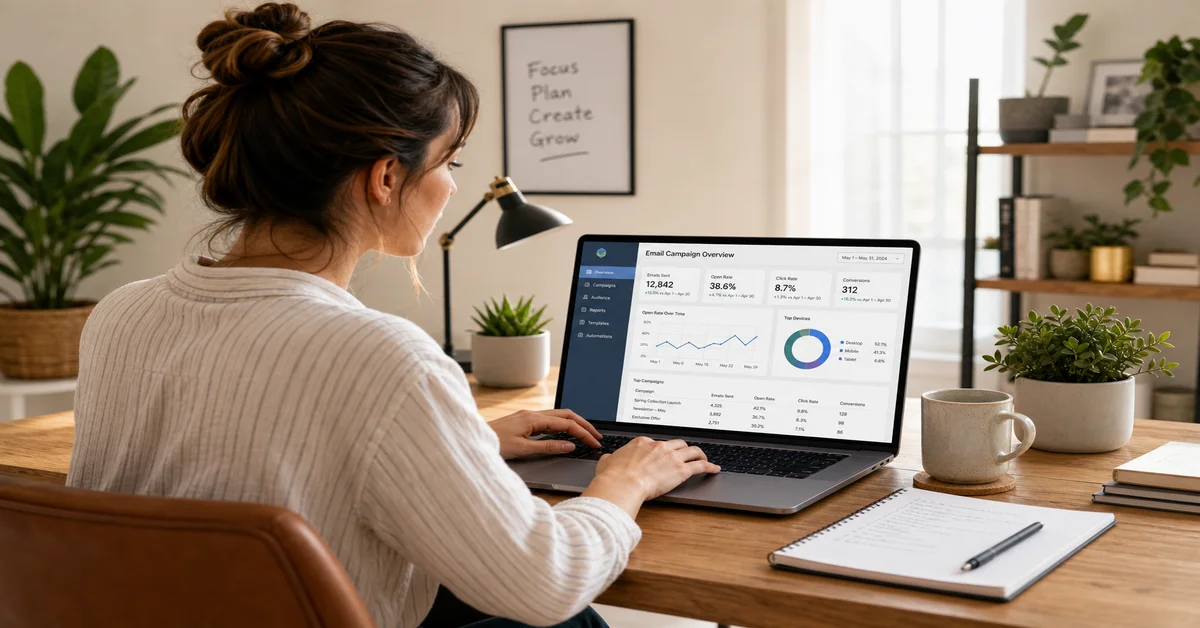

Email marketing examples from top-performing brands share a common blueprint: clear value proposition, sharp subject line, single conversion goal, and automated delivery triggered by subscriber behavior. For small and mid-sized businesses, these aren’t just inspiration — they’re a replicable playbook. The businesses winning with email today aren’t sending newsletters and hoping for the best; they’re running sequenced, segmented campaigns that generate predictable revenue on autopilot. Ready to build campaigns like these? [See how Automated Sales Machine automates your email sequences → automatedsalesmachine.com/demo].
What Makes Email Marketing Examples Work? {#what-works}
Not all email marketing examples are created equal. The difference between a campaign that converts at 3% and one that converts at 0.3% usually comes down to three structural decisions made before a single word is written.
The ROI Case Is Non-Negotiable
According to HubSpot Research, email marketing delivers an average ROI of $36 for every $1 spent — making it the highest-returning digital marketing channel by a significant margin. That figure climbs higher for businesses running automated sequences rather than one-off blasts, because automation captures intent signals (a site visit, an abandoned cart, a content download) and responds within minutes.
The implication: the best email marketing examples aren’t just well-crafted — they’re well-timed.
The Three Structural Pillars
Every high-performing email marketing example shares three structural traits regardless of industry or audience:
1. One job per email. The best email marketing examples never ask subscribers to do two things at once. One CTA, one message, one action. Every additional ask cuts conversion rates in half.
2. Behavior-triggered delivery. Static schedules (“send every Tuesday at 10am”) underperform behavioral triggers by a factor of 3x. Per Salesforce’s State of Marketing report, triggered email campaigns drive 3x higher revenue per email than scheduled broadcasts.
3. Segmentation over broadcast. A blanket email to your full list is the lowest-leverage move in your marketing stack. Per Campaign Monitor’s email marketing research, segmented campaigns generate 760% more revenue than non-segmented campaigns. The email marketing examples that dominate SERPs and case study lists are almost always the segmented, personalized ones.
The Key Metric Framework
Before you model any email marketing example, establish which metric it’s optimizing:
- Open Rate: A subject line and sender name problem. Industry average for SMBs sits at 21.33% per Mailchimp’s Email Marketing Benchmarks.
- Click-Through Rate (CTR): A preview text + body copy + CTA problem. Industry average: 2.6%.
- Conversion Rate: A landing page problem as much as an email problem.
- Revenue Per Email (RPE): The only metric that actually pays the bills.
The email marketing examples in this guide are mapped to specific metrics so you know exactly what problem each solves.
Email Marketing Examples by Campaign Type {#by-type}
Welcome Email Examples
The welcome email is the most opened email you will ever send — open rates routinely hit 50-60%, often double the average for any other email in your sequence. Most businesses waste this prime real estate with a generic “Thanks for signing up!” message.
The Anatomy of a High-Converting Welcome Email:
Subject line: “Here’s exactly what happens next” or “Welcome — start here”
Opening line: Immediate value delivery or expectation setting. Never a “We’re so excited you’re here!”
Body: One clear path. Tell them what you do, who you do it for, and what their next step is.
CTA: A single, low-friction action (book a call, start a free trial, watch a 90-second video).
Real-World Pattern: SaaS companies that A/B test welcome emails consistently find that “utility-first” messages (here’s what you can do right now) outperform “brand-first” messages (here’s our story) by 30-40% on CTR.
Best for: New subscribers, free trial signups, lead magnet downloads.
Promotional Email Examples
Promotional email marketing examples live and die on subject lines and urgency framing. The email marketing examples with highest conversion rates for promotional campaigns share these subject line patterns:
- Scarcity: “Only 12 spots left at this price”
- Specificity: “Your 30% discount expires Thursday at midnight”
- Personalization: “[First Name], your April exclusive is inside”
- Curiosity gap: “We don’t usually do this…”
Anatomy:
– Subject + preheader: 40% of the conversion work happens before the email is opened
– Hero image: shows the product or outcome, not the company logo
– Headline: restate the offer in the first 10 words of the body
– Social proof: one testimonial or data point that validates the offer
– CTA button: action-oriented language (“Claim My Discount” not “Click Here”)
Best for: Product launches, seasonal campaigns, flash sales, client reactivation.

Abandoned Cart Email Examples
Abandoned cart emails are the single highest-ROI email marketing examples for any business that collects payments online — or takes appointments, requests for quotes, or demo signups. The “cart” doesn’t have to be a shopping cart. An incomplete booking, a paused onboarding flow, or an unscheduled consultation qualifies.
Three-Email Abandoned Cart Sequence:
| Timing | Subject | Goal | |
|---|---|---|---|
| Email 1 | 1 hour after abandonment | “You left something behind” | Remind + remove friction |
| Email 2 | 24 hours | “Still thinking it over? Here’s why others said yes” | Social proof + overcome objection |
| Email 3 | 72 hours | “Last chance + [incentive]” | Close with offer |
Per Klaviyo’s email benchmarks, abandoned cart sequences average $5.81 revenue per recipient — the highest RPE of any automated email type.
Best for: eCommerce, service businesses with online booking, SaaS with incomplete trials.
Re-engagement Email Examples
The average email list loses 22.5% of its subscribers to disengagement every year. Most businesses ignore this and keep blasting to dead weight, which destroys sender reputation and deliverability over time.
Re-engagement email marketing examples have one goal: identify who still wants to be on your list and purge who doesn’t — cleanly and deliberately.
The 3-Step Re-engagement Flow:
- “We miss you” email: Acknowledge the silence, remind them why they subscribed, offer a simple way back (new offer, updated content, “click to stay subscribed” link).
- “Last chance” email: Direct subject line — “This is it, [First Name].” One-sentence body. One link to confirm subscription.
- Sunset email: Automatic unsubscribe if no engagement. No guilt, no drama.
Best re-engagement subject lines:
– “Is this goodbye?” (Open rates regularly exceed 30%)
– “We’ve missed you — here’s what you’ve been missing”
– “Can we be honest with you?”
Best for: Any business with a list older than 6 months, pre-reactivation campaigns.
Newsletter Email Examples
Newsletters are the most commonly sent and most commonly underperforming email marketing format. Most newsletters fail because they’re built around what the company wants to say, not what the subscriber wants to read.
The email marketing examples that make newsletters work:
- Utility-first structure: Each issue solves a specific problem or answers a specific question for your audience.
- Consistent format: Readers should be able to scan and extract value in under 90 seconds.
- Clear editorial voice: The best newsletters sound like one person, not a committee.
- Embedded offers (not standalone pitches): Product mentions woven into educational content outperform dedicated promo sections 3:1 on CTR.
Segmenting newsletter delivery by engagement tier (highly engaged vs. occasional openers) dramatically improves deliverability and open rates across both segments.
Email Marketing Examples by Industry {#by-industry}
Real Estate Email Marketing Examples
The real estate purchase cycle spans 6-18 months. Email marketing examples built for real estate must sustain interest and trust across a long consideration window, not just drive an immediate click.
High-Performing Real Estate Email Sequence:
- Week 1: Market update with neighborhood-specific data (personalized by buyer geography)
- Week 3: “Homes you might have missed” — new listings matching saved criteria
- Month 2: Buyer’s guide or seller’s timeline resource — educational authority
- Month 3: Re-engagement check-in with a fresh CTA to book a call
Subject line best practice for real estate: include price range or neighborhood name when segmentation allows. “3 homes under $450k just listed in Riverside” dramatically outperforms generic “New listings this week.”
Home Services & Contractor Email Marketing Examples
For HVAC companies, plumbers, roofers, and landscapers, email marketing examples that work best are:
- Seasonal maintenance reminders: “Your fall HVAC tune-up window opens next week”
- Service anniversary emails: “It’s been 1 year since your last drain cleaning — time to schedule?”
- Review request sequences: 2-3 emails post-service asking for a Google review, with direct links
The highest-converting copy for home services is always specific: “Save $75 on your spring roof inspection (valid through May 31)” outperforms “Get a seasonal discount!” every time.
Med Spa & Fitness Email Marketing Examples
These industries have a unique challenge: high LTV clients who need consistent nurture to prevent churn, and high CAC on new client acquisition. Email marketing examples that work:
- Membership renewal reminders with usage summary (“You’ve used 6 of 8 visits this month — here’s how to maximize your membership”)
- New treatment / new class announcements to existing clients (social proof-heavy, with “Be first to try it” framing)
- Referral sequences triggered after positive experience events (post-5th-visit, post-positive-review)

Email Marketing Performance Benchmarks: How Your Campaigns Stack Up
Before modeling any email marketing examples, you need to know what “good” looks like. These industry benchmarks — drawn from aggregated SMB campaign data — give you the baseline against which every sequence in this guide should be measured.
Open Rate Benchmarks by Industry
Not all industries are created equal when it comes to email engagement. B2B service businesses typically outperform eCommerce on open rates because their lists are built on active relationships rather than one-time purchases.
| Industry | Average Open Rate | Above Average |
|---|---|---|
| Professional Services | 28-35% | >38% |
| Home Services | 22-28% | >32% |
| Real Estate | 25-30% | >35% |
| Health & Fitness | 20-26% | >30% |
| eCommerce | 15-20% | >25% |
If your open rates are consistently below industry average, the problem is almost always sender reputation (too many cold contacts on your list), subject line quality, or sending cadence (too frequently, or at the wrong time of day).
Click-Through Rate and Beyond
Open rates tell you whether your subject lines work. Click-through rates tell you whether your content and CTAs work. But the metric that actually matters — the one that determines whether your email marketing generates revenue — is revenue per recipient (RPR), also called revenue per email.
High-performing automated sequences in service industries routinely generate $3-12 RPR on reactivation campaigns and $0.50-2.00 RPR on nurture sequences. Promotional blasts to cold lists rarely exceed $0.10-0.30 RPR, which explains why broadcast marketing continues to underperform segmented automation by such a wide margin.
When auditing your email marketing examples and active campaigns, track RPR at the sequence level — not just the individual email level — because the cumulative effect of a 5-email welcome sequence often exceeds any single promotional blast by 3-5x.
Anatomy of High-Converting Email Marketing Examples {#anatomy}
Subject Lines That Get Opened
Subject line performance follows predictable patterns across the email marketing examples with the highest open rates. These formulas consistently outperform generic alternatives:
The Specificity Formula: Replace vague promises with numbers and named outcomes.
– ❌ “Tips to grow your business”
– ✅ “5 email sequences that book appointments automatically”
The Curiosity Gap: Withhold just enough information to compel the open.
– ❌ “Our new feature is live”
– ✅ “You’re going to want to see this”
The Personalization Hook: First-name personalization in subject lines boosts open rates by 26% per Campaign Monitor research, but only when the rest of the email delivers on the personalized premise.
Length rules: 6-10 word subject lines generate the highest open rates for SMB audiences. Mobile screens show approximately 30-40 characters — front-load the most important words.
Body Copy That Drives Clicks
The best email marketing examples share a copywriting structure called “Problem → Agitate → Solve” (PAS):
- Problem: Open with the reader’s pain, stated in their exact language. No preamble.
- Agitate: Expand on the consequence of not solving the problem. This is the emotional escalation.
- Solve: Introduce your solution as the natural resolution. One clear path.
Body copy length for SMB email marketing: 150-200 words is the performance sweet spot for promotional and transactional emails. Educational newsletters can run longer if value density is maintained throughout.
Formatting that increases CTR:
– Bullet points over paragraphs for multi-item content
– Bold on the single most important sentence in each section
– Whitespace between sections — dense walls of text kill mobile readability
– One hyperlinked CTA phrase in-line, plus one CTA button, pointing to the same destination
CTAs That Convert
The CTA (call-to-action) is where most email marketing examples lose the conversion they’ve already earned. Common mistakes:
- Vague language: “Click here” or “Learn more” tell the reader nothing about what happens next
- Multiple CTAs: Every additional CTA beyond one reduces conversion on the primary ask
- Button design: Color matters less than contrast — your CTA button must visually separate from the email background
High-converting CTA copy patterns:
– “Book My Free Demo” (possessive language increases CTR)
– “Start My Free Trial”
– “Get My [Resource Name]”
– “Reserve My Spot”
Notice the pattern: action verb + possessive pronoun + specific outcome. This structure drives 15-20% higher CTR than generic CTA text.
How Automated Sales Machine Powers These Email Marketing Examples {#automate}
Built-in Email Sequences You Can Deploy Immediately
Automated Sales Machine includes pre-built email sequences engineered on the exact email marketing examples in this guide — welcome sequences, abandoned lead follow-up, re-engagement campaigns, and post-service review requests — all available out of the box without touching a line of code.
The platform’s email builder gives you drag-and-drop sequence creation with behavioral triggers: someone visits your pricing page three times → trigger a follow-up sequence. A lead goes silent for 14 days → auto-send a re-engagement series. An appointment is completed → automatically send a review request 48 hours later.
This is how small service businesses compete with enterprise marketing departments: not by outspending them, but by out-automating them.
Smart Segmentation That Multiplies Every Email’s ROI
Static lists are the single biggest missed opportunity in small business email marketing. Automated Sales Machine automatically segments your contacts by:
- Lead source (which campaign or channel brought them in)
- Engagement tier (last open, last click, last purchase)
- Stage in the buying cycle (cold lead, warm prospect, active client, past client)
- Service history (what they’ve purchased, when they last bought, what they haven’t tried yet)
When each segment receives messaging built for exactly where they are in the relationship, open rates climb, unsubscribes fall, and revenue per email compounds over time.
[Start automating your email marketing today → automatedsalesmachine.com/start]
Common Mistakes Your Email Marketing Must Avoid {#mistakes}
Even the best-designed email marketing examples fail in execution. These are the patterns that destroy list health and kill campaigns:
1. Mailing a purchased list. This tanks your sender reputation, triggers spam filters, and can get your domain blacklisted. Grow your list organically — it takes longer but delivers 10x better performance.
2. Ignoring unsubscribe hygiene. Every subscriber who ignores your emails for 6+ months is actively damaging your deliverability. Regular list cleaning (removing or suppressing cold contacts) protects your sender score and improves open rates for everyone else.
3. Testing subject lines incorrectly. A/B tests require statistical significance. Testing 50 vs. 50 recipients is not a valid A/B test. You need minimum 1,000 per variant for most email tools to report meaningful results.
4. Sending from a no-reply address. No-reply addresses signal to inbox providers that your emails are transactional, not relational. They suppress deliverability. Send from a named address (team@, hello@, or a real person’s email).
5. Skipping mobile optimization. Over 60% of emails are opened on mobile devices. Every email marketing example in this guide is built to render perfectly on a 390px iPhone screen. Test every email on mobile before scheduling.
6. Building sequences without an exit condition. Every automated sequence needs a “stop rule” — if a contact converts (books an appointment, makes a purchase), they should exit the sequence immediately. Continuing to sell someone who already bought is a fast path to unsubscribes and damaged trust.
Start Building Email Campaigns That Actually Convert {#cta}
Ready to Stop Guessing and Start Automating?
The email marketing examples in this guide aren’t hypothetical — they’re the patterns used by thousands of service businesses, agencies, and local operators to generate consistent, predictable revenue from their email list every month.
The difference between businesses that send emails and businesses that scale with email comes down to infrastructure: the right platform, the right sequences, and the right triggers firing at the right moments.
Automated Sales Machine is built specifically for small businesses that need enterprise-level email automation without a six-figure tech budget. Pre-built sequences, behavioral triggers, smart segmentation, and a CRM that keeps your entire pipeline visible in one place.
See how Automated Sales Machine puts these email marketing examples to work for your business — book a free demo and get a full walk-through of the email automation suite, built around your specific industry and growth goals.