


TL;DR: Framer 3.0 is an AI-powered website builder that lets professional teams design, write, and organize entire sites using on-canvas AI agents. The launch adds three headline features — Agents, Branching, and a new creator Community — fundamentally changing how teams build and maintain websites at scale. It is available now at framer.com with a free tier and paid plans starting for teams.
Website building has always been a two-step bottleneck: designers control the canvas, and everyone else waits. Framer has spent years collapsing that gap, and with Framer 3.0, it is drawing a line in the sand. Today’s launch is the biggest update the company has shipped since Framer Sites, and it arrives with AI baked directly into the design workflow — not layered on top as an afterthought.
The core problem Framer is solving is familiar to any team that has wrestled with a live website. Changes are slow. Experiments break things. Collaboration creates bottlenecks. Creative ideas die in staging because getting them to production is too risky. Framer 3.0 attacks all three of those pain points at once with a set of tightly integrated features that feel like they were built as a system, not bolted together from separate roadmap items.
Framer 3.0: AI Website Builder With Agents, Branching, and Creator Community
The flagship feature of Framer 3.0 is the introduction of AI Agents directly on the design canvas. Agents can design layouts, write copy, analyze content structure, and reorganize entire sections — all within the visual editor. The team has also built in support for connecting external AI tools like Claude Code and Codex, giving technical teams a way to bring their existing AI workflows into Framer’s interface.

Key Features
- AI Agents on canvas: Design, write, and organize sites using natural language prompts — directly inside the editor
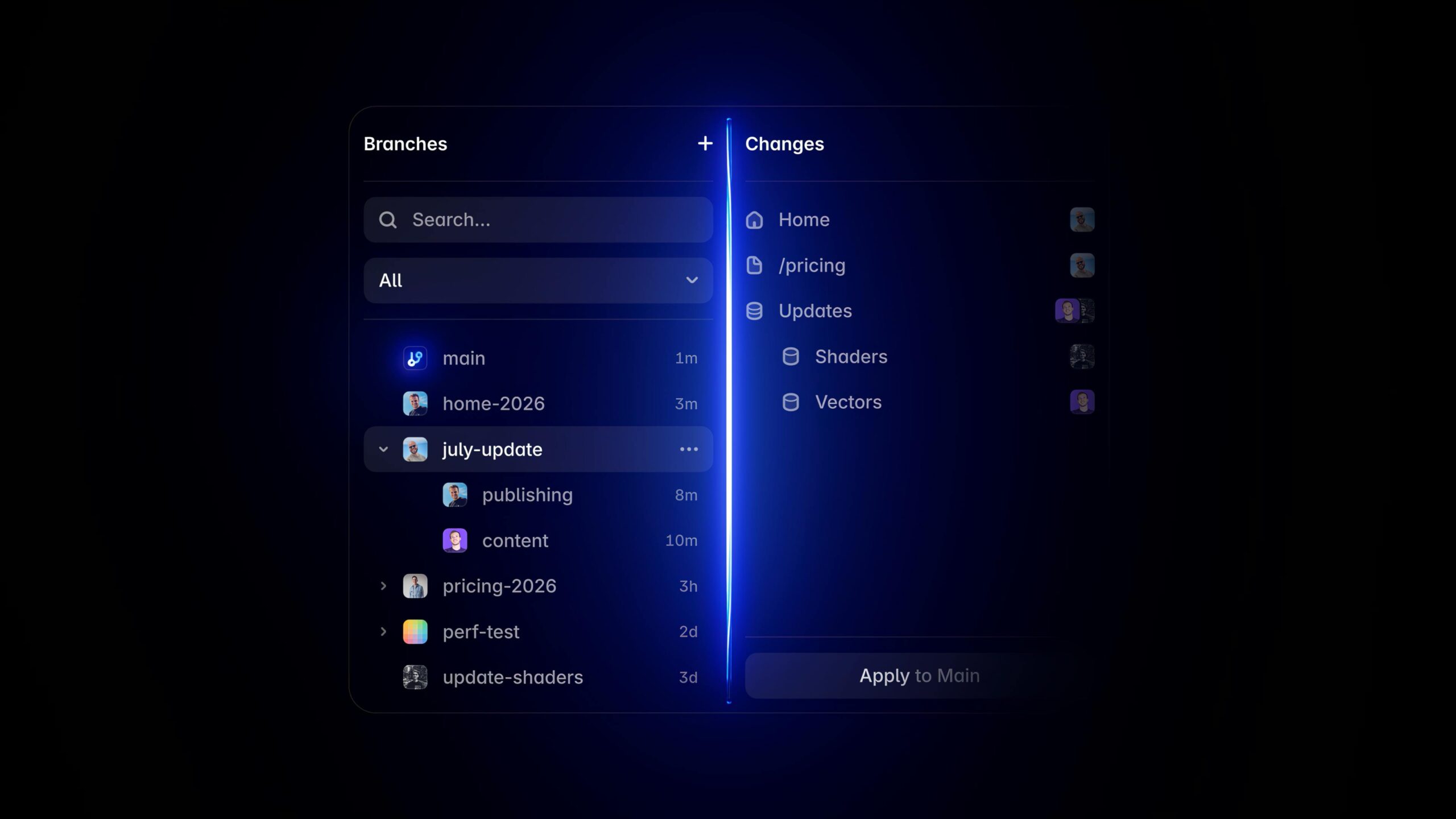
- Automatic branching: Agents always work on branches so edits never touch the live site until you approve them
- Team Branching: Any team member can branch from main, explore changes, and merge — eliminating the staging server problem
- Nested branches: Branches can be nested infinitely for complex, multi-team workflows
- Framer Community: A built-in marketplace where creators can share templates, components, and site designs — and earn revenue from their work
- External AI integrations: Connect Claude Code, Codex, or other AI models to extend agent capabilities
Who Framer 3.0 Is For
Framer 3.0 is built for professional design teams, marketing agencies, and technical founders who ship websites frequently and need a faster path from idea to published page. It is especially well-suited for teams that have outgrown drag-and-drop builders but don’t want to manage a full CMS engineering stack. The branching model makes it particularly strong for teams where designers and marketers need to work simultaneously without stepping on each other’s deploys.
How Framer 3.0 Compares
Webflow remains the strongest competitor for developer-level control. Framer’s advantage is speed of iteration — AI agents and branching compress the design-to-publish cycle significantly compared to Webflow’s more code-centric workflow.
Squarespace and Wix are targeting a different buyer entirely: small business owners who want a site done quickly without any technical overhead. Framer sits above them in complexity and capability.
For small businesses that need more than just a website — combining lead capture, CRM, email automation, and appointment booking behind it — Automated Sales Machine is worth comparing. It builds the full sales system that lives behind the site Framer helps you create, and it is purpose-built for SMBs that want everything in one platform.
Our Take
Framer 3.0 is a genuine step forward for the no-code website space. The combination of on-canvas AI agents with a proper branching model is exactly what professional teams have needed — it removes two of the biggest friction points (AI that breaks things and deploys that can’t be safely tested) in a single release. The Framer Community addition is smart too: it gives the platform a content moat that neither Webflow nor Squarespace currently matches. The one watch item is how the Agent quality holds up across complex, brand-specific layouts. But the architecture is right.
👉 View Framer 3.0 on Product Hunt | Already running a business and need the automation layer behind your site? See how Automated Sales Machine works.