



Monkey Morse — A typing test, but for dits and dahs As a morse code trainer browser, it addresses a growing need among small business owners.
23 upvotes · #10 Product of the Day — View on Product Hunt
Morse code is not dead. In fact, it is thriving in corners of the internet that most people never visit — amateur radio communities, accessibility circles, emergency preparedness forums, and the occasional tech enthusiast who decided that learning to tap out SOS was worth an afternoon. The challenge has always been finding a morse code trainer browser tool that is clean, free, and actually enjoyable to use. Most options feel like they were designed in 2003 and never updated. Monkey Morse wants to change that.
Topics: Productivity, Education, Games
Released on Product Hunt on May 24, 2026, where it landed 10th for the day with 23 votes, Monkey Morse pitches itself as “a browser-based morse code practice tool.” That tagline alone earns points for honesty. This is not a comprehensive morse code curriculum. It is a clean, browser-based trainer that borrows its aesthetic and feedback loop from Monkeytype — arguably the most popular typing speed test on the web — and applies the same logic to morse code.
Morse Code Trainer Browser: What Monkey Morse Offers
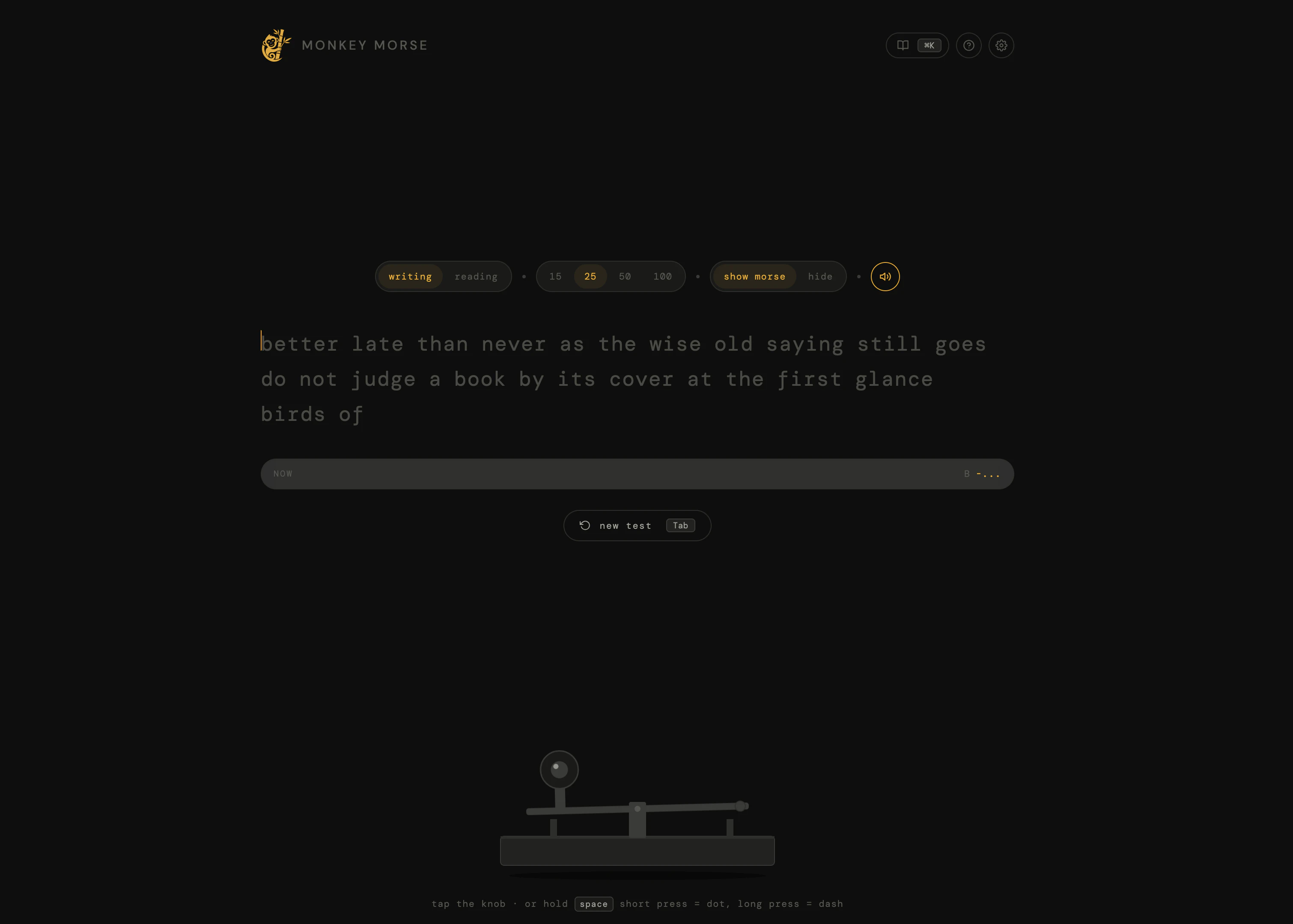
Monkey Morse operates on two core modes, and the distinction matters. In the first mode, users tap a telegraph-style key in the browser to send dots (dits) and dashes (dahs) that correspond to letters and numbers. Think of it as muscle-memory training — the goal is to internalize the patterns of each character through repetition, the same way a touch typist internalizes the QWERTY layout without looking down.
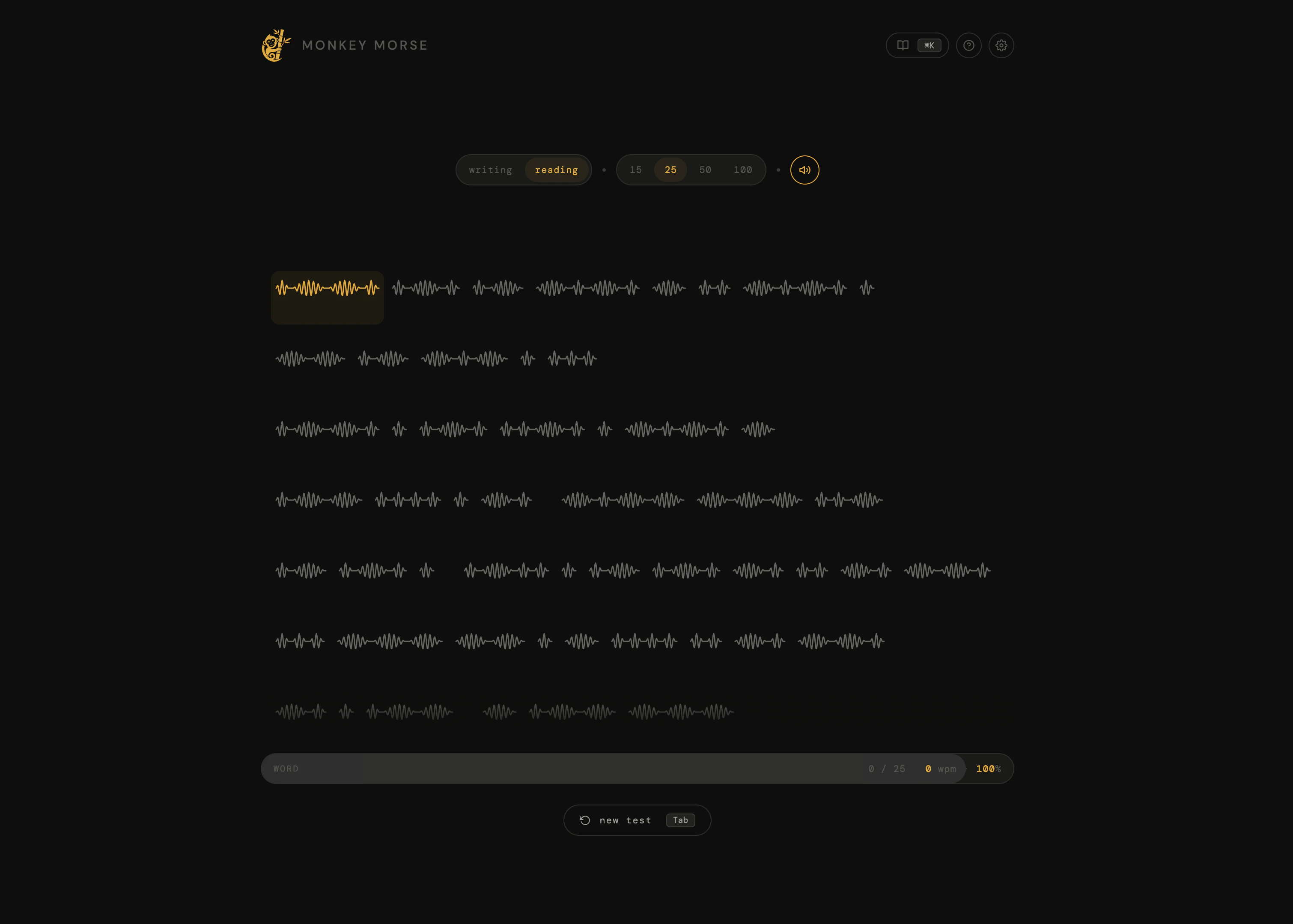
In the second mode, the app plays morse audio tones and asks users to type the decoded letter. This trains the ear rather than the hand, which is a separate and arguably more important skill for practical morse use. Both modes are available in this morse code trainer browser tool with no account required and no friction to start.
Both modes feed into a real-time dashboard that tracks words per minute (WPM), accuracy, and consistency. Anyone who has used Monkeytype will recognize the familiar feedback loop immediately. The interface is minimal: dark background, clean typography, no clutter. There is no account required, no email signup, and no progress saved between sessions.

Who Should Try It
The most obvious audience is amateur radio (ham radio) learners. Morse code, also known as CW (continuous wave) in ham radio culture, is no longer required for licensing in most countries, but it remains deeply embedded in the hobby. Many operators pursue it voluntarily, either for the challenge or because CW signals cut through interference that defeats voice communications. A free, no-friction morse code trainer browser option is genuinely useful for daily warm-up sessions.
Accessibility users are a second and often overlooked audience. Morse code can be input with a single switch, making it a viable alternative input method for users with limited mobility. The core mechanic — single-key tapping — maps naturally onto switch-based input methods.
Beyond those groups, curious learners and productivity enthusiasts will find Monkey Morse to be an entertaining skill-building tool. It sits comfortably in the same category as a chess puzzle app or a foreign language flashcard set: niche, stimulating, and surprisingly absorbing once you start seeing accuracy numbers improve.
Pricing
Monkey Morse is completely free. There is no signup, no freemium tier, no premium plan, and no paywall. You open a browser, navigate to the tool, and start practicing. There are no advertisements visible in the current version, though this may change as the product matures. The cost of entry is zero, which removes any evaluation risk entirely.
How It Compares
- LCWO.net (Learn CW Online) is the incumbent for serious morse learners. It offers a structured curriculum based on the Koch method, character-by-character progression, user accounts, progress tracking, and a community forum. It is also free. LCWO is clearly the better tool for anyone who wants to go from zero to proficient in a systematic way. Monkey Morse cannot match it on depth. What Monkey Morse offers is a cleaner interface and a lower barrier to a first session.
- G4FON Koch Method Trainer is a free Windows desktop application widely respected in ham radio communities. It is powerful and configurable but requires a download and runs only on Windows. Monkey Morse wins on accessibility simply by being browser-based and platform-agnostic.
- Monkeytype is the direct design inspiration — a non-morse typing speed test with an exceptional interface. Monkey Morse borrows that aesthetic sensibility and applies it to morse. If you love Monkeytype’s vibe and want a morse equivalent, Monkey Morse is the closest thing available.
- Google Morse Typing Trainer is a Chrome experiment that uses mnemonic imagery to teach morse characters. It is accessibility-focused and supports switch-based input. It is a stronger choice for accessibility use cases specifically. Monkey Morse offers a more speed-training-oriented experience by comparison.
Pros and Cons
- Pro: Completely free with no account required — zero friction to start
- Pro: Clean, modern interface that feels contemporary compared to most morse tools
- Pro: Two distinct practice modes cover both sending (key tapping) and receiving (audio decoding)
- Pro: Real-time WPM, accuracy, and consistency metrics reward deliberate practice
- Pro: Browser-based and platform-agnostic — works on any modern device
- Con: No progress tracking between sessions — every visit starts from scratch
- Con: No structured curriculum or character-by-character progression system
- Con: Limited configuration options compared to mature tools like LCWO or G4FON
- Con: Not explicitly designed for accessibility use cases despite compatible mechanics
Verdict
Monkey Morse is a well-executed niche tool that does exactly what it advertises. It is a morse code trainer browser app built for people who want to practice, not study. If you are looking for a free, no-signup way to build or maintain morse speed and ear training, it delivers that experience cleanly and with surprisingly good UX for a young product.
It is not a replacement for LCWO if you are a beginner who needs structured progression. But as a daily warm-up tool, a curiosity satisfier, or a low-stakes introduction to what morse code practice actually feels like, Monkey Morse earns a genuine recommendation. The fact that it costs nothing and requires nothing to start makes trying it a simple decision. The Monkeytype comparison is apt and flattering — if that team’s formula works for QWERTY typing, there is no reason it cannot work for dits and dahs.
Frequently Asked Questions
Is Monkey Morse suitable for complete beginners with no morse code experience?
Monkey Morse can be used by beginners, but it does not include a built-in character introduction system. Complete beginners who want a structured, zero-to-proficient path will get further faster with LCWO.net, which introduces characters one at a time using the Koch method. Monkey Morse is better suited as a practice layer on top of existing knowledge or as a first-taste experience to decide whether morse code learning is worth pursuing further.
Does Monkey Morse work on mobile devices and tablets?
Monkey Morse is browser-based, which means it loads on any device with a modern browser. The tapping mechanic translates reasonably well to touchscreen use, though the experience is optimized for desktop with a physical keyboard or mouse. The audio decoding mode works well on mobile since it requires only typed letter responses. Users should expect a slightly different feel on touchscreen versus hardware keyboard, but the core functionality is accessible across devices.
How does Monkey Morse define and calculate WPM for morse code?
Morse code WPM is calculated differently from standard typing WPM. The conventional benchmark in amateur radio is the PARIS standard, where one word equals 50 dit units. Monkey Morse tracks real-time performance metrics including WPM, accuracy, and consistency in a format familiar to Monkeytype users, though the specific calculation methodology is not documented in detail on the current version. Users focused on strict WPM benchmarking for ham radio licensing should verify the measurement standard against official references.
Check out Monkey Morse on Product Hunt or visit the official Monkey Morse website to learn more.