

I’ve built hundreds of funnels over 20 years — opt-in funnels, webinar sequences, abandoned cart chains, membership onboarding flows. I’ve run funnel builder setups that pushed $100K in a single day on Facebook ads and ones that quietly printed $3M a month for a dropshipping operation I helped scale. So when someone asks me which funnel tool to use, I don’t give a theoretical answer. I give them the answer that comes from having lost real money on the wrong tools and made a lot more money on the right ones.
Here’s my honest take: most funnel builders are overengineered for what 90% of businesses actually need. They’re built to impress you during the demo, not to convert your visitors into customers day after day. The feature list looks incredible. The reality is that you end up paying for complexity you’ll never use while the core job — getting a stranger to become a paying customer — gets buried under options.
This guide cuts through that. I’m going to show you exactly what a funnel builder does, which ones are worth your money in 2026, and why the all-in-one option I recommend at the end might make most of these other tools irrelevant for your business.

What Is a Funnel Builder (And Why Most Explanations Are Wrong)
The standard definition you’ll read online is something like “a tool that guides prospects through a series of steps toward a conversion.” That’s technically true and practically useless.
Here’s how I actually think about it: a this software lets you create a sequence of web pages or messages designed to move someone from curious to committed. That’s it. Page one gets attention. Page two handles objections. Page three takes money. Everything in between is strategy, not software.
The tool matters for two reasons: speed and connection. Speed, because if it takes you three weeks to launch a funnel, you’ll test fewer ideas and make less money. Connection, because a funnel builder that doesn’t integrate with your email, CRM, and payment processor is a dead end — you’re just collecting visitors, not customers.
I’ve seen businesses with a six-page funnel built in a weekend outperform competitors who spent six months on a “perfect” website. The funnel wins because it’s focused. Every page has one job. That’s the whole philosophy, and the best funnel builder tools make that philosophy easy to execute.
The 7 funnel creation tools Worth Knowing in 2026
I’m going to be direct about each of these. I’ve either used them personally, run campaigns on them for clients, or have had enough hands-on time to give you a real opinion. No fluff.
1. Automated Sales Machine (ASM) — Best All-in-One Funnel Builder
I’ll be upfront: I recommend ASM’s funnel builder first because it solves a problem I’ve had with every other platform on this list. Most funnel tools are just page builders. ASM is the entire sales infrastructure — funnels, CRM, email, SMS, automations, booking, pipelines — all talking to each other natively.
When I was running the membership SaaS doing $20M+ per year, the biggest operational headache wasn’t building the funnel. It was stitching together what happened after someone converted. You’d have Stripe talking to Zapier talking to your email tool talking to your CRM and half the time something in that chain broke silently. You wouldn’t know until a customer complained they never got their login credentials.
ASM eliminates that stitching problem. The funnel is already connected to the built-in CRM, the email and SMS automations fire based on funnel behavior, the sales pipeline updates automatically, and if you’re running any service-based component, the booking calendar is integrated too. It’s not a best-of-breed argument — it’s a “stop spending 40% of your tech budget on duct tape” argument.
Best for: Small business owners, service providers, course creators, ecommerce brands who want funnels that actually connect to their business operations — not just their landing pages.
Key features:
- Visual drag-and-drop funnel and page builder
- Native email and SMS marketing with behavioral triggers
- Built-in CRM with pipeline management
- Membership and course delivery
- Booking and calendar system
- AI-powered automations and bots
- Reputation management and social planning
If you’re serious about building a system that converts and actually runs your business, start here with ASM.
2. ClickFunnels — The Tool That Popularized the Category
ClickFunnels deserves credit for doing more than almost any other platform to get small business owners thinking in terms of funnels rather than websites. Russell Brunson’s marketing was so effective that “funnel” became a verb in marketing circles, and ClickFunnels was the reason.
I’ve run campaigns on ClickFunnels and it works. The templates are conversion-tested, the one-click upsell mechanic is still best-in-class, and if you’re selling information products or running webinar funnels, it’s genuinely well-suited to that job.
The problems I have with it: it’s expensive for what it does on its own ($97–$297/month just for the funnel builder), the email tool they added is basic, and you still need a CRM, an automation platform, and a separate tool for anything complex on the back end. For a lot of businesses, ClickFunnels is the front door and then you have to build the entire house separately.
Best for: Info product sellers, affiliate marketers, webinar-based businesses who live and breathe the classic opt-in-to-sales-call model.
3. ConvertFlow — Best for Ecommerce Personalization
ConvertFlow is genuinely impressive in the ecommerce context. Their published data shows a 23% increase in add-to-cart rates and they’ve attributed $500M in revenue to campaigns built on their platform. I don’t doubt those numbers — their segmentation and personalization capabilities are sophisticated.
ConvertFlow’s strength is behavioral targeting. You can show different funnels to different segments of your audience based on where they came from, what they’ve bought before, and how they’re behaving right now. For a high-volume ecommerce store, that level of personalization pays for itself fast.
The limitation: it’s built as a layer on top of your existing site and store, not as a standalone funnel builder. It integrates with Shopify and major email platforms but it’s not a replacement for them — it’s an enhancement. If you’re running a straightforward lead-gen or service funnel, ConvertFlow is more tool than you need.
Best for: Mid-to-large ecommerce stores with existing traffic and a real need for behavioral segmentation.
4. Leadpages — Best for Simple, Fast Landing Pages
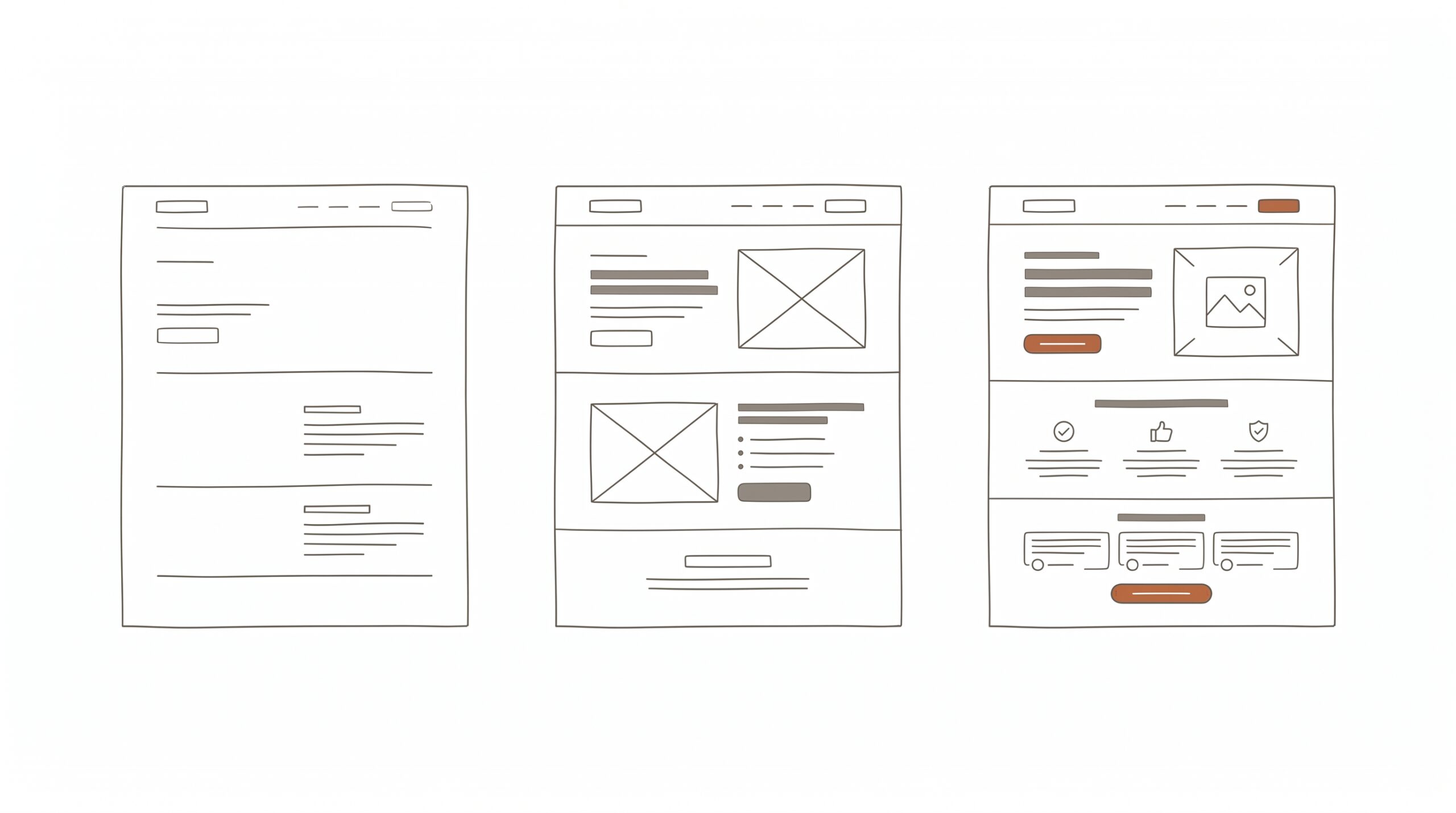
Leadpages has been around almost as long as I’ve been running funnels seriously, and it’s survived because it does one thing really well: getting a clean, high-converting landing page live in under an hour. The templates are legitimately good and their conversion-rate data is actually shown in the template library, which is something I respect.
It’s not really a full funnel builder at this point — it’s a landing page builder with some light funnel features bolted on. If you need a single opt-in page or a simple two-step funnel to collect leads, Leadpages is fast and effective. If you need anything resembling a post-conversion workflow, you’re going to be building that somewhere else.
Best for: Businesses that primarily need polished landing pages and are already running their CRM and email marketing in separate tools they’re happy with.
5. Kartra — Best All-in-One Alternative to ClickFunnels
Kartra positioned itself as ClickFunnels with a business backend, and in some ways that’s accurate. You get email marketing, a helpdesk ticketing system, membership sites, and affiliate management in addition to the platform. The platform is mature and the feature list is genuinely broad.
My honest experience: Kartra is a lot of platform and the interface hasn’t always kept pace with how fast the market has moved. There’s a learning curve that’s steeper than it should be, and the pricing tiers can feel punishing once you start scaling your contact list. But if you’re an info marketer or course creator who wants a self-contained ecosystem and you’re willing to invest time learning it, Kartra can work well.
Best for: Online educators, coaches, and membership site owners who want to avoid Zapier at all costs and don’t mind a steeper learning curve.
6. Systeme.io — Best Free Funnel Builder Option
If you’re searching for a free AI funnel builder or the best free funnel tool for getting started, Systeme.io is the honest answer. Their free plan includes up to 2,000 contacts, 3 sales funnels, one membership site, and unlimited emails. For someone bootstrapping their first business, that’s a real starting point.
The paid plans are also significantly cheaper than most competitors. You’re not going to get the depth of automations or the native CRM you’d get from a platform like ASM, but if budget is genuinely the constraint, Systeme.io lets you build a working funnel without paying anything upfront.
Best for: First-time funnel builders on a tight budget who need to validate a business idea before investing in a premium platform.
7. WordPress + Elementor/Thrive Architect — Best Funnel Builder for WordPress
I know a lot of people search for “funnel builder WordPress” and I want to give that a real answer. Yes, you can build solid funnels on WordPress using Elementor or Thrive Architect as your page builder, combined with WooCommerce or SureCart for payments and CartFlows for the funnel sequencing logic.
The case for this approach: you own everything, you control everything, and the one-time or annual license costs can be lower than SaaS subscription fees over a long enough time horizon. If you already have a WordPress site you love and you’re comfortable with the technical side, this is a legitimate path.
The case against: you are now responsible for hosting performance, plugin conflicts, security updates, and every integration between those separate tools. I’ve seen this stack work beautifully and I’ve seen it implode at exactly the wrong moment. If you’re running a launch that’s doing $50K over a weekend, WordPress plugin conflicts are not the problem you want to be debugging on a Saturday night.
Best for: Technical users with existing WordPress infrastructure who prioritize ownership and flexibility over managed convenience.
Funnel Builder Comparison: Features That Actually Matter
Here’s a no-nonsense comparison of the features that separate a good funnel tool from a frustrating one. I’ve ranked these based on what I’ve seen actually drive revenue, not what looks good on a feature matrix.
the platform Feature Matrix
| Feature | ASM | ClickFunnels | ConvertFlow | Leadpages | Systeme.io |
|---|---|---|---|---|---|
| Visual Funnel Builder | Yes | Yes | Yes | Limited | Yes |
| Built-in Email Marketing | Yes | Basic | No (integrates) | No | Yes |
| Built-in CRM | Yes | No | No | No | Basic |
| SMS Marketing | Yes | No | No | No | No |
| Booking / Calendar | Yes | No | No | No | No |
| Membership / Courses | Yes | Yes | No | No | Yes |
| AI Automations | Yes | Limited | Limited | No | No |
| Free Plan Available | Trial | No | Trial | Trial | Yes |
Looking at this honestly: the tools that check the most boxes are ASM and — to a lesser extent — ClickFunnels and Systeme.io. The difference is that ASM combines the sales infrastructure with the funnel itself. That matters more than most people realize until they’ve run a real campaign and had to patch together what happens after the opt-in.
Free vs. Paid Funnel Builder: What You Actually Get
Let me be real about the “free funnel tool” question because it comes up constantly.
There is no fully free funnel tool that’s also production-ready for serious business use. Free plans exist to let you start and to give platforms a chance to convert you to a paying customer. That’s fine — it’s a reasonable model — but you should know what you’re trading.
What free plans typically restrict:
- Contact limits (usually 500–2,000 before you hit a paywall)
- Number of funnels or pages you can publish
- Custom domain usage — you’re often stuck on a subdomain of their platform
- Removal of their branding from your pages
- Access to automation or email marketing features beyond basic broadcasts
- A/B testing and analytics beyond surface-level pageview counts
If you’re in the “validate before you invest” phase, a free tier like Systeme.io’s makes sense. If you’re at the point where you’re running traffic — paid or organic — to your funnels and real revenue is on the line, the $97–$297/month for a proper platform is not the variable that’s going to make or break your business. Your conversion rate is.
I’ve watched people spend three months trying to make a free tool do what a $100/month platform would have done in a week. That’s not frugality. That’s expensive in a way that doesn’t show up on your credit card statement.

How to Choose the Right Funnel Builder for Your Business
Rather than giving you a generic checklist, let me walk you through the actual decision tree I use when someone asks me this question.
Step 1: What’s your primary conversion goal?
Lead generation funnels (get email, nurture, book a call) have different requirements than ecommerce funnels (add to cart, upsell, recover abandoned carts) or course/membership funnels (opt-in, webinar, pitch, onboard). Each type benefits from different tools. A platform optimized for webinar funnels isn’t necessarily the right choice for a physical product store.
Step 2: What happens after the conversion?
This is the question most people skip and then regret. You build a funnel that converts. Now what? Does that new lead automatically enter a nurture sequence? Does your sales team get notified? Does the customer get onboarded without manual intervention? If your funnel tool can’t answer these questions natively — or connect cleanly to tools that can — you’re going to spend a lot of time on tech support instead of marketing.
This is exactly why I steer people toward ASM’s automation system when they’re asking about funnels. The funnel is the beginning, not the end. What happens in the hours, days, and weeks after someone opts in or buys is where the real money lives.
Step 3: What’s your technical tolerance?
Be honest with yourself here. If you’re not going to enjoy debugging a Zapier zap at 11pm because a webhook stopped firing, you don’t want a stack of best-of-breed tools that require you to be your own integration engineer. You want a platform where the pieces work together by design.
If you are technical, enjoy the control, and already have infrastructure you’ve built and trust — the WordPress approach or a more API-friendly tool might suit you well.
Step 4: What are you actually willing to pay?
Be specific. “I want the cheapest option” is not a useful answer because cheap often means slow, constrained, or broken in ways that cost you more than the price difference. What I find works better: estimate the lifetime value of a customer, then ask yourself how many customers per month the platform needs to help you convert to pay for itself. At almost any reasonable LTV, a $100–$200/month platform pays for itself with one or two extra conversions per month.
Building Your First Funnel: What I’d Do If I Were Starting Today
If I were starting fresh today with no existing tools and had to build a funnel for a new business, here’s exactly what I’d do.
First, I’d get clear on my one conversion goal. Not goals — goal. One action I want a visitor to take. For most small businesses, that’s either book a call or buy a specific product. Everything else is secondary.
Second, I’d build the simplest possible funnel that achieves that goal. For a lead-gen funnel: opt-in page, thank you page with a next step (book a call, watch a video, join a group). For a product funnel: sales page, order form, confirmation page with an upsell offer. That’s it. No 17-step sequences out of the gate. Get your basic conversion working first.
Third, I’d make sure the back end is wired up before I run a single dollar of traffic. Email confirmation goes out immediately. New contacts enter a follow-up sequence. If it’s a service business, I want a notification in my CRM so I know who just opted in and can follow up personally if they don’t book. If I’m using ASM, all of this is set up in the same platform. If I’m using something else, I’m testing every step before traffic arrives.
Fourth, I’d run a small test — $20–$50 in paid traffic or a single email to my existing list — and look at two numbers only: opt-in rate and conversion rate. Not bounce rate, not time on page, not heatmaps. The two numbers that tell me if the funnel is working.
Fifth, I’d optimize based on data, not opinions. If the opt-in rate is low, the headline or offer needs work. If the conversion rate is low after the opt-in, the sales process needs work. Work on one thing at a time. The businesses I’ve seen struggle with funnels are almost always the ones changing five things at once and not knowing which change moved the needle.
For more on the lead capture side of this equation, I wrote about the best lead capture tools for small businesses — worth reading alongside this guide. And if you’re thinking about what feeds the top of your funnel, my post on how to get more leads for your small business covers the traffic side in depth.
Funnels and Email: Why They’re Inseparable
I want to spend a minute on something that doesn’t get enough attention in funnel tool comparisons: email is not optional in a funnel strategy.
I’ve seen the data across hundreds of campaigns. The average opt-in-to-purchase timeline for most offers is not 20 minutes — it’s 3–7 days. Maybe longer for high-ticket offers. The funnel pages capture the lead. Email nurtures them to the purchase. If your funnel tool doesn’t connect to a serious email marketing platform, you’re leaving most of your conversion opportunity on the table.
I’ve reviewed the email marketing software landscape separately and the short version is: whatever funnel tool you choose, confirm that the email follow-up story is solid. With ASM, it’s built in. With most other funnel tools, you’re connecting to an external platform and you want to make sure that connection is robust — not just technically, but in terms of deliverability and behavioral triggers.
The ASM email marketing system lets you trigger sequences based on funnel behavior — not just “person opted in” but “person visited the sales page twice but didn’t buy” or “person opened the email but didn’t click.” That behavioral precision is how you take a 15% close rate to a 25% close rate without changing the funnel pages themselves.
Funnels and Your Sales Pipeline: The Missing Connection
Here’s a mistake I see constantly, especially with service businesses: they build a great funnel, collect leads, and then those leads go into a spreadsheet or a disconnected CRM that nobody looks at consistently. The funnel worked. The follow-up process didn’t.
A funnel tool that connects to a real sales pipeline for small business closes this gap. When a lead comes in through your funnel, they should automatically appear in a pipeline stage, trigger a follow-up task or sequence, and give you visibility into where every lead stands without manual data entry.
This is one of the reasons I push ASM for service businesses and agencies specifically. The funnel, the CRM, and the pipeline are the same system. A lead generated at 11pm on a Tuesday gets a follow-up email immediately, enters a nurture sequence, and shows up in my pipeline dashboard the next morning. No one has to do anything manually. That’s the version of funnels most business owners actually want — they just don’t know they can have it.
The Honest Case Against Overcomplicating Your Funnel
I want to end the main content with something that goes against a lot of what gets sold in the funnel world: you probably don’t need a complicated funnel.
I ran a $3M/month dropshipping operation that used a two-page funnel. Product page, order form. That’s it. No upsell sequence, no 9-step email course, no webinar. Two pages, one clear offer, and a relentless focus on the quality of the traffic coming in.
I’ve seen coaches build 6-figure businesses on a one-page website and a booking link. I’ve seen ecommerce brands do eight figures with funnels that would look embarrassingly simple to a conversion rate optimization consultant.
the platform you need is the one that lets you launch fast, connect to your business systems, and iterate based on real data. Complexity is the enemy of velocity. Build something that works, run traffic to it, and optimize from there.
If you’re still figuring out your overall web presence alongside your funnels, I’d also point you to my breakdown of the best free website builders — because for many businesses the funnel and the website need to coexist, and knowing which tool handles which job saves you a lot of unnecessary overlap.
Ready to Build Funnels That Actually Work?
Automated Sales Machine gives you a complete funnel tool with built-in CRM, email and SMS marketing, pipeline management, booking, and AI automations — all in one platform. No duct tape, no integration nightmares, no missing pieces.
FAQ: Funnel Builder Questions I Actually Get Asked
What is a funnel builder?
this type of software lets you create a sequence of pages or messages designed to guide a visitor toward a specific action — usually an opt-in, a purchase, or a booked appointment. Unlike a regular website builder, a funnel tool focuses on one conversion goal per page, removing distractions and guiding visitors step by step. The best funnel tools also connect to your email marketing, CRM, and payment systems so the process after the conversion is automated.
How do I make my own funnel?
Start with clarity on one conversion goal. Then build the minimum pages required: typically an opt-in or sales page, a checkout or booking page, and a confirmation page. Connect your email follow-up before you launch. Run a small test with real traffic. Measure your opt-in rate and conversion rate. Optimize one thing at a time. Most businesses overcomplicate this — a two or three page funnel that converts beats a ten-page funnel you spent three months perfecting but never launched.
What is the best funnel builder in 2026?
For most small businesses, Automated Sales Machine (ASM) is the best funnel tool because it combines the funnel pages with the business back-end: CRM, email, SMS, pipelines, booking, and automations. If you’re specifically an info marketer or course creator, ClickFunnels has a mature template library and solid upsell mechanics. If you’re a high-volume ecommerce brand with sophisticated segmentation needs, ConvertFlow is worth evaluating. If budget is the primary constraint, Systeme.io offers a functional free tier to get started.
Is there a free AI funnel builder?
Systeme.io has the most genuinely functional free plan among dedicated funnel tools — including unlimited emails, up to 2,000 contacts, and 3 active funnels. Several platforms including ASM offer free trials. “AI” features in funnel tools typically mean AI-assisted copy generation or automated follow-up sequences — these are more commonly found in paid tiers. The honest answer is that a free plan gets you started, but running a real funnel with real traffic and real revenue requires investing in a platform that matches your scale.
Can I build a funnel on WordPress?
Yes. Elementor or Thrive Architect for page building, CartFlows for funnel sequencing, and WooCommerce or SureCart for payments gives you a functional funnel stack on WordPress. The advantage is ownership and cost control over time. The disadvantage is that you own the maintenance, the plugin conflicts, and the integration responsibility. For technical users with existing WordPress infrastructure it’s a legitimate option. For everyone else, a dedicated funnel platform is faster and more reliable.
Do I need a separate funnel builder and website builder?
Not necessarily. If your funnel tool supports custom domains and you’re building a business primarily around conversions (lead gen, courses, services), your funnel platform can serve as your primary web presence. If you have a content-heavy site with a blog, portfolio, or complex navigation, you may want a traditional website alongside your funnel tool. ASM handles both use cases — you can run full funnels on custom domains without needing a separate website builder, but if you want a blog or brochure site in addition, pairing it with a dedicated website builder is straightforward.
Conclusion
After 20 years of building and running funnels, here’s what I know for certain: the platform you choose matters less than the clarity of your offer and the quality of your follow-up. But that doesn’t mean the tool is irrelevant. The wrong tool slows you down, creates technical debt, and makes you less likely to test and iterate.
The right tool — one that connects your funnel to your CRM, email marketing, pipelines, and automations natively — removes the friction between “someone showed interest” and “someone became a customer.” That’s the job. Everything else is details.
My recommendation hasn’t changed: Automated Sales Machine is the platform I’d build my business on if I were starting today. Not because it has the most features or the flashiest UI, but because it connects the funnel to everything that needs to happen after the funnel — and that connection is where businesses are won or lost.
If you’re still shopping, do the work: pick your conversion goal, map your post-conversion flow, and then choose the tool that handles both sides of that equation without duct tape. That’s the shortcut I wish I had 15 years ago.