

The right sales funnel software can increase conversion rates by 3–5 times compared to sending traffic directly to a homepage — but the wrong one will drain budget, fragment data across five separate tools, and leave sales teams manually stitching together reports at the end of every month. This guide cuts through the noise with an unsparing look at nine platforms: what they actually do, what they cost in total (not just the headline price), and who should realistically use each one.

What Is Sales Funnel Software?
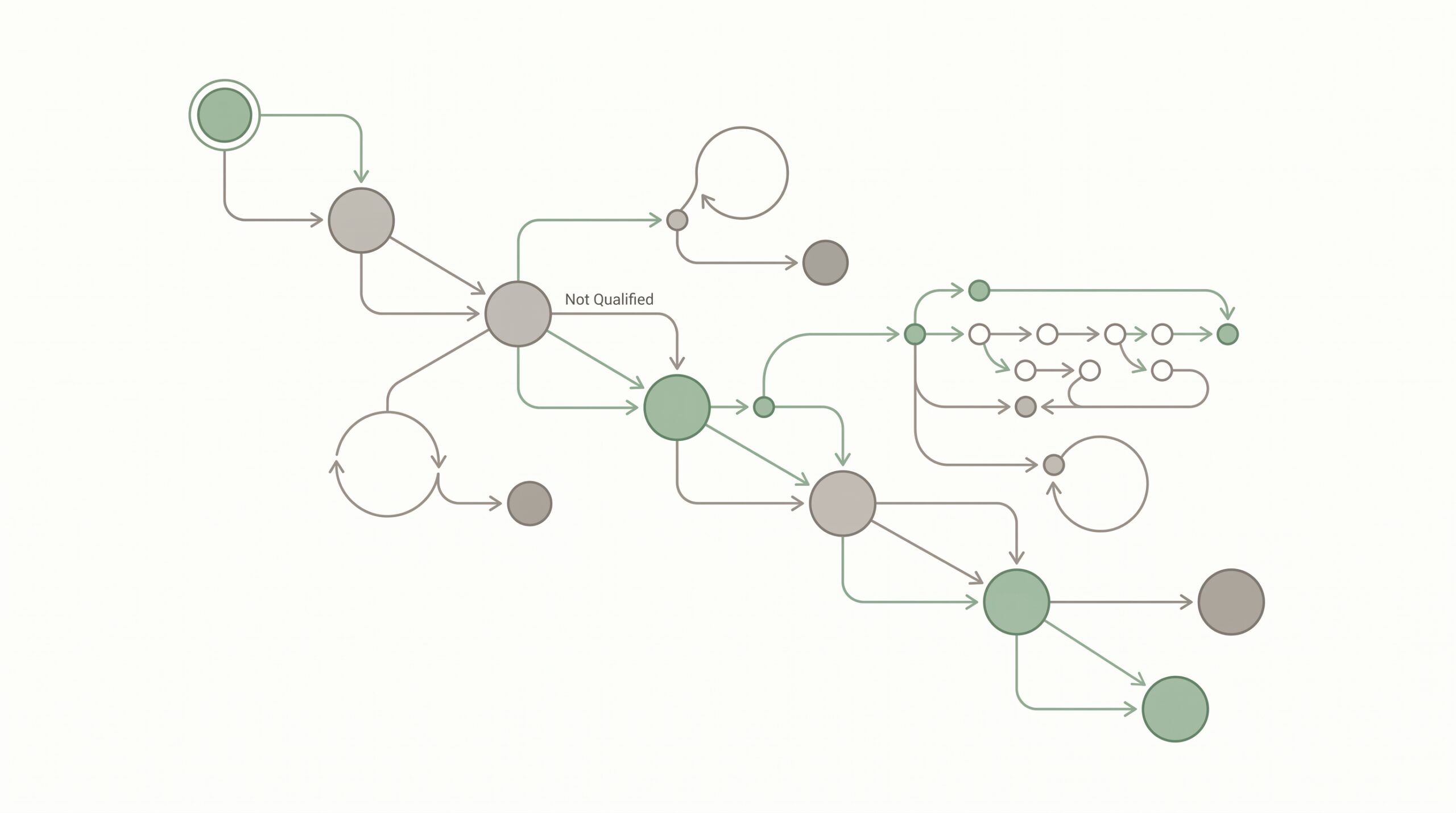
Sales funnel software is a category of platform that manages the structured journey a prospect takes from initial awareness to purchase decision. The “funnel” metaphor reflects reality: a large number of leads enter at the top, and a smaller number convert at the bottom. Software in this category helps businesses build the stages in between — landing pages, opt-in forms, email sequences, checkout flows, upsells, and follow-up automations.
The category spans a wide range of tools. Some are dedicated funnel builders that focus almost entirely on page design and conversion flows (Leadpages, ClickFunnels). Others are email-first platforms that have added funnel capabilities (GetResponse, MailerLite, ActiveCampaign). A third group positions as all-in-one systems where funnels are one module among many, alongside CRM, SMS, booking, and course delivery (Kartra, Systeme.io, Automated Sales Machine).
For a broader look at how funnels fit into the overall marketing system, see the marketing funnel guide and the overview of marketing automation software.
Best Sales Funnel Software at a Glance
| Tool | Best For | Starting Price | Free Plan? |
|---|---|---|---|
| Automated Sales Machine | All-in-one: funnels + CRM + email/SMS + automations | See pricing | Free trial |
| ClickFunnels | Dedicated funnel builder, info-product sellers | $97/mo | No (14-day trial) |
| Kartra | Course creators, coaches, digital product sellers | $59/mo | No ($1 trial) |
| Systeme.io | Solopreneurs, bootstrapped businesses | $0/mo (free) | Yes (2,000 contacts) |
| GetResponse | Email-first marketers who want basic funnels | $0/mo (limited) | Yes (500 contacts) |
| ActiveCampaign | Automation-heavy B2B and ecommerce teams | $15/mo | No (14-day trial) |
| HubSpot | Mid-market and enterprise with budget for the full suite | $0/mo (CRM only) | Yes (limited CRM) |
| Leadpages | Landing page-focused teams who use a separate email tool | $37/mo | No (14-day trial) |
| MailerLite | Budget-conscious email marketers with simple funnels | $0/mo | Yes (1,000 subscribers) |
Automated Sales Machine — Best All-in-One Sales Funnel Platform
Automated Sales Machine (ASM) is a standalone all-in-one platform built to consolidate every piece of the funnel stack into a single system. Rather than paying separately for a funnel builder, an email tool, a CRM, an SMS provider, a booking calendar, and a reputation management dashboard, ASM includes all of these as native modules that share a single database and unified contact record.
The funnel builder supports drag-and-drop page construction, multi-step flows, order bumps, and upsell pages. Funnels connect directly to ASM’s built-in CRM and pipeline system, so every lead captured in a funnel immediately enters a trackable deal stage — no Zapier connection required. Email and SMS automations can be triggered based on funnel behavior, form submissions, pipeline stage changes, or appointment bookings.
Additional modules include AI bots for lead qualification and customer service, AI Studio for content and copywriting support, social media scheduling, online reputation management, membership and course delivery, and email marketing with deliverability tracking built in.
Pros:
- Single platform replaces 5–7 separate tools with zero integration overhead
- Funnels, CRM, email, SMS, and automations share one contact database — no data silos
- Native booking/calendar system removes the need for Calendly or similar add-ons
- AI bot and AI Studio features included without separate subscriptions
- Membership and course delivery built in for businesses selling digital products
Cons:
- The breadth of features means a longer onboarding period than a single-purpose tool
- Businesses that only need a landing page and nothing else may find it more than necessary
See current ASM pricing to compare against what a comparable multi-tool setup would cost.
Related: CRM software compared | Sales pipeline for small business
ClickFunnels — Best Pure-Play Funnel Builder
ClickFunnels built the category and remains the reference point every competitor is measured against. The platform is built entirely around moving prospects through structured conversion sequences — opt-in pages, sales pages, order forms, one-click upsells, and thank-you pages.
Pricing: $97/month (Basic, 20 funnels) | $297/month (Pro, 100 funnels) | $497/month (Funnel Hacker, unlimited). No free plan; 14-day trial available.
Pros:
- Conversion-optimized templates based on actual transaction data
- One-click upsells and order bumps are best-in-class for checkout revenue optimization
- Large community and extensive training resources
Cons:
- Email marketing, course hosting, and CRM are not included — the real cost of a ClickFunnels stack often exceeds $250/month once missing tools are added
- The Basic plan caps at 20 funnels, which constrains businesses running multiple offers
- No free plan at any tier
Kartra — Best for Course Creators and Coaches
Kartra positions as an all-in-one platform for digital product businesses — courses, coaching programs, and membership sites. Unlike ClickFunnels, Kartra includes email marketing, video hosting, affiliate management, and a helpdesk within the base subscription.
Pricing: $59/month (Essentials) | $119/month (Starter) | $229/month (Growth). No free plan; $1 trial for 14 days.
Pros:
- Email marketing with behavioral triggers included at every paid tier
- Video hosting built in — no Vimeo or Wistia required
- Affiliate program management included
Cons:
- The backend interface is notoriously cluttered — new users consistently report a steep learning curve
- No SMS marketing capability at any tier
Systeme.io — Best Free Sales Funnel Software
Systeme.io offers the most generous free plan in the category: 2,000 contacts, 3 hosted funnels, one online course, and unlimited email sends permanently. The paid plans start at $17/month (Startup) and top out at $97/month for the unlimited tier.
Pricing: Free (2,000 contacts, 3 funnels) | $17/mo (Startup, 5,000 contacts) | $47/mo (Webinar, 10,000 contacts) | $97/mo (Unlimited).
Pros:
- Genuinely capable free plan — not a degraded trial but a functional tier that supports a real business
- A comparable stack on ClickFunnels + Mailchimp + Teachable runs $245+/month; Systeme.io covers the same ground for $0–$97/month
- 0% transaction fees at every tier
Cons:
- The interface design and template quality lag behind ClickFunnels and Leadpages
- Limited advanced automation capabilities compared to ActiveCampaign
GetResponse — Best Email-Led Funnel Builder
GetResponse is an email marketing platform that has built a capable funnel system on top of its core email infrastructure. The free plan supports 500 contacts and includes landing pages. Pricing scales with contact list size from approximately $12/month (Starter, 1,000 contacts, annual billing).
Pros:
- Free plan includes landing pages and email — a real differentiator at zero cost
- Webinar-to-funnel integration is the tightest in the market for webinar-based businesses
Cons:
- Funnel builder is capable but lacks the polish of dedicated funnel platforms
- No native CRM or SMS at most plan levels
See also: Email marketing platforms compared
ActiveCampaign — Best for Automation-Heavy Teams
ActiveCampaign is the strongest pure automation platform in this comparison. Its visual automation builder supports complex branching logic, predictive sending, split automations, and lead scoring. Pricing: $15/mo (Starter, 1,000 contacts, annual billing) | $59/mo (Plus) | $99/mo (Professional). No free plan; 14-day trial. SMS and enhanced CRM are add-ons at additional cost.
Pros:
- Automation builder is best-in-class at this price point for behavior-based segmentation
- Split automation testing evaluates entire funnels against each other
- Deep ecommerce integrations (Shopify, WooCommerce) with revenue tracking
Cons:
- No dedicated funnel builder — landing pages and checkout flows require integrations or third-party tools
- SMS and CRM are add-ons, not included in base pricing
See the best lead capture tools guide for complementary options.
HubSpot — Best for Mid-Market Teams With Budget
HubSpot’s free CRM is genuinely useful — it includes contact and deal records, email tracking, live chat, forms, and meeting scheduling for unlimited users. The reality gap appears when teams need marketing automation: those require Professional tier at $100/seat/month, with a mandatory $1,500 onboarding fee.
Pros:
- Free CRM is the strongest at the zero-cost tier for pipeline management
- Breadth of the platform is unmatched — sales, marketing, service, and operations in one system
Cons:
- The feature gap between Starter and Professional is enormous
- Total cost for a 5-person team at Professional can exceed $3,900/month
- Mandatory onboarding fees add $1,500–$3,500 at Professional and Enterprise tiers
Leadpages — Best Dedicated Landing Page Builder
Leadpages is a landing page-focused platform with a clean, fast drag-and-drop editor and a strong template library. Unlimited traffic, lead capture, and A/B testing are available on the Pro plan. Pricing: $37/mo (Standard, 5 landing pages) | $74/mo (Pro, unlimited pages + A/B testing).
Pros:
- Landing page builder is among the easiest and fastest to use in the category
- AI page creation and lead enrichment included on all plans
- Unlimited traffic on all paid plans
Cons:
- Standard plan caps at 5 landing pages — very restrictive for active testing
- No email marketing, CRM, or automation — must be paired with other tools
Leadpages suits teams that already have an email platform and CRM in place. See the full landing page builder comparison for alternatives.
MailerLite — Best Budget Option for Simple Email Funnels
MailerLite is an email marketing platform with a surprisingly capable free tier: 1,000 subscribers, 12,000 emails per month, a website and landing page builder, and a checkout page for selling digital products. Pricing: Free (1,000 subscribers, 12,000 emails/mo) | From $9/mo (Growing Business).
Pros:
- Free plan is among the most capable in the email-first category
- Clean, fast interface — one of the easiest platforms to learn
- Checkout page included for digital product sales
Cons:
- No CRM, pipeline management, or SMS
- Funnel functionality is limited to opt-in and email sequences

What to Look For in a Sales Funnel Builder
Before selecting a platform, buyers should evaluate against these seven criteria:
- True total cost: Headline pricing rarely tells the full story. Calculate the combined cost of the funnel builder plus the email tool, CRM, SMS, booking, and any other tools required to run a complete funnel. Many “affordable” platforms become expensive when the supporting stack is priced in.
- CRM integration depth: Funnels generate leads — those leads need to enter a pipeline and be tracked through close. See the CRM software guide for more on this distinction.
- Automation capability: The value of a funnel is not in a single conversion — it is in the automated follow-up that converts non-buyers over days and weeks.
- Landing page and template quality: Conversion rates are partly a function of page design. Look for platforms with templates validated by real transaction data.
- Checkout and payment handling: For direct-to-consumer offers, one-click upsells, order bumps, and payment processor integrations directly impact revenue per visitor.
- Reporting and attribution: A funnel that cannot be measured cannot be improved.
- Scalability: A platform suitable for 500 contacts may become unworkable or prohibitively expensive at 50,000. Evaluate pricing curves before committing.
For deeper guidance on building the architecture these tools support, see the funnel builder tested guide and the sales pipeline for small business overview.
Frequently Asked Questions
What is sales funnel software?
At its core, a sales funnel platform that helps businesses build and manage the multi-step journey a prospect takes from first contact to purchase. It typically includes landing pages, opt-in forms, email automations, checkout flows, and reporting tools that track how leads progress through each stage. Some platforms focus narrowly on funnel and page building; others combine funnel functionality with CRM, email marketing, and automation in a single system.
What is the cheapest sales funnel builder?
Systeme.io provides a permanently free tier covering 2,000 contacts, 3 funnels, unlimited email sends, and a hosted course at no cost — permanently, no credit card required. GetResponse and MailerLite also offer free plans with landing page capabilities. For paid-only tools, ActiveCampaign starts at $15/month and Leadpages at $37/month.
Do sales funnels still work?
Yes — industry data consistently shows that structured funnel sequences convert 3–5 times better than sending traffic directly to a homepage. The funnel concept is sound; the execution quality is what determines results. Platforms that support meaningful personalization produce better results than those built purely for funnel aesthetics.
What sales funnel software is best for small businesses?
For a solopreneur testing an offer, Systeme.io’s free plan is the defensible starting point. For a small team that needs funnels, email, CRM, and automations in one place without managing multiple subscriptions, an all-in-one platform like Automated Sales Machine eliminates integration overhead and keeps total cost lower than assembling a separate stack.
The Bottom Line
The sales funnel software category has expanded significantly, which is both good news and a trap. Good news: there are genuinely capable free plans (Systeme.io, GetResponse, MailerLite) that let businesses validate an offer before spending. The trap: per-tool pricing that looks affordable in isolation — a $37/month landing page builder, a $15/month email platform, a $20/month CRM — stacks into $150–$300/month before any automation or SMS capability is added.
For businesses at the earlier stages, Systeme.io’s free plan is the most rational starting point. For email-centric operations, GetResponse provides the best free-to-paid upgrade path. For teams that want deep automation without a funnel builder, ActiveCampaign is the strongest option at the mid-price range. ClickFunnels remains the gold standard for pure conversion optimization, but its real cost — once the missing tools are added — makes it one of the most expensive choices in this comparison.
For businesses that want a single platform covering funnels, CRM, pipelines, email, SMS, automations, booking, reputation management, and course delivery without stitching together a stack, Automated Sales Machine is the most complete all-in-one option in this category.
Ready to see what a unified funnel-to-close system looks like? Compare ASM plans and start a free trial.