



TestSprite 3.0 — Let a fleet of parallel agents test your app in minutes
424 upvotes · #1 Product of the Day — View on Product Hunt
TestSprite 3.0 represents a significant shift in how engineering teams approach end-to-end testing. This testsprite testing tool harnesses a fleet of parallel AI agents to generate and execute tests autonomously, cutting typical test execution time by up to 5 times compared to traditional frameworks. The platform addresses a persistent pain point for software teams: the time and resources consumed by test creation, maintenance, and execution. With 424 upvotes on Product Hunt, TestSprite 3.0 has demonstrated measurable market interest among developers and QA professionals seeking faster, more intelligent testing solutions.
Topics: Developer Tools, Artificial Intelligence
How TestSprite 3.0 Works
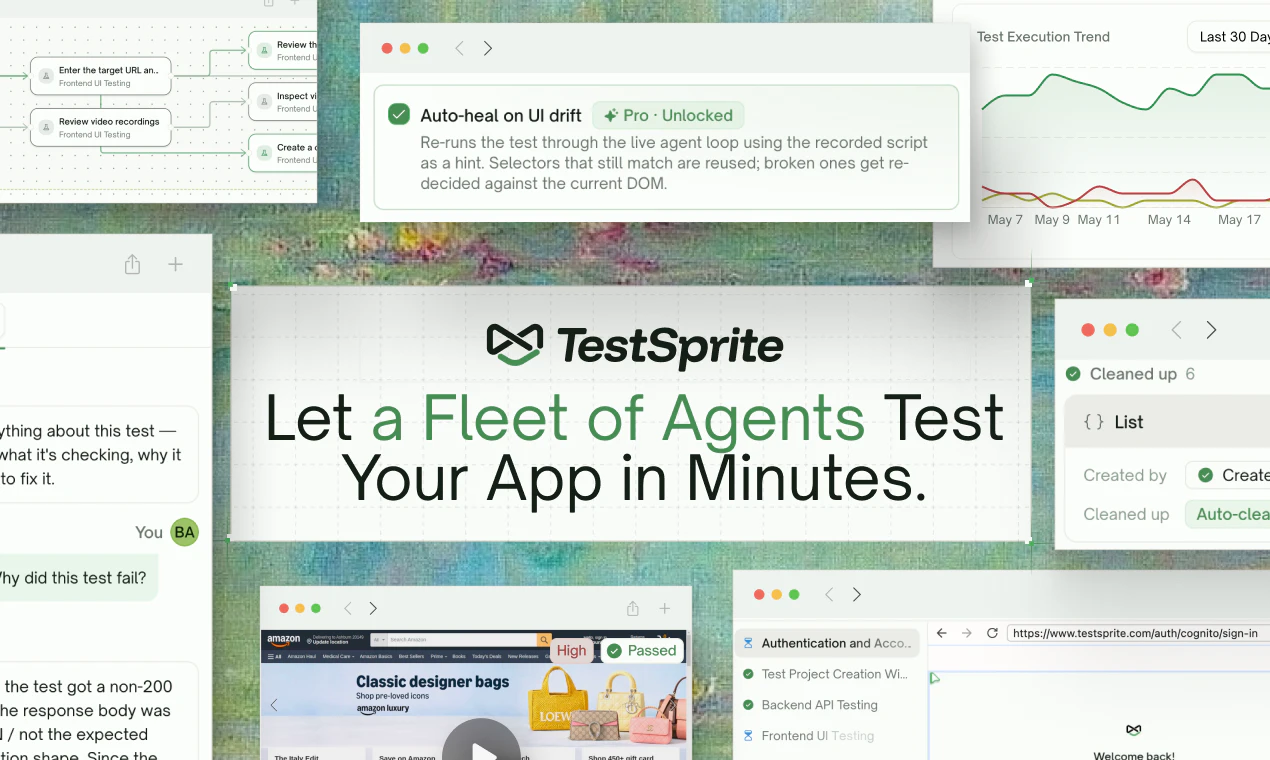
TestSprite 3.0 operates on a fundamentally different architecture than conventional testing tools. Rather than requiring engineers to write and maintain test scripts manually, the platform deploys multiple AI agents that work in parallel to explore applications, identify test scenarios, and generate comprehensive test coverage. For backend systems, the tool creates complex integration tests with dynamic variables, automatic cleanup, and built-in Data Flow debugging capabilities. On the frontend, autonomous agents interact with the application as real users would—clicking through features, validating behavior, and documenting results that feed directly into testing pipelines.
Version 3.0 introduces three critical improvements: auto-heal functionality that adapts tests when UI elements shift, auto-authentication for seamless regression testing, and a command-line interface (CLI) designed for developers using Claude Code and Codex-based workflows.
Key Features
- Parallel AI Agent Architecture: Multiple agents work simultaneously, exploring different aspects of the application and feeding results into a unified testing pipeline.
- Backend Integration Tests: Generates complex integration tests with dynamic variables, auto-cleanup, and Data Flow debugging for identifying where data transforms go wrong.
- Frontend Agent Exploration: AI agents navigate the UI as real users would, capturing edge cases and user flows that manual testers often miss.
- Auto-Heal for UI Drift: Detects when UI elements have shifted or been restyled and adapts test logic accordingly, dramatically reducing test maintenance overhead.
- Auto-Authentication: Handles login flows automatically for regression testing, eliminating a common CI/CD friction point.
- CLI for Claude Code and Codex: Trigger and monitor tests from your IDE without switching contexts.
Use Cases for Development Teams
TestSprite 3.0 addresses several high-impact scenarios for modern engineering teams:
- Continuous Integration Pipelines: Parallel test execution accelerates CI/CD cycles, enabling teams to merge code faster with confidence.
- Complex Application Testing: Applications with interconnected frontend and backend systems benefit from TestSprite’s ability to generate tests spanning multiple layers.
- Regression Test Suites: Auto-authentication and auto-heal reduce the overhead of maintaining large suites, making frequent testing economically viable.
- Exploratory Testing: AI agents can discover edge cases that human testers might overlook, improving application robustness before release.
For teams building AI tools for business, where reliability is a product differentiator, automated testing infrastructure like TestSprite directly reduces risk at scale.
TestSprite 3.0 vs. Competitors
| Feature | TestSprite 3.0 | Playwright | Mabl | BrowserStack |
|---|---|---|---|---|
| AI Test Generation | Yes (autonomous agents) | No (manual scripts) | Yes (AI-assisted) | No |
| Parallel Execution | Multi-agent architecture | Browser-level parallelization | Yes (parallel sessions) | Yes (cloud-based) |
| Backend Testing | Full integration support | Primarily frontend | Primarily frontend | Cloud infrastructure focus |
| Auto-Heal | Yes (UI drift detection) | No | Yes (limited scope) | No |
| IDE CLI Integration | Yes (Claude Code/Codex) | Yes (npm) | No (web/SaaS) | No |
| Learning Curve | Low (AI-driven) | High (scripting required) | Medium | High |
Strengths
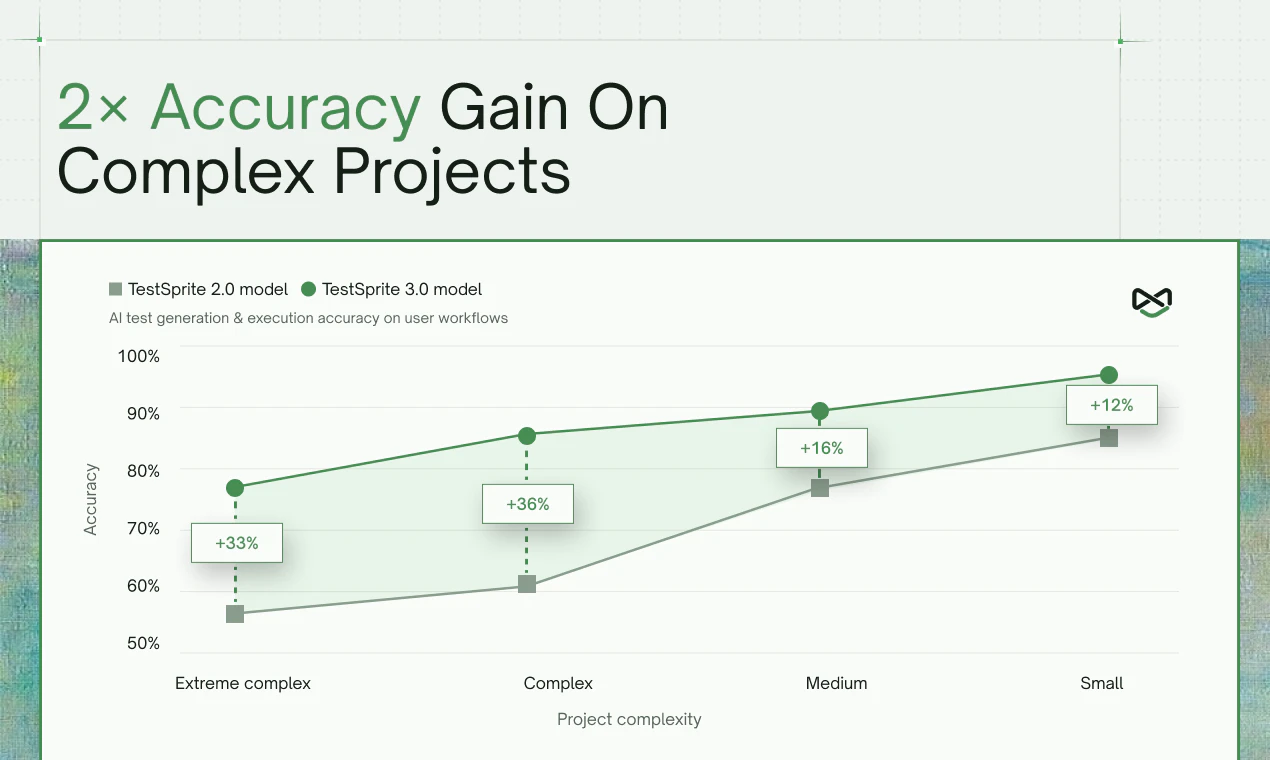
TestSprite 3.0 excels in reducing the human effort required to maintain test suites. The combination of AI-generated tests, auto-healing, and parallel execution directly addresses one of engineering’s most expensive problems: test maintenance. For organizations building marketing automation software or other SaaS platforms where rapid deployment is competitive, faster feedback loops translate directly to business value.
Limitations and Considerations
TestSprite 3.0 is not a universal solution. The platform assumes modern, cloud-accessible deployment models; teams with legacy monolithic systems may find the AI-driven approach less suitable. Organizations with strict data residency requirements should evaluate where TestSprite processes test data during execution.
While auto-heal reduces test flakiness, it cannot completely eliminate maintenance—particularly in applications with frequent, unplanned UI changes. Teams accustomed to writing precise, deterministic tests in frameworks like Playwright may experience a period of adjustment when adopting an AI-driven model.
Verdict
TestSprite 3.0 represents a meaningful evolution in testing technology. For teams managing complex, multi-layered applications under pressure to accelerate deployment cycles, the platform’s AI-driven test generation and parallel execution offer genuine value. The auto-heal and auto-authentication features address real pain points that most engineering teams encounter regularly.
That said, TestSprite is best understood as a force multiplier for experienced QA and engineering teams—not a fully autonomous solution that eliminates all human judgment. For development organizations already invested in Automated Sales Machine platforms and modern AI-assisted development practices, the tool 3.0 merits serious evaluation alongside established frameworks.
Check out TestSprite 3.0 on Product Hunt or visit the official TestSprite 3.0 website to learn more.