


Cleo — The AI PM that runs your team
350 upvotes · #2 Product of the Day — View on Product Hunt
Cleo is positioning itself as the AI product manager for founders and lean teams—a tool that handles the operational overhead of PM work so technical leaders can focus on building. With integrations in Telegram and Slack, transparent decision-making through confidence scoring, and a free tier that requires just one minute to set up, Cleo represents a specific bet: that AI can shoulder routine PM responsibilities without requiring black-box trust or complex platform migrations. This spotlight examines how the Cleo AI product manager works, where it fits in a crowded productivity market, and whether it delivers on its promise to run your team while you ship.
Topics: Productivity, Artificial Intelligence
How Cleo Works: Learning Your Tone, Earning Your Trust
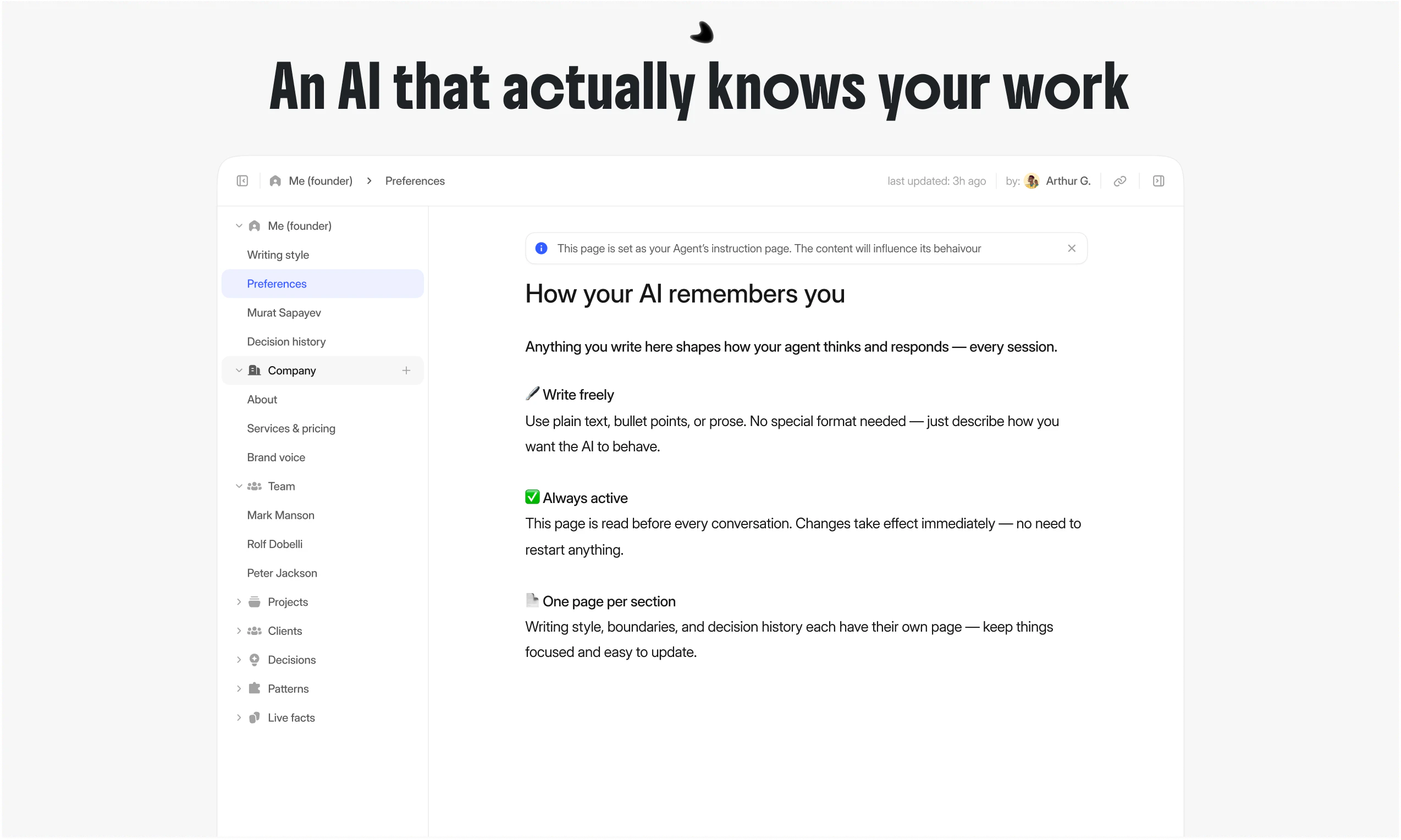
The core innovation in Cleo is not automation for its own sake—it’s automation with radical transparency. Rather than making decisions in the background and surfacing results, Cleo learns continuously from team conversations and flags every fact it extracts for confirmation or correction. This approach addresses a common friction point in team software: when systems learn from usage data, teams often don’t know what the system actually knows, or worse, what it gets wrong.
Cleo uses a three-tier confidence model to decide what it can act on independently:
- Confidence above 85%: Acts silently (e.g., posting a standup template)
- Confidence 60–85%: Surfaces the action before execution (e.g., confirming meeting attendees)
- Confidence below 60%: Routes to team review before proceeding
This mechanic is subtle but important. Instead of bombarding teams with “verify this” notifications, Cleo learns which decisions can be safe and routine, freeing human attention for decisions that actually need it. The tool integrates directly into Telegram and Slack, eliminating context switching that plagues standalone PM software—you’re already in your team chat, so Cleo operates there without adding a new tab or login.
Setup takes roughly one minute. Teams point Cleo at their integrations (Linear, Notion, Gmail, Calendar), authenticate, and the bot begins observing and learning. For early-stage teams or founders working solo, this low friction is particularly valuable; traditional PM tools like Linear, ClickUp, and Asana all demand upfront investment in configuration and adoption.
Key Capabilities: What Cleo Actually Handles
Standups and Status Tracking
Cleo automates the mechanics of standups: collecting updates from team members, synthesizing them, and posting summaries in Slack or Telegram. Rather than scheduling a meeting, teams can run async standups where Cleo gathers input and surfaces blockers. For distributed or async-first teams, this alone can eliminate weekly meeting debt.
Follow-ups and Decision Tracking
Teams generate decisions constantly—in meetings, Slack threads, emails, pull request comments. Cleo monitors these conversations, extracts action items and decisions, and surfaces them for confirmation. Once confirmed, it maintains a transparent record of what was decided, by whom, and when. This becomes invaluable as teams grow and institutional memory becomes fragile.
Communication and Research
Cleo learns your tone and can draft emails, Slack messages, and responses in your voice. It can also research competitors, clients, and topics on demand—surfacing findings with sources so teams can audit the research rather than treating it as an oracle.
Trust Levels: Granular Permission Control
Cleo offers five distinct permission tiers, from observer (read-only access to team activity) to full operator (can execute decisions and post communications). This structure lets teams onboard Cleo gradually—starting with observation, then expanding its authority as confidence builds. A team might start with Cleo as an observer that only surfaces findings, then promote it to operator for routine standups, while keeping human gates on major decisions.
Use Cases for Lean Teams
the tool’s design reflects a specific market: early-stage companies, solo founders, and small product teams where PM work often falls on the founder or a part-time product lead. Common scenarios include:
- Async-first teams: Teams distributed across time zones can replace synchronous standups with Cleo-coordinated async updates, capturing the same information with less meeting overhead.
- Founder-operator shops: When a founder is juggling product, strategy, and fundraising, Cleo can handle routine PM work (status collection, decision logging, follow-up) so the founder’s attention stays on core decisions.
- Teams scaling from zero structure: Early teams often lack PM infrastructure entirely. Cleo’s one-minute setup means teams can build structure without waiting for a dedicated PM hire or weeks of tool configuration.
- Lean operations teams: Similar to what we cover in our guide to marketing automation, Cleo reduces manual process work so teams can focus on execution rather than administration.
Pricing and Availability
the AI agent offers a free tier in Telegram that includes core automation and unlimited memory. This is genuinely useful for very early stage teams or founders testing the concept. Paid plans scale for teams that run heavier PM operations, with annual plans offering a discount. For context, a team running daily standups, decision tracking, and follow-ups will find the paid tiers competitively priced against alternatives.
Cleo vs. Alternatives: How It Compares
the assistant occupies a distinct niche—it’s not a replacement for Linear or Asana, but rather a PM-layer tool that can augment them. To understand where the bot fits:
| Tool | Primary Model | Setup Time | Best For | Price Entry |
|---|---|---|---|---|
| Cleo | Conversational AI (Slack/Telegram) | 1 minute | Lean teams, async work | Free (Telegram) |
| Linear | Issue tracking and roadmapping | 15–30 minutes | Engineering-focused teams | Free tier available |
| ClickUp | Unified workspace | 30–60 minutes | Cross-functional teams | $7/month |
| Asana | Project management | 30–45 minutes | Enterprise workflows | Free tier available |
| Jira | Agile project management | 45–120 minutes | Scrum-based large orgs | Free tier available |
The key difference: Linear, ClickUp, Asana, and Jira are systems of record. They require teams to centralize work, adopt their data model, and maintain rigor in entry. it assumes teams are already in Slack or Telegram and works within those spaces, extracting and organizing what’s already happening. This is a fundamentally different strategy—not a better one, but a different bet about where PM work actually lives in lean teams.
Strengths and Limitations
Strengths:
- Genuine friction reduction: By operating in Slack/Telegram, Cleo eliminates context switching for teams that already live in chat.
- Transparency by design: The confidence-scoring and source-citation model is refreshingly honest about AI limitations.
- Minimal onboarding: A one-minute setup and free Telegram tier mean early teams can test the platform with zero financial or time commitment.
- Complementary, not competitive: the tool integrates with Linear, Asana, and other tools—it’s a coordination layer, not a replacement.
Limitations:
- Limited to chat-based teams: If your team relies on email or synchronous meetings as the primary coordination mechanism, the service’s value drops significantly.
- Not a replacement for PM rigor: it automates mechanics but doesn’t design product strategy, run discovery, or make prioritization calls.
- Dependency on third-party integrations: Teams with custom or niche tools may find the system’s reach limited.
Verdict: Cleo for Lean Teams and Async Operations
the product is a strong fit for a specific market: founders, lean product teams, and distributed companies that want PM structure without the heavyweight upfront investment of traditional tools. The transparent AI design, chat-native operation, and generous free tier remove barriers to entry.
For teams that have committed to Linear as their system of record, or that need complex workflow orchestration, the platform is useful but not transformative. For the target audience—early-stage founders, lean operations, async-first teams—the tool deserves a serious trial.
As teams evaluate whether to adopt the service, they should also consider their broader infrastructure. For companies leveraging Automated Sales Machine or similar platforms for operations coordination, it could integrate into a broader suite of AI-augmented team tools—handling the PM layer while other automation handles sales, marketing, and CRM software functions.
Check out it on Product Hunt or visit the official the system website to learn more.