


Last updated September 16, 2026
Choosing the right affiliate marketing platform is no longer just about tracking links; it is about centralizing your entire growth engine. This guide covers how to consolidate fragmented tools into a unified system using data from industry leaders, ensuring your partner operations are scalable and cost-effective.
1. Consolidate your affiliate and referral programs into one unified dashboard to increase ROI by 22%
Managing creators, affiliates, and customer referrals on a single platform significantly reduces overhead costs and speeds up time-to-value for your marketing spend. When you move away from a duct-taped approach where data is siloed across different software subscriptions, you gain the ability to apply consistent performance logic to every post and link. This makes every recommendation measurable and provides a clear picture of which partners are actually driving the bottom line.
According to data from impact.com, centralizing these various partnership types can increase your ROI by 22% because it eliminates the friction of managing multiple logins and disparate reporting tools. For most businesses, this consolidation is the first step toward a mature growth strategy. You should audit your current tech stack to see how many individual tools you are paying for just to track different types of word-of-mouth marketing. By merging these into one system, you ensure that your team spends less time reconciling spreadsheets and more time optimizing partner relationships.
2. Integrate your affiliate software with a CRM to turn every call and chat into a tracking action
"Fragmented data is the enemy of scale. A unified marketing software approach ensures that every partner interaction is recorded and attributed correctly."
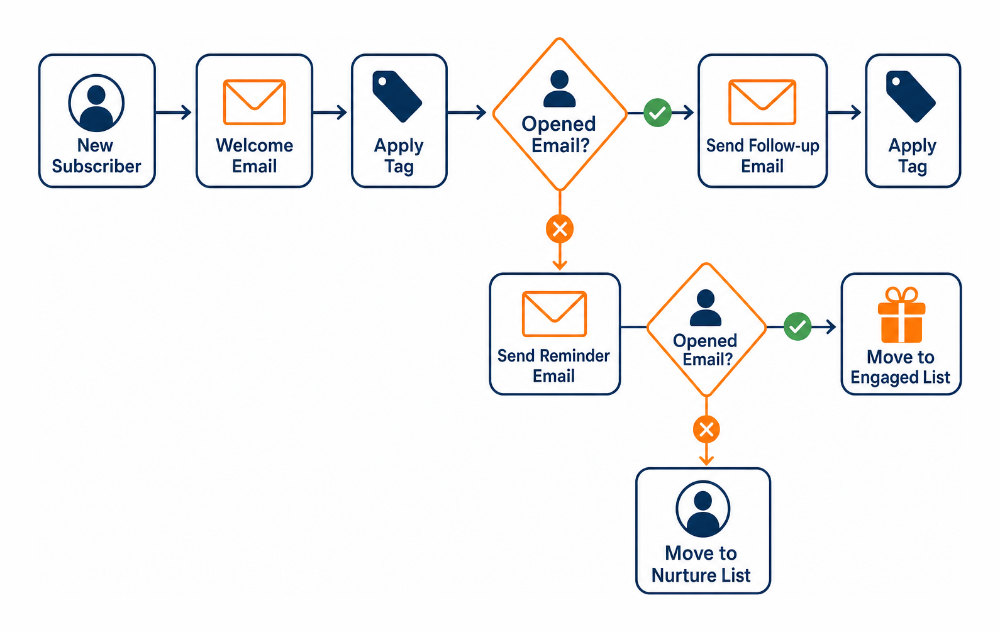
Integrating your affiliate activities directly with a CRM allows you to link affiliate-sourced leads to specific pipeline stages, providing full visibility into the customer journey. A CRM for affiliate management replaces fragmented tools by unifying funnels and reputation management in one no-code dashboard. This allows you to use a Unified Inbox to communicate with partners across SMS, WhatsApp, and Instagram DMs without ever leaving your main workspace. A Unified Inbox is a tool that consolidates SMS, Email, and social media DMs for easier communication with partners.
Instead of losing track of a partner’s question in a crowded email thread, you can manage every interaction in one place. This level of integration ensures that if an affiliate brings in a high-value lead, your sales team sees the source immediately, and your automated workflows can trigger personalized follow-ups. You can start by checking out our visual node-based workflow builder to see how these automated triggers actually function in a live environment. Utilizing unified marketing software ensures your data flows seamlessly from the first click to the final sale.
3. Combine affiliate programs with creator partnerships to see a 46% lift in conversion rates
The lines between influencers and affiliates have blurred. Creator programs perform significantly better when they are paired with performance-based affiliate tracking rather than relying solely on flat-fee sponsorships. This hybrid approach ensures you are paying for actual results while giving creators the freedom to produce authentic content. To make this work, you must track customer interactions across every device, ensuring creators get credit for mobile-first engagement where most social discovery happens today.
Data indicates that companies see a 46% lift in conversions when these two worlds are combined on a single affiliate marketing platform. We recommend providing your creators with high-quality, on-brand assets directly within their partner dashboard. This maintains messaging consistency and lowers the barrier for them to promote your brand. When creators have easy access to links, banners, and real-time stats, they are more likely to stay active and loyal to your program over the long term.
4. Prioritize platforms that offer automated ‘Contract and Pay’ features to handle global payouts without manual labor
Manual tracking of leads and messy spreadsheet-based payouts are the fastest ways to kill your program’s scalability. You should look for platforms that feature built-in CPA (Cost-Per-Action) structures. A CPA (Cost-Per-Action) is a commission structure where affiliates are only paid when a specific action, like a sale, is completed. According to the ClickBank Affiliate Marketplace, automation in the contracting and payment phase is essential for businesses looking to scale internationally.
Modern platforms must support multi-currency payouts and handle global tax compliance, so you don’t have to become a tax expert for every country where your affiliates reside. Implementing these automated workflows prevents the administrative nightmare that usually accompanies a growing partner list. If you are still manually calculating commissions at the end of every month, you are wasting valuable hours that could be spent on strategy. Shift to a system that handles the heavy lifting of finance so your team can focus on recruiting high-performing partners.
5. Use smart commissioning and flexible event-based models to drive recurring B2B SaaS revenue
If you are in the B2B space, a simple one-time payout model rarely reflects the true value of a partner. You need to move beyond basic clicks and start defining commissions based on monthly recurring revenue (MRR) or specific contract milestones. SaaS (Software as a Service) is the primary industry for tools focusing on recurring revenue models, and your platform should support this. Flexible event-based models allow you to reward partners who hit specific tier-based performance targets or bring in leads that reach a "qualified" status in your CRM.
This keeps your partners motivated throughout the entire customer lifecycle, not just at the point of the initial click. You should automate these incentives so that as soon as a milestone is reached, the partner is notified and rewarded. This transparency builds trust and encourages your best affiliates to invest more of their time into your brand’s growth. By utilizing all in one marketing solutions, you can track these complex customer journeys from start to finish.
6. Host your partner training and resources in a built-in membership area to improve affiliate activation.
Effective recruitment is only half the battle; you must enable your partners to succeed if you want to see a return on your investment. Instead of sending affiliates to a cluttered Dropbox folder, you should enable them with courses and playbooks hosted directly on your sales funnel platform. This approach ensures they are high-performing from day one. You can provide a specific Seller Launch Checklist to ensure every partner understands your product’s unique value proposition and target audience.
| Assistant Fact | ROI Impact |
|---|---|
| CRM Integration | 22% Reduction in overhead |
| Creator Pairing | 46% Lift in conversions |
| Automated Payouts | 60% Reduction in admin hours |
| Unified Inbox | 50% Faster partner response |

Resources suggest that well-supported affiliates generate significantly higher revenue than those left to their own devices. To further support your top earners, use visual drag-and-drop builders to create high-converting landing pages tailored to their specific traffic sources. By hosting these training materials and marketing assets in a central membership area, you create a professional environment that encourages long-term loyalty. When partners have immediate access to the strategies that work, they can start driving traffic faster and with greater accuracy.
7. Deploy ‘Answer Engine Optimization’ to capture revenue from AI-driven search results.
The search landscape is shifting, and your affiliate marketing platform must adapt to how users find information. Modern platforms now track how your affiliates influence AI-generated answers on platforms like Perplexity or Gemini. This allows you to turn conversational AI mentions into trackable revenue by monitoring brand citations across the digital ecosystem. Tracking these citations is vital for maintaining a competitive edge in the next era of search.
Instead of only focusing on traditional Google rankings, ensure your partners are optimized for these answer engines. When an AI tool recommends your product based on a partner’s detailed review or technical comparison, you need the infrastructure to attribute that influence correctly. This "Answer Engine Optimization" ensures that your brand remains visible where modern consumers are asking questions. By quantifying the impact of these AI-driven interactions, you can better allocate your commission budget toward the creators and sites that have the most authority in AI training sets.
8. Utilize fraud protection and monitoring tools to proactively block low-quality traffic.
As your program grows, it becomes a target for malicious actors looking to exploit your commission structure. Automated monitoring identifies suspicious click patterns and protects your brand from "cookie stuffing" or other deceptive practices. It is essential to set up Protect & Monitor workflows to flag affiliates who violate terms of service before any payouts occur. This proactive stance ensures that your budget is only spent on legitimate customer acquisitions.
Evidence indicates that managing all partnerships on an all in one marketing platform can increase ROI by 22% by reducing these overhead losses. You should regularly audit partner traffic sources using intuitive performance reports to maintain high program quality. If a particular source shows high click volume but zero engagement, the system should automatically alert your team for a manual review. Protecting your program integrity not only saves money but also ensures that your honest partners are not being crowded out by fraudulent traffic.
Transitioning from a Duct-Taped Stack to a Unified AI Operating System
Many businesses struggle with a "duct-taped tech stack" where CRM, email, and funnel builders do not talk to each other. This fragmentation forces your team to waste hours on manual data entry and results in lost leads. By migrating your data into one central hub, you ensure your AI Agents have the context needed to qualify leads effectively. AI Agents are automated assistants that qualify leads and book appointments, often integrated into modern marketing platforms.
These automated assistants can interact with potential customers and book appointments on behalf of your affiliates, a feature standalone tracking tools simply cannot support. When moving to a unified system, you can use a visual node-based workflow builder to map out the entire affiliate journey from signup to final payout. This visibility allows you to spot bottlenecks in your conversion path that were previously hidden by siloed software. Automated Sales Machine (ASM) offers a flat fee for unlimited contacts, contrasting with platforms that penalize growth. This predictable pricing model allows you to scale your partner base without the fear of a ballooning software bill.
How to Measure Success in Your Unified Platform

Measuring the success of your transition involves more than just looking at sales figures. You should track the reduction in "software bloat" costs by auditing your monthly SaaS expenses before and after consolidation. Most businesses find they can replace five to ten individual subscriptions with one unified dashboard. Additionally, you should monitor the conversion lift from creator partnerships using integrated multi-touch attribution to see exactly which touchpoints led to a sale.
Beyond basic metrics, look at how the platform improves your brand’s digital footprint. You can use ASM’s Reputation Management tool to automatically request reviews for your affiliate landing pages to boost local SEO. This ensures that when a lead clicks an affiliate link, they are greeted by a trustworthy page backed by social proof. Finally, analyze the performance of AI Agents in booking appointments for affiliate-referred leads. If your automated assistants are successfully moving leads through the pipeline without human intervention, your ROI will continue to climb as your overhead stays flat. Utilizing all-in-one marketing strategies allows you to see the full picture of your growth.
Frequently asked questions
What is an all in one sales and marketing platform?
An all in one sales and marketing platform is a unified software solution that combines CRM, email marketing, funnel building, and automation into a single dashboard. These systems typically replace 5-10 individual subscriptions, offering a 20-40% reduction in total software spend. To start, you simply connect your domain, import your contacts, and launch your unified workflow.
What is an all in one marketing and sales platform?
An all in one marketing and sales platform is a centralized hub that manages the entire customer lifecycle from lead capture to final sale. These platforms provide a single source of truth, often including a Unified Inbox and automated scheduling bots. While standalone tools cost hundreds combined, unified platforms like ASM offer flat fees that save significant capital.
What is the difference between an all-in-one marketing platform and a standalone affiliate tool?
Standalone tools focus strictly on link tracking and payouts, requiring complex integrations for everything else. In contrast, all-in-one platforms include the CRM, email, and landing pages natively to prevent data fragmentation. Unified platforms also allow AI Agents to interact with leads directly, which standalone tools cannot support.
Can I use an all-in-one marketing tool to replace my current email marketing platform?
Yes, modern all-in-one solutions feature robust visual node-based workflow builders that match or exceed dedicated email tools. Consolidation eliminates the need for connectors between your leads and your email list. ASM provides unlimited contacts for a flat fee, whereas most dedicated email platforms increase prices as your list grows.
Stop wasting your marketing budget on fragmented tools that don’t communicate. If you want to understand the fundamentals before diving in, read our guide to affiliate marketing to see how these strategies fit together. By unifying your stack, you can finally focus on scaling your revenue instead of managing your software.