

If you are running a small business in 2026 and still tracking leads in a spreadsheet or relying on memory, you are competing with one hand tied behind your back. The data is conclusive: companies with a modern CRM outperform those without on nearly every measurable metric — from lead conversion and revenue growth to customer retention and team productivity. But which statistics actually matter for your business, and what do they tell you about where to invest next?
This article collects 28 authoritative CRM statistics from Nucleus Research, Salesforce, Freshworks, HubSpot, Forrester, and leading market research firms. Each stat is explained with business context, so you walk away with data you can actually use — not just a number to paste into a slide deck.
TL;DR — Top 5 Most Striking CRM Statistics for 2026
- 91% of companies with 10 or more employees use a CRM — if you are not, you are in the bottom 9%.
- $3.10 return per $1 spent is the current CRM ROI benchmark from Nucleus Research (2023, 63 case studies).
- 97% of businesses using CRM met or exceeded their sales goals in Freshworks research.
- Automated email flows generate 41% of all email revenue from just 5.3% of total sends (Klaviyo, 183,000+ brands).
- Businesses using CRM are 86% more likely to exceed their sales targets than those without one.
CRM Adoption Statistics
Understanding how widely CRM has been adopted — and by which types of businesses — is the starting point for benchmarking your own operation. If the majority of your competitors are already using CRM, you need to know that.
Stat 1: 91% of Companies with 10+ Employees Use a CRM
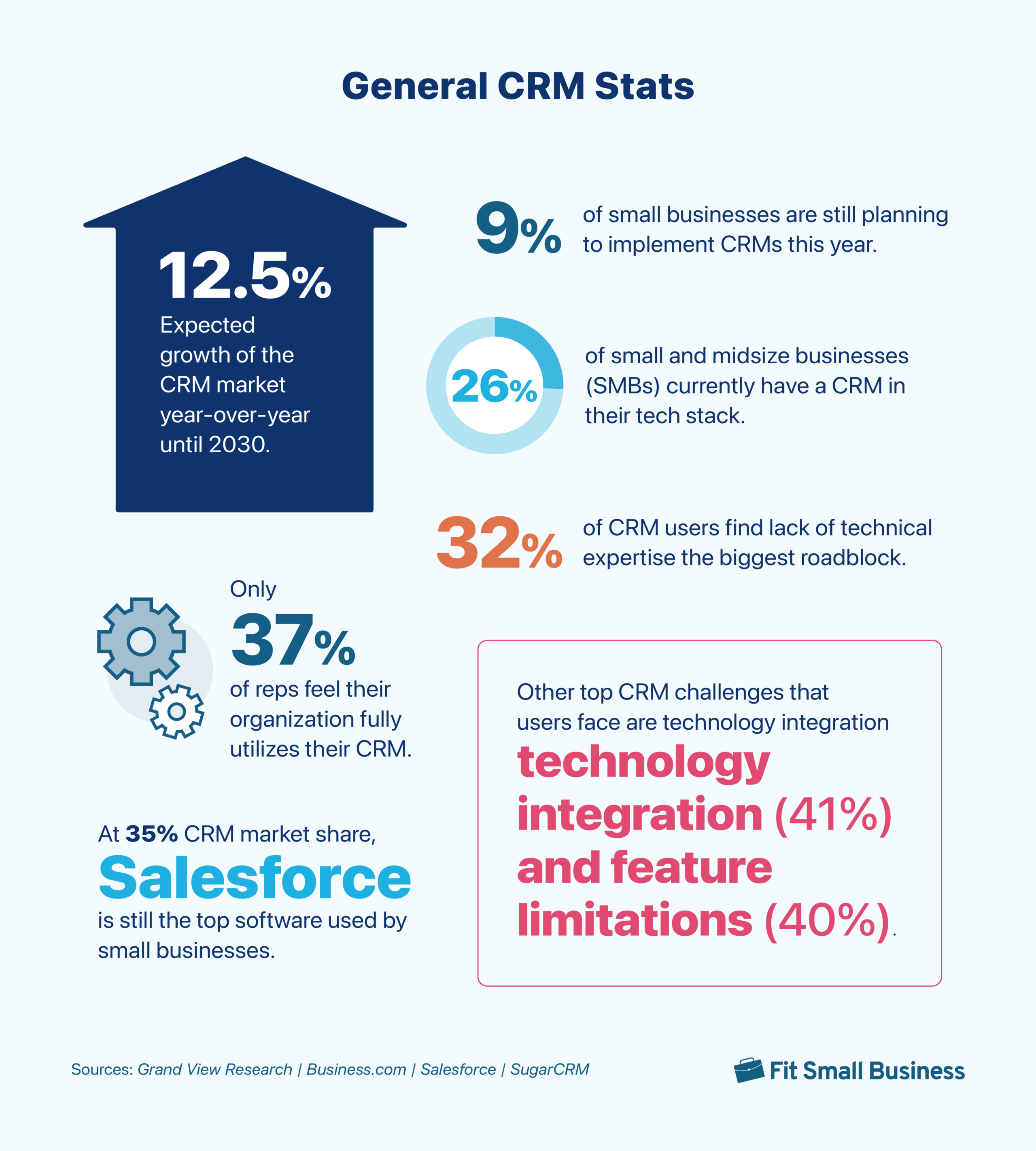
91% of companies with 10 or more employees now use a CRM system, according to the Salesforce State of Sales Report (2024).
CRM adoption has moved from optional sales tooling to a core operating system for customer-facing teams. The moment a business grows beyond a handful of people, informal tracking — a shared inbox, sticky notes, a spreadsheet — stops scaling. At 91% penetration, CRM is table stakes for any business with a real sales process.
Stat 2: 71% of Small Businesses (Under 500 Employees) Use CRM
71% of small businesses with 500 or fewer employees have adopted a CRM system, per Freshworks research (2024) based on 600 business owners and professionals.
Small business CRM adoption shows that lead tracking and follow-up automation are not only enterprise concerns. More than seven in ten small businesses have concluded that manually managing customer relationships does not scale — and the data on revenue impact explains why. If you are in the 29% that have not adopted a CRM, you are increasingly the outlier.
Stat 3: 65% of Small Businesses (Under 50 Employees) Use CRM
65% of small businesses with 1 to 50 employees use a CRM, according to HubSpot State of Marketing Report (2024).
Even among the smallest businesses, CRM adoption is the majority position. Free and low-cost CRM tiers from HubSpot, Zoho, and others have removed the cost barrier, meaning size is no longer an excuse. The businesses in this group that skip CRM are most likely losing opportunities to faster-moving competitors who track every lead systematically.
Stat 4: 94% of Technology Companies Use CRM
94% of technology businesses use a CRM system, making tech the highest-adopting industry according to Freshworks research (2024).
Technology companies often need CRM earlier because sales cycles, demos, renewals, and customer data are harder to manage manually. The near-universal adoption in tech sets a competitive standard: if you sell into technical markets or compete with tech-savvy companies, CRM is not optional.
Stat 5: 73% of All Businesses Surveyed Use CRM Software
73% of businesses overall used CRM software in Freshworks research — the broadest cross-industry adoption figure available from this 2024 survey.
Across industries, sizes, and geographies, CRM has become the default tool for managing customer relationships. This aggregate figure is the clearest signal that the question for most businesses is no longer whether to implement CRM but how well they are using the one they have.
Stat 6: The CRM Market Will Reach $126 Billion in 2026
$126.17 billion — that is the projected global CRM software market size in 2026, according to Fortune Business Insights (May 2026), growing at a 12.4% CAGR toward $321 billion by 2034.
The scale of this market reflects the depth of investment businesses worldwide are making in customer relationship infrastructure. For small businesses, this means an increasingly competitive landscape of tools, integrations, and AI features — with more options than ever at every price point.
CRM ROI and Revenue Impact
Return on investment is the number every small business owner asks about before committing to a new software category. CRM ROI data is widely cited but frequently misunderstood — here is what the actual research says.

Stat 7: $3.10 Returned per $1 Spent on CRM (2023 Benchmark)
$3.10 is the current average return per dollar invested in CRM, from Nucleus Research’s 2023 update (Research X148, 63 CRM case studies) — a 37% decline from the $4.90 benchmark a decade ago.
The often-cited “$8.71 ROI” figure comes from a 2014 Nucleus Research study and is now over a decade out of date. The current benchmark of $3.10 still represents a strong positive return, but it reflects the growing complexity and cost of running modern CRM stacks. Productivity and process efficiency — not increased revenue — now drive 51% of total CRM ROI in modern deployments.
Stat 8: 97% of CRM Users Met or Exceeded Their Sales Goals
97% of businesses using CRM met or exceeded their sales goals, according to Freshworks research (2024, 600 respondents).
This is one of the most striking adoption-outcome statistics in the CRM data landscape. Good CRM hygiene improves visibility into opportunities, task ownership, and follow-up gaps — the structural factors that determine whether deals close or slip. A 97% success rate is not a coincidence; it reflects the discipline CRM creates.
Stat 9: CRM Users Are 86% More Likely to Exceed Sales Goals
86% more likely — that is the sales goal outperformance gap between businesses using CRM and those that are not, per Freshworks research (2024).
This benchmark directly links CRM adoption to sales execution. The companies that miss their targets are disproportionately in the group operating without structured pipeline management. For a small business evaluating CRM, this number frames the decision not as a software purchase but as a competitive positioning choice.
Stat 10: Most CRM-Using Businesses Saw Revenue Increase 21–30%
21–30% revenue increase was reported by the majority of businesses after implementing CRM, according to Freshworks research (2024).
Revenue lift of this magnitude within the first year of CRM adoption signals a strong signal for prioritizing CRM setup, migration, and adoption work. Even at the lower end of this range — 21% — a business doing $500,000 in annual revenue adds $105,000 simply by structuring its sales process.
Stat 11: Salesforce AI Processed 2.4 Billion Agentic Work Units in FY2026
2.4 billion agentic work units were delivered through Salesforce’s Agentforce platform in fiscal 2026, crossing $800 million in ARR — a signal of how deeply AI is now embedded in enterprise CRM operations.
For small businesses, this trajectory matters because AI features are rapidly cascading from enterprise CRM into SMB-tier tools. The gap between what a large company can automate and what a small business can automate is narrowing quickly. The businesses investing in CRM now are building the data foundation AI will run on next.
Stat 12: 42% Improvement in Sales Forecast Accuracy with CRM
42% improvement in forecast accuracy is reported by teams using CRM forecasting tools versus spreadsheet-based forecasting, according to Salesforce State of Sales Report (2024).
Inaccurate forecasting is one of the most expensive invisible problems in small business. When you cannot predict which deals will close, you cannot plan hiring, inventory, marketing spend, or cash flow. A 42% improvement in forecast accuracy is the difference between reactive and proactive business management.
Email and Marketing Automation Stats
CRM and email marketing automation are increasingly inseparable in modern small business stacks. The data on automated emails is some of the most compelling in this entire category.
Stat 13: Automated Email Flows Generate 41% of Email Revenue from 5.3% of Sends
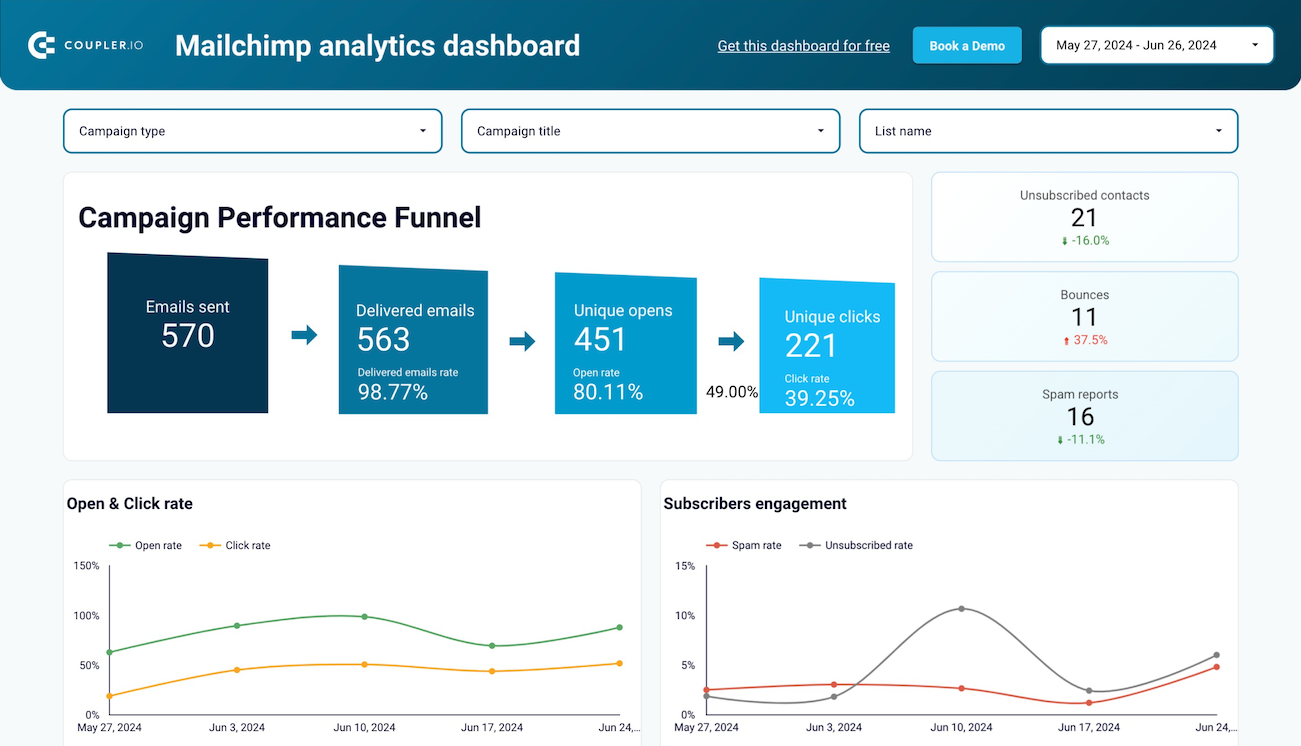
41% of all email-driven revenue comes from just 5.3% of total send volume — automated triggered flows — according to Klaviyo’s analysis of 183,000+ brands (2026 Omnichannel Benchmark Report).
This is the most important email marketing statistic for small businesses to internalize: automation is not a nice-to-have, it is the primary revenue infrastructure of modern email marketing. Broadcasting one-time campaigns generates the bulk of send volume but only 59% of revenue. Every automated flow you build compounds returns indefinitely after a one-time setup investment.
Stat 14: Automated Emails Convert at 19x the Rate of Campaigns
19x higher conversion rate for automated emails (1.49%) versus one-time campaign emails (0.08%), per Omnisend’s 2025 Ecommerce Marketing Report analyzing 20 billion+ emails from 27,000+ brands.
Automated emails win because of timing and intent, not superior copywriting. A subscriber who just abandoned a cart, just signed up, or just received a shipment is in a peak receptive state. The triggered email arrives precisely in that window — a relevance advantage no amount of A/B testing on a broadcast campaign can replicate.
Stat 15: Email Automation Delivers $5.44 ROI per $1 Invested
$5.44 average ROI per dollar invested in marketing automation across the first three years, according to RevenueMemo / Oracle synthesis (2025–2026).
Email marketing automation is the highest-return marketing technology category by a wide margin. At $5.44 return per dollar, the case for automation is clear. For small businesses choosing where to invest limited marketing budgets, automation consistently outperforms paid acquisition channels on a per-dollar-invested basis.
Stat 16: 76% of Businesses Generate Positive ROI Within Year One of Automation
76% of companies that implement marketing automation generate positive ROI within the first year of adoption, per RevenueMemo Marketing Automation ROI Report (2026).
Year-one positive ROI means the tool pays for itself before the first annual contract renewal. For a small business owner evaluating whether automation is worth the monthly subscription cost, a 76% rate of year-one breakeven should settle the question. The 24% that do not see immediate returns are typically dealing with poor data quality or incomplete flow setup.
Stat 17: Abandoned Cart Emails Achieve 50.5% Open Rates
50.5% open rate for abandoned cart emails — the most widely deployed high-value automation, used by 22.5% of brands (Omnisend 2025 data, 470 million automated sends).
For context, the average campaign email achieves a 30.7% open rate. Abandoned cart emails outperform campaigns by roughly 20 percentage points purely because of behavioral timing. A customer who left items in a cart is explicitly signaling purchase intent — and a well-timed reminder email can recover that revenue. Top 10% of brands hit 65.34% open rates and 7.69% conversion rates on these emails.
Stat 18: Welcome Emails Average 83.6% Open Rates
83.6% cross-industry open rate for welcome emails — the highest open-rate automation type according to GetResponse Email Marketing Benchmarks (2025).
New subscribers are in a state of maximum attention — they just opted in. A strong welcome series (3 to 7 emails) sets the relationship tone and establishes expectations for every subsequent communication. Welcome series emails also generate $6.16 revenue per recipient (Omnisend data), making them the third-highest revenue-generating flow type by RPR.
Stat 19: 76% of Businesses Now Use Some Form of Marketing Automation
76% of businesses use at least some marketing automation in 2026, according to RevenueMemo / AffTank research synthesis.
Marketing automation has crossed from competitive advantage to competitive necessity. The remaining 24% of businesses operating without automation are increasingly competing against companies with compounding automation advantages — flows that work while founders sleep, follow up without forgetting, and segment without manual effort.
Sales Productivity Statistics
CRM does not just impact revenue at the top line — it transforms how efficiently your sales team operates day to day. The productivity statistics below quantify what better tooling actually means for your team’s time and output.
Stat 20: CRM Saves Employees 5–10 Hours per Week
43% of businesses reported that CRM saved their employees 5 to 10 hours per week, according to Freshworks research (2024).
Time savings come from automation, centralized customer data, and fewer manual status updates. For a small business owner wearing multiple hats, reclaiming 5 to 10 hours per week per team member is transformative. That time can be redirected from data entry and status updates to actual selling, relationship building, and business development.
Stat 21: CRM Shortens Average Sales Cycles by 8–14 Days
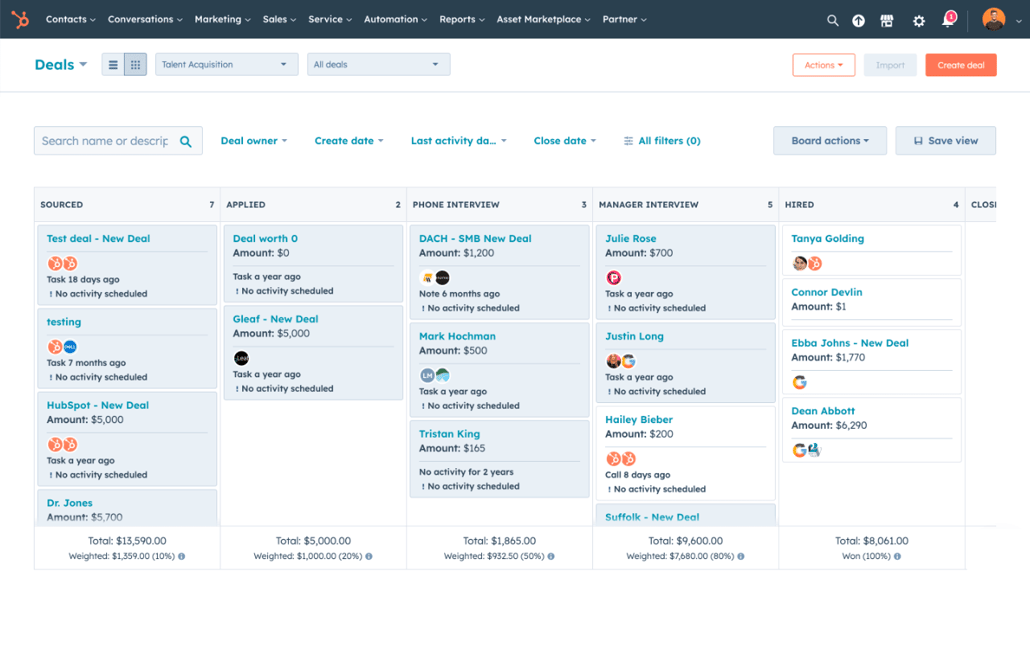
34% of businesses reported that CRM shortened their average sales cycles by 8 to 14 days, per Freshworks research (2024).
Shorter sales cycles mean faster revenue recognition, improved cash flow, and the ability to pursue more opportunities in the same timeframe. The mechanism is straightforward: CRM-powered reminders, automated follow-ups, and clear next-action visibility eliminate the delay gaps that cause deals to stall between touchpoints.
Stat 22: 29% Average Boost in Sales Productivity After CRM Adoption
29% average lift in sales productivity after CRM adoption, according to Salesforce State of Sales Report (2024).
A 29% productivity increase means your existing sales team can handle 29% more pipeline without adding headcount. For small businesses where hiring is constrained by budget, that lift is the equivalent of adding nearly one-third of a salesperson to your team at no additional payroll cost. CRM pays for itself through efficiency gains alone before even counting revenue impact.
Stat 23: AI in CRM Improves Sales Productivity by up to 30%
30% increase in sales productivity from AI integration in CRM systems, per Nucleus Research (September 2024, Y142 — AI in CRM analysis of five organizations).
AI-enabled CRM features — predictive lead scoring, automated data entry, next-step suggestions, and email drafting — are shifting time from administrative work to strategic selling. Nucleus found that AI integration specifically enhanced efficiency and improved revenue outcomes by allowing sales teams to focus on relationship management and deal execution rather than routine data entry and analysis.
Stat 24: 91% of CRM-Using Businesses Reported Lower Customer Acquisition Costs
91% of businesses reported lower customer acquisition costs (CAC) after implementing CRM, according to Freshworks research (2024). Specifically, 49% saw CAC decrease by 11 to 20%.
Lower acquisition costs directly improve unit economics and marketing ROI. CRM reduces wasted acquisition spend by improving follow-up rates, segmentation precision, and conversion tracking. When you know exactly where leads are in your pipeline and which sources convert best, you stop spending money on channels and tactics that do not produce customers.
Stat 25: 93% of Businesses Saw Higher Customer Retention After Using CRM
93% of businesses saw higher customer retention rates after implementing CRM, per Freshworks research (2024).
Acquiring a new customer costs five to seven times more than retaining an existing one — a well-established economics principle. CRM creates the visibility needed to proactively engage customers before they churn: service reminders, renewal alerts, check-in sequences, and satisfaction tracking all become systematic rather than reactive when built on a CRM foundation.
The Cost of NOT Using a CRM
The adoption statistics show what CRM enables. This section looks at the inverse: what the data says about the ongoing cost of operating without structured customer relationship management.

Stat 26: 70% of CRM Users Cite Poor Data Quality as the Top Barrier to Value
70% of CRM users report inconsistent data quality as the top barrier to getting value from their CRM, according to Validity State of CRM Data Health Report (2024).
This statistic applies even more sharply to businesses without CRM — they typically have data spread across inboxes, spreadsheets, and memory, making data quality problems structurally invisible. Without a central system, you cannot even audit the problem. Poor data quality means missed follow-ups, duplicate outreach, and forecasting built on guesswork.
Stat 27: B2B Contact Data Decays at 22.5–70% Annually
22.5–70% annual decay rate for B2B contact data, cited across sources by industry and contact type — meaning a meaningful percentage of every contact database becomes inaccurate within 12 months.
People change roles, companies, phone numbers, and email addresses constantly. Without a CRM with active data hygiene processes, a business’s contact database quietly becomes a list of former colleagues and stale leads. Businesses without CRM often discover this problem only when response rates collapse or a major sales push generates poor results from a database they assumed was current.
Stat 28: 30–60% of CRM Implementations Fail to Meet Original Objectives
30–60% of CRM implementations fail to meet their original business objectives, according to Forrester Research CRM Implementation Study (2023). The dominant cause is poor user adoption, not missing functionality.
This statistic cuts both ways: it confirms that simply purchasing a CRM is not enough — and it explains why so many small businesses that “tried CRM” concluded it did not work. The failure is almost never the software. It is the absence of defined pipeline stages, trained users, clean data, and executive enforcement of CRM-first workflows. For businesses evaluating CRM for the first time, understanding this before implementation is the difference between becoming a success statistic or a failure statistic.
Frequently Asked Questions About CRM for Small Business
Do small businesses actually need a CRM?
Yes — once you have more than 50 to 100 active relationships to manage, a spreadsheet stops being viable. CRM becomes essential when dropped follow-ups start costing you deals. Research shows 71% of small businesses with under 500 employees have already adopted CRM, and those using it are 86% more likely to exceed their sales goals than those operating without one.
What ROI can a small business realistically expect from CRM?
Nucleus Research’s most current benchmark (2023, 63 case studies) puts average CRM ROI at $3.10 returned per $1 spent — representing productivity and process efficiency gains, not just revenue lift. Freshworks data shows most businesses see a 21–30% revenue increase after implementation. Individual results vary significantly based on implementation quality, user adoption, and data hygiene — but the breakeven timeline for most SMB implementations is 1 to 3 months.
How does CRM connect to email marketing automation?
Modern CRM platforms integrate directly with email automation, using contact data and behavioral triggers to send the right message at the right time. Automated email flows driven by CRM data — welcome series, abandoned cart recovery, post-purchase sequences — generate 41% of all email revenue from just 5.3% of total send volume (Klaviyo, 2026). The CRM is the brain; email automation is the delivery system.
What is the biggest mistake small businesses make with CRM?
Purchasing CRM without a plan for adoption. Forrester research shows 30–60% of CRM implementations fail to meet objectives, and the root cause is almost always poor user adoption rather than software limitations. Small businesses that succeed with CRM define clear pipeline stages before going live, train every user properly, and enforce CRM-first workflows from day one. The software itself is rarely the problem.
The 2026 CRM Landscape: What These Statistics Tell Small Business Owners
The macro-trend across all 28 statistics is clear: CRM has moved from enterprise software to small business operating infrastructure, and the businesses that treat it as such are outperforming on every metric that matters — revenue growth, sales cycle length, customer retention, and team productivity. The gap between CRM-equipped businesses and those still operating manually is not shrinking; it is widening as AI capabilities compound the advantages of businesses with clean, structured customer data. If you are ready to see what a modern CRM can do for your pipeline, request a demo of the Automated Sales Machine and put these statistics to work in your own business.
Sources: Nucleus Research — CRM ROI, Digital Applied — CRM Statistics 2026, Scallar — CRM Adoption Statistics (Freshworks data), AMW — CRM Statistics 2026 (Salesforce/HubSpot/Forrester data), Affinco — 50+ CRM Statistics 2026, Stripo Research — Email Automation Benchmarks 2026, Klaviyo — Email Marketing Benchmarks, MailerLite — Email Marketing Conversion Rate