
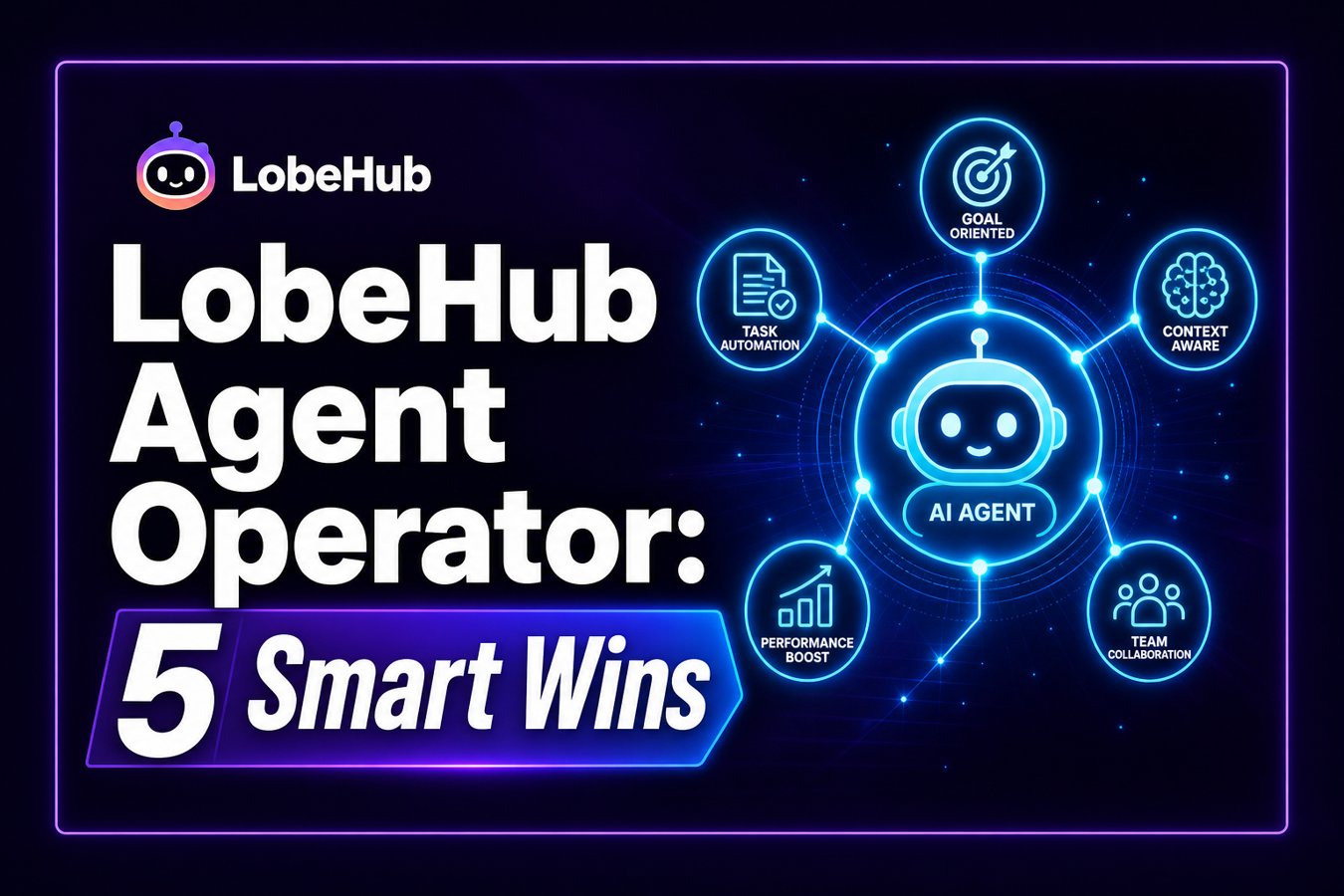

LobeHub — a quick look at the lobehub agent operator launched on Product Hunt.

LobeHub — Your Chief Agent Operator for multi-agent work
469 upvotes · #1 Product of the Day · Launched May 18, 2026 — View on Product Hunt
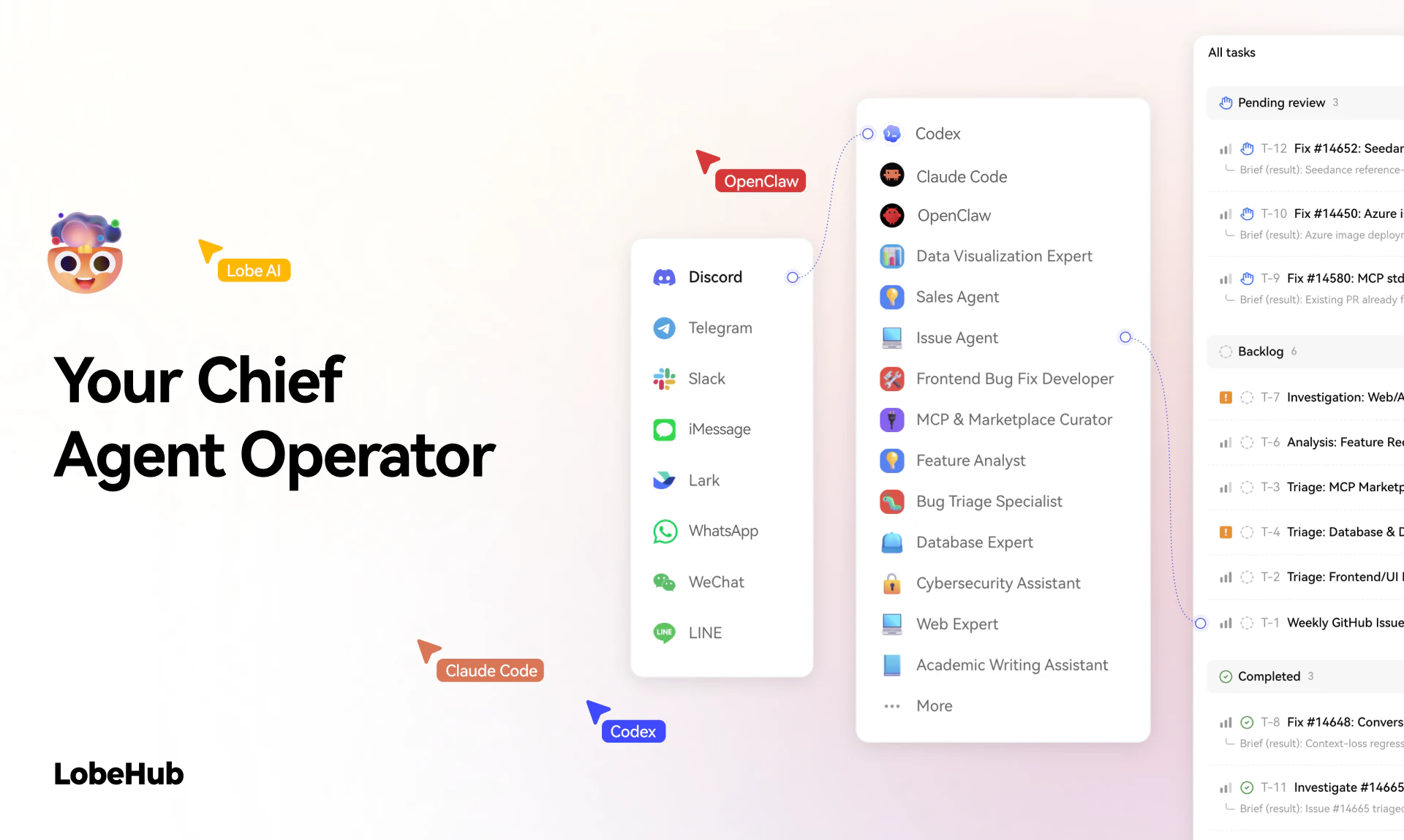
LobeHub has arrived as a Chief Agent Operator that fundamentally changes how small business teams orchestrate AI work. The product—ranked #1 on Product Hunt on May 18, 2026—tackles a real friction point: coordinating multiple AI agents without drowning in manual handoffs. Describe a goal to the lobehub agent operator, and it assembles the right agents, runs tasks in parallel across cloud infrastructure, routes work intelligently between AI models, and surfaces only high-stakes decisions back to humans via Slack, Discord, Telegram, or iMessage. The result is less context-switching overhead and more executable outcomes.
Topics: Productivity, Artificial Intelligence
What LobeHub Does
LobeHub functions as an orchestration layer for multi-agent workflows. Instead of juggling separate AI tools, tabs, and integration points, teams define their work objective once. The platform then intelligently composes an agent team, executes tasks in parallel, manages model routing, and handles all the housekeeping—logging, retries, error handling—behind the scenes. When LobeHub needs human judgment, it routes a summary back through existing communication channels. This architecture eliminates the context-loss that comes from switching between different tools and dashboards.
For small business owners evaluating workflow automation, the proposition is straightforward: spend less time managing tools and more time on outcomes that move the needle. The lobehub agent operator handles the orchestration complexity so teams can focus on strategy and execution.


Key Features of the LobeHub Agent Operator
The feature set is built around reducing operational friction in AI-driven work:
- Multi-agent assembly: Automatically composes agent teams based on the task description, matching skill requirements to available agents without manual configuration.
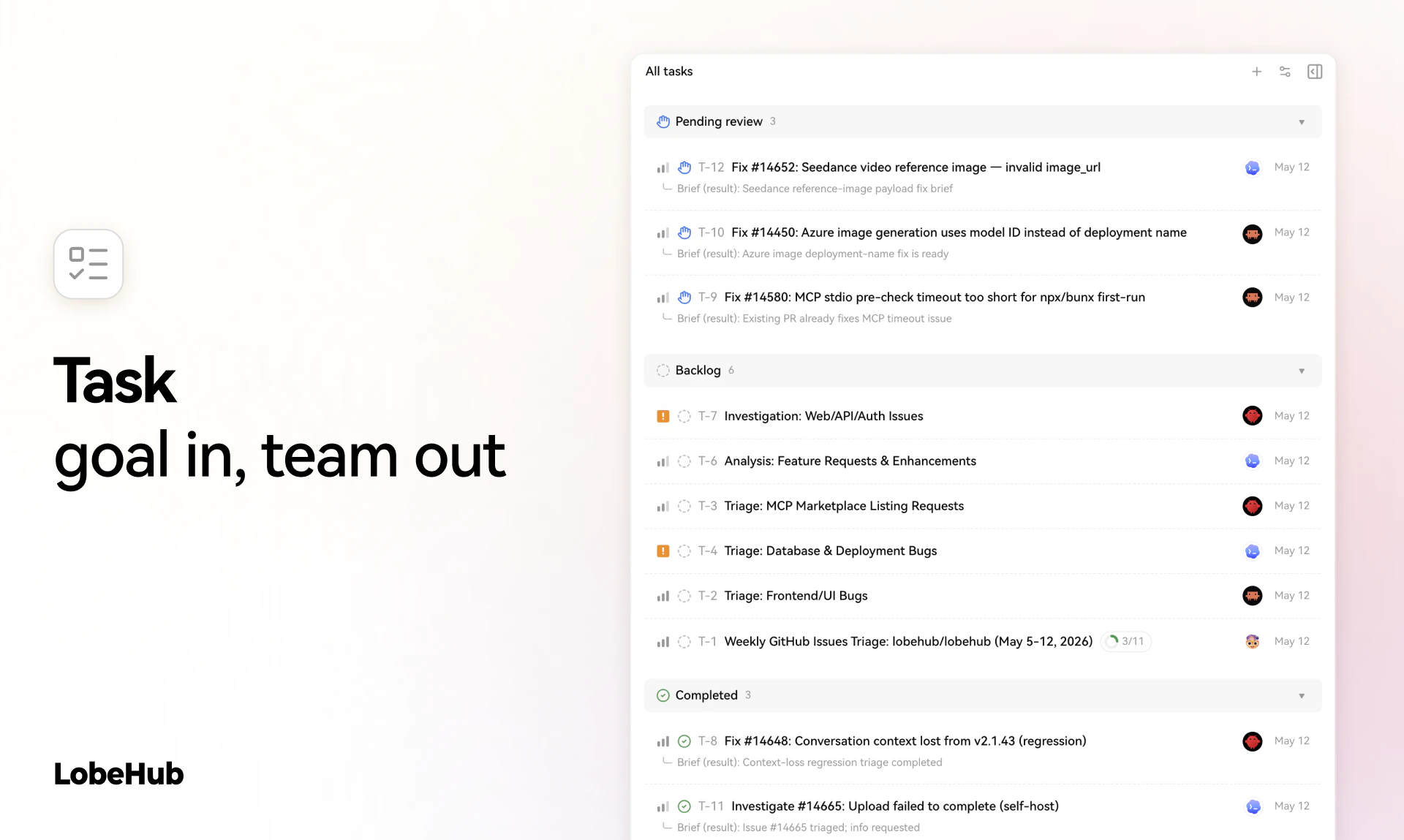
- Parallel task execution: Runs independent work streams simultaneously in cloud infrastructure, compressing timelines compared to sequential processing.
- Intelligent model routing: Routes work across different AI models based on cost, speed, and accuracy requirements—no lock-in to a single provider.
- Native channel integration: Surfaces decisions and summaries directly to Slack, Discord, Telegram, or iMessage so teams stay informed without leaving their communication hub.
- Transparent decision logs: Maintains full audit trails of agent actions, reasoning, and outcomes for compliance and learning.
- Cloud-native execution: Runs compute in the cloud, meaning no local infrastructure overhead or bottlenecks.
These features are particularly valuable for small operations where each team member wears multiple hats. The lobehub agent operator removes the coordination tax that comes with AI-driven work, allowing teams to scale output without proportional headcount increases.
Who It’s Built For
LobeHub targets small to mid-market business teams that are already exploring AI but hitting the coordination wall. Common use cases include content production teams (requiring research, drafting, and review agents), customer operations (combining support, escalation, and documentation agents), and revenue teams (blending prospecting, qualification, and outreach agents).
The platform appeals to founders and operators who value tooling efficiency. Rather than maintaining a sprawling stack of point solutions, teams can consolidate AI orchestration under one intelligent system. This reduces vendor management overhead and creates a cleaner audit trail for regulatory or quality-assurance requirements.
LobeHub is not designed for non-technical users building simple automation—those markets are well-served by no-code RPA tools. Instead, it targets operators comfortable defining work objectives in technical terms and trusting the system to orchestrate the execution layer.
Pricing and Availability
LobeHub is live and available immediately on Product Hunt. For detailed pricing structure and plan options, interested teams should consult the official LobeHub website, as pricing details may vary based on usage volume, agent complexity, and integration scope. Early adopters can evaluate the platform directly through the Product Hunt listing.
How It Compares to Other AI Agent Platforms
The AI agent orchestration space includes platforms like AutoGPT, Crew AI, and various enterprise workflows. LobeHub differentiates by prioritizing operational simplicity: rather than requiring users to hand-code agent definitions, the lobehub agent operator infers team composition from task descriptions. This abstraction layer is meaningful for small teams without dedicated ML engineering staff.
Additionally, LobeHub’s emphasis on outcome-first notification—surfacing only decisions back to humans—reflects a maturity in thinking about AI-human collaboration. Many competitors prioritize visibility over signal; LobeHub inverts that to reduce alert fatigue.
Pros and Cons
Pros:
- Dramatically reduces the operational overhead of managing multiple AI agents and tools in parallel.
- Native integration with existing communication channels (Slack, Discord, Telegram, iMessage) keeps teams in flow.
- Cloud execution eliminates local infrastructure requirements and scaling bottlenecks.
- Intelligent model routing prevents vendor lock-in and optimizes costs across inference providers.
- Designed for teams without dedicated AI engineering staff—abstraction hides complexity without sacrificing control.
Cons:
- Requires clear task definition upfront; works best when objectives are well-articulated rather than exploratory.
- Limited to teams whose workflows align with the built-in agent patterns and skills.
- New product means limited case studies and long-term usage data compared to mature platforms.
- Depends on third-party AI model availability and pricing, which teams cannot fully control.
The Verdict for Small Business Owners
The lobehub agent operator represents a meaningful step forward in how small business teams can leverage AI without drowning in operational complexity. By automating agent coordination and surfacing only high-value decisions, the platform directly addresses a real pain point: the friction of managing multiple AI tools and integrations. Additional context on AI orchestration trends can be found in research from Gartner, which tracks emerging patterns in enterprise AI automation.
Small business operators should evaluate LobeHub based on their current AI tooling and coordination costs. If context-switching and manual agent management are eating time, the platform merits a serious trial. For teams whose workflows align with the agent-based execution model, the platform delivers clear ROI through reduced overhead and faster outcomes.
Check out LobeHub on Product Hunt or visit the official LobeHub website to learn more.