

ReactVision Studio — Build AR/VR Apps in React Native + ship directly to devices
250 upvotes · #3 Product of the Day · Launched May 18, 2026 — View on Product Hunt
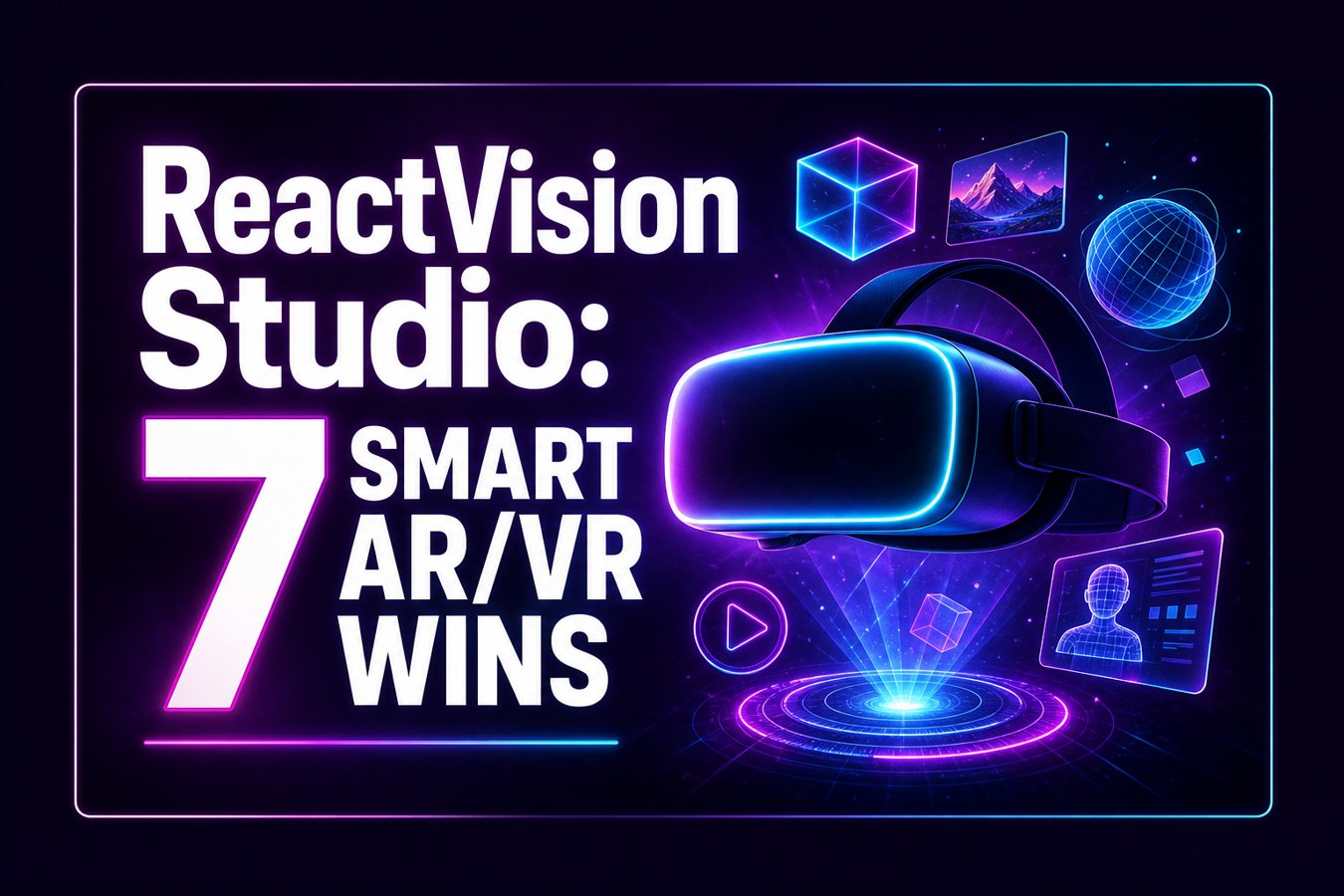
ReactVision Studio has arrived as a developer-focused alternative to traditional game engines. This browser-based reactvision studio editor allows React developers to build AR and VR experiences using drag-and-drop 3D design, AI-powered asset generation, and direct deployment to iOS, Android, and Meta Quest devices—all from a single React Native codebase. With over 100,000 npm installs and an open-source renderer, ReactVision Studio addresses a critical gap in the spatial computing ecosystem.
Topics: Virtual Reality, Developer Tools, Augmented Reality
What ReactVision Studio Does
ReactVision Studio is a browser-based visual editor designed specifically for developers who want to build immersive AR and VR applications without learning C# or diving into complex game development pipelines. The platform eliminates the friction between design and deployment by allowing creators to compose spatial experiences using a visual interface, then ship those experiences natively to multiple platforms from a single React codebase.
The core workflow centers on three capabilities: designing 3D scenes through drag-and-drop interfaces, generating AI-powered 3D assets from text and image prompts, and previewing designs in real-time on physical devices using the StudioGo mobile app. Once a project is ready, developers deploy to iOS, Android, and Meta Quest without writing separate codebases or managing platform-specific asset pipelines. ReactVision Studio leverages the proven ViroReact library as its underlying open-source renderer, ensuring compatibility with Expo and eliminating vendor lock-in concerns.



Key Features of the app
the service combines visual design tooling with developer infrastructure. The drag-and-drop 3D object placement system lets non-engineers or rapid prototypers compose scenes without touching code, while the built-in AI asset generator accelerates content creation by producing 3D models from text descriptions or image inputs. The live preview system syncs changes from the desktop editor to the StudioGo app on mobile devices, enabling designers to validate spatial layouts in real-world environments before finalizing projects.
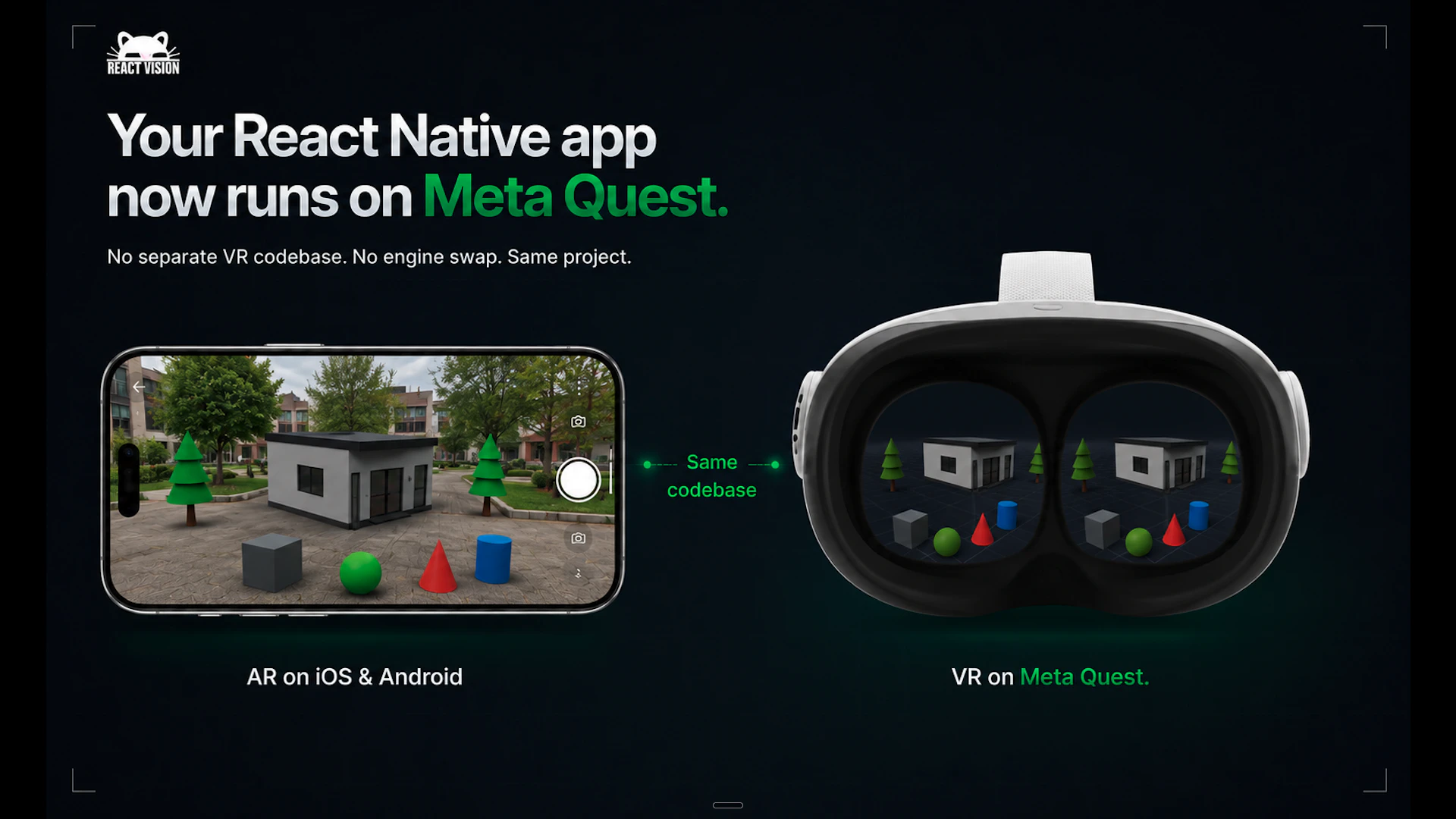
Cross-platform deployment represents a significant advantage for small teams. A single React Native project compiles to iOS, Android, visionOS, and Meta Quest, eliminating the need to manage separate Unity or Unreal projects for different platforms. The open-source renderer—licensed under the MIT License with no runtime fees—means developers retain full control over their technology stack and avoid platform dependencies that could create vendor lock-in. With 100,000+ npm installs and active community maintenance, the platform provides the infrastructure stability that production apps require.
Who Should Use It
the product targets three distinct audiences. React Native developers building mobile apps represent the primary audience—they already understand the component model, styling systems, and deployment workflows the platform uses. Small business owners exploring AR or VR product features without building internal game development teams can prototype and launch spatial experiences using this solution’s visual tools and AI asset generation.
Indie game developers and experience creators also benefit significantly. Rather than licensing expensive game engines or learning new programming languages, creators can leverage their existing JavaScript and React Native knowledge to build immersive apps. Teams building for Meta Quest, which requires native app optimization, gain particular advantage from the integrated Quest deployment pipeline.
Pricing and Open Source Model
it operates on a free, open-source model during its public beta phase. There are no runtime fees, no feature paywalls, and no restrictions on commercial use. Developers can examine the entire codebase on GitHub, fork it for custom modifications, and deploy to production without licensing concerns. This approach contrasts sharply with traditional game engines that impose revenue-sharing agreements or per-seat licensing models.
The underlying ViroReact library is licensed under the MIT License, removing legal and financial barriers that often prevent small teams from adopting spatial computing tools. This positioning makes the tool particularly attractive for bootstrapped founders and solo developers who cannot absorb enterprise licensing costs.
How It Compares to Unity and Unreal
Unity and Unreal Engine remain dominant in 3D game development, but the platform addresses a different market segment. Both traditional engines require developers to learn C# or C++, manage separate projects for each target platform, and operate within each engine’s proprietary ecosystem. This approach introduces onboarding friction for web developers and requires desktop application installation.
the app eliminates these barriers by using React Native as its foundation. Developers familiar with JavaScript, React, and Expo use the exact same mental models they apply to mobile app development. The browser-based editor runs in any modern web browser without installation overhead. Cross-platform deployment happens automatically from a single codebase, whereas Unity and Unreal require developers to maintain separate projects or complex build pipelines for iOS, Android, and VR platforms.
That said, Unity and Unreal excel at high-fidelity 3D graphics and complex physics simulations. the service optimizes for rapid prototyping, cross-platform deployment, and developer velocity rather than photorealistic rendering. The choice depends on project requirements rather than absolute capability.
Pros and Cons
Advantages: Eliminates platform fragmentation by compiling to iOS, Android, visionOS, and Meta Quest from a single codebase. The visual editor reduces the skill floor—non-engineers can prototype spatial experiences without writing code. AI asset generation accelerates content creation cycles significantly. Open-source licensing removes vendor lock-in and licensing costs. The StudioGo live preview tool enables real-world validation before deployment.
Limitations: As a public beta product, the product lacks the rendering fidelity and physics capabilities of mature game engines like Unity or Unreal. Community feedback indicates latency in syncing desktop editor changes to mobile previews, which can slow iteration cycles during development. The platform remains early-stage, and long-term roadmap visibility is limited compared to established engines backed by major corporations.
The Verdict for Small Business Builders
this solution represents a meaningful shift in spatial computing accessibility. By removing the requirement to learn game development frameworks and eliminating vendor lock-in through open-source licensing, the platform enables React developers and small teams to enter the AR and VR market without massive infrastructure investments. For indie developers and small business owners familiar with React Native, it offers a clear path to building and shipping spatial experiences. The 250 Product Hunt votes and 100,000+ npm installs reflect genuine community adoption.
Check out the tool on Product Hunt or visit the official the platform website to learn more.