

Businesses sending text messages to customers achieve open rates above 90 percent, compared to roughly 20 percent for email. That single metric explains why sms marketing software has become one of the most contested categories in marketing technology. The problem is the market is crowded, compliance requirements are real, and the cost difference between platforms can be dramatic. This guide compares 10 platforms across pricing, deliverability, compliance tooling, and integration depth so buyers can make a defensible decision rather than a hopeful one.
Whether the use case is a retail flash sale, a restaurant reservation reminder, or a healthcare appointment notification, the platform choice has downstream consequences that are hard to reverse once subscriber lists are built inside a vendor’s system.
Quick Answer / TL;DR
Choosing the right sms marketing software comes down to three decisions: standalone vs. integrated, pricing model, and compliance depth.
Best overall for integrated marketing: Automated Sales Machine (ASM) — combines SMS with CRM, email, automations, and pipelines in one platform.
Best standalone SMS for e-commerce: Attentive — strong segmentation, Shopify-native integrations, but expensive at scale.
Best for tight budgets: SimpleTexting — transparent pricing, no long-term contracts, good deliverability for small lists.
What Is SMS Marketing Software and Why Does It Matter?
SMS marketing software is a platform that enables businesses to send promotional or transactional text messages to opted-in subscribers at scale. The core functionality includes contact list management, broadcast scheduling, two-way messaging, compliance opt-out handling, and analytics. More advanced platforms layer in automations, segmentation, A/B testing, and integrations with e-commerce or CRM systems.
The category matters for several reasons. First, SMS reaches people where email increasingly does not. The average person checks their phone within three minutes of receiving a text. Second, SMS works across demographics in ways that social platforms do not — there is no algorithm suppressing reach. Third, the regulatory landscape (TCPA in the United States, GDPR in Europe) creates real liability for non-compliant campaigns, which means platform choice is also a compliance decision.
For businesses already running marketing automation software, the question is rarely whether to add SMS but which tool integrates most cleanly with existing workflows. Siloed point solutions create data fragmentation; unified platforms reduce it.
The market is broadly split into three categories:
- Standalone SMS platforms (SimpleTexting, EZ Texting, SlickText, Textedly, TextMagic) — focused tools that do SMS well but require integrations for everything else.
- E-commerce-native SMS tools (Attentive, Postscript, SMSBump) — built around Shopify and similar platforms, strong on revenue attribution but narrow in scope.
- Integrated marketing platforms (Klaviyo SMS, Twilio, Automated Sales Machine) — SMS as one channel inside a broader marketing or communications stack.

The 10 Best SMS Marketing Software Platforms Compared
The table below summarizes the key decision variables. Full platform analyses follow.
| Platform | Best For | Starting Price | Free Trial |
|---|---|---|---|
| Automated Sales Machine | All-in-one CRM + SMS + automation | See pricing page | Demo available |
| SimpleTexting | SMBs wanting transparent pricing | $29/mo (500 credits) | 14-day free trial |
| EZ Texting | Non-profits and community groups | $25/mo | Free plan available |
| SlickText | Loyalty and keyword campaigns | $29/mo (500 texts) | 14-day free trial |
| Textedly | Budget-conscious list growth | $26/mo (1,200 texts) | 14-day free trial |
| TextMagic | Pay-as-you-go international SMS | $0.049/text (pay-per-use) | Free trial credits |
| Attentive | Enterprise e-commerce brands | Custom (est. $400+/mo) | Demo only |
| Klaviyo SMS | E-commerce with existing Klaviyo email | Bundled with Klaviyo plans | Free up to 150 SMS/mo |
| Postscript | Shopify merchants scaling fast | $100/mo | 30-day free trial |
| Twilio | Developers building custom SMS flows | $0.0079/text (API) | Free trial credits |
1. Automated Sales Machine (ASM)
ASM takes a different approach to SMS than every standalone tool on this list. Rather than positioning SMS as an isolated channel, ASM embeds text messaging inside a platform that also manages CRM contacts, sales pipelines, calendars, automations, email campaigns, funnels, reputation management, and AI-driven conversation bots. The result is that an SMS sent from ASM can be triggered by a CRM pipeline stage change, a missed call, a form submission, or an email non-open — without requiring a third-party integration.
For businesses that have experienced the tax of maintaining five separate marketing tools, that consolidation is a meaningful operational advantage. The SMS marketing features in ASM include two-way messaging, automated follow-up sequences, bulk broadcasts, and AI chatbot capabilities that can handle inbound replies without human intervention.
The platform also handles the missed call text-back use case natively — a feature that standalone SMS tools require third-party Zapier connections to replicate. Combined with the marketing automation engine, ASM can run multi-step nurture sequences that move between SMS, email, and voicemail drops based on contact behavior.
Pros: All-in-one eliminates integration overhead; CRM-native SMS triggers; AI reply handling; pipeline-linked automations; email + SMS unified reporting.
Cons: Broader feature set has a learning curve; not ideal for teams that only want a pure SMS point solution.
Pricing: Visit automatedsalesmachine.com/demo for a personalized pricing walkthrough.
Best for: Service businesses, agencies, and growth-stage companies that want SMS embedded inside a complete lead management system.
2. SimpleTexting
SimpleTexting is one of the most widely used standalone sms marketing software options for small and mid-size businesses. Its pricing model is credit-based and clearly documented, which is a meaningful differentiator in a market where hidden costs are common. The platform covers broadcast campaigns, autoresponders, drip sequences, keywords, and two-way messaging through a clean interface that does not require technical training.
Pros: Transparent pricing; solid deliverability; easy contact import; good customer support reputation.
Cons: No native CRM; limited automation depth; integrations require Zapier or native connectors for most workflows.
Pricing: Starts at $29/month for 500 credits. Credits roll over. MMS costs 3 credits per message.
Best for: Small businesses running regular promotional broadcasts without complex automation needs.
3. EZ Texting
EZ Texting targets community organizations, non-profits, and local businesses. It offers a free plan (25 messages/month) that gives genuine product access — not just a truncated demo. The platform’s keyword tools are well-developed, and it integrates with Mailchimp, HubSpot, and Constant Contact, which matters for teams already embedded in those ecosystems.
Pros: Free plan with real functionality; solid keyword campaigns; Mailchimp and HubSpot integrations; good compliance documentation.
Cons: Per-message pricing can escalate quickly at volume; automation capabilities are limited compared to e-commerce-focused competitors.
Pricing: Free plan available; paid plans from $25/month.
Best for: Non-profits, churches, community groups, and local businesses with modest sending volumes.
4. SlickText
SlickText is sms marketing software built around loyalty and keyword campaigns, with a strong reputation in that segment. Retailers use it heavily for text-to-join promotions and VIP subscriber programs. The platform’s analytics go deeper than most mid-market competitors, and the onboarding team is consistently praised in independent reviews for campaign strategy guidance rather than just technical setup.
Pros: Strong keyword and loyalty campaign tools; detailed analytics; good onboarding support; clean mobile app.
Cons: Plans cap on text volume, requiring upgrades as lists grow; no native email marketing.
Pricing: Starts at $29/month for 500 outgoing texts. Unlimited incoming messages on all plans.
Best for: Retail and hospitality businesses running loyalty programs and keyword-driven subscriber growth.
5. Textedly
Textedly competes primarily on text volume per dollar. Its entry plan delivers 1,200 texts per month for $26, which is meaningfully more generous than most competitors at that price point. The platform covers the standard feature set — broadcasts, autoresponders, keywords, drip campaigns, and an inbox for two-way messaging. It is not a feature innovator, but for businesses where raw volume and cost-per-message matter most, it is worth serious consideration.
Pros: High text volume per dollar; simple interface; reasonable MMS pricing; no long-term contracts.
Cons: Customer support receives mixed reviews; automation builder is basic; limited third-party integrations.
Pricing: Starts at $26/month for 1,200 texts. Annual plans reduce costs further.
Best for: Budget-conscious businesses with large subscriber lists and straightforward broadcast needs.
6. TextMagic
TextMagic approaches sms marketing software differently from the field by using a pay-as-you-go model rather than a monthly subscription with a text allotment. This structure suits businesses with irregular sending patterns — seasonal retailers, event-driven campaigns, or companies testing SMS before committing to a subscription. International SMS coverage is TextMagic’s strongest differentiator; it supports over 190 countries, which is relevant for businesses with cross-border audiences.
Pros: No monthly commitment; strong international coverage; email-to-SMS gateway; good API for developers.
Cons: Per-message costs add up fast for high-volume senders; no e-commerce integrations; automation is limited.
Pricing: Pay-as-you-go from $0.049 per text (US). Prices vary by country.
Best for: Businesses with irregular sending volumes or international SMS needs.
7. Attentive
Attentive is the enterprise-grade choice for direct-to-consumer e-commerce brands. Its identity resolution technology, dynamic segmentation, and real-time revenue attribution make it the platform of choice for brands doing significant volume on Shopify or Magento. Several published case studies document 20-35% revenue contribution from the SMS channel alone, though those results come from brands with large, well-segmented lists built over time.
Pros: Best-in-class segmentation; strong revenue attribution; enterprise compliance infrastructure; dedicated success managers on higher plans.
Cons: Pricing is not publicly listed and estimates suggest $400+/month minimum; not suitable for small businesses; onboarding is lengthy.
Pricing: Custom. Requires a sales conversation to obtain pricing.
Best for: Mid-market to enterprise DTC brands with large lists and dedicated marketing operations resources.
8. Klaviyo SMS
Klaviyo SMS is not a standalone product — it is an add-on to Klaviyo’s email platform. For businesses already using Klaviyo for email marketing, the SMS addition is compelling because it runs inside the same flow builder and shares the same audience segments. Flows that trigger on cart abandonment or browse abandonment can seamlessly incorporate SMS steps alongside email steps without any integration work.
Pros: Unified email + SMS flows; shared audience segments; strong e-commerce data integrations; transparent pricing at lower volumes.
Cons: Expensive at scale; SMS pricing layered on top of email costs; limited value if not already a Klaviyo email user.
Pricing: SMS is charged per message. Free up to 150 SMS/month; paid SMS credits start around $15/month for small volumes.
Best for: E-commerce brands already on Klaviyo email who want unified cross-channel automation.
9. Postscript
Postscript is sms marketing software built exclusively for Shopify merchants that takes a channel-focused approach e-commerce operators tend to appreciate. The platform’s revenue-per-recipient reporting gives merchants a direct line of sight to campaign ROI, and its compliance tooling for TCPA was built specifically around the e-commerce subscriber acquisition patterns (pop-up forms, checkout opt-ins) that Shopify stores use most.
Pros: Shopify-native with deep order data integration; strong compliance tooling for e-commerce opt-in flows; good analytics; 30-day free trial.
Cons: Shopify-only (no other platforms); $100/month minimum is steep for early-stage stores; limited use outside pure product promotion.
Pricing: Starts at $100/month. Usage-based pricing above base threshold.
Best for: Established Shopify merchants focused on SMS-driven revenue attribution.
10. Twilio
Twilio is not a marketing platform in the traditional sense — it is a cloud communications API that enables developers to build custom SMS workflows from scratch. The per-message pricing ($0.0079/text in the US) is among the lowest available, but the cost of developer time to build and maintain custom integrations often makes the total cost of ownership higher than subscription-based alternatives for most marketing teams.
Pros: Extreme flexibility; lowest per-message rates at scale; global coverage; robust API documentation.
Cons: Requires developer resources to implement; no native marketing UI; compliance responsibility sits entirely with the user.
Pricing: $0.0079 per outbound SMS in the US. Inbound messages also charged.
Best for: Technical teams building custom communication workflows where off-the-shelf platforms cannot meet the requirement.
How to Choose the Right SMS Marketing Software
The comparison table reveals pricing differences, but the decision framework goes deeper than per-message cost. Here are the five variables that most commonly determine which platform is the right fit.
1. Integration requirements
When selecting sms marketing software, integration depth should be the first filter if the business already runs on a specific e-commerce platform or CRM. Postscript and SMSBump are designed for Shopify; Klaviyo SMS is designed for Klaviyo email users; ASM is designed for businesses that want to eliminate the integration problem entirely by running everything in one place. See the full ASM comparison page for a breakdown of how the platform stacks up against point solutions.
2. Automation depth
Simple broadcast tools (Textedly, EZ Texting) work well for campaigns but struggle with behavioral triggers and multi-step sequences. If the goal is to send messages based on what contacts do — visiting a page, abandoning a cart, not opening an email, moving through a sales pipeline — the platform needs a genuine automation builder, not just scheduled broadcasts. This is an area where the gap between entry-level and mid-tier platforms is large. Review what a fully integrated approach looks like in the combined email and SMS feature set before committing to a point solution.
3. Volume and pricing model
Credit-based models (SimpleTexting, SlickText) reward consistent monthly senders. Pay-as-you-go models (TextMagic, Twilio) reward irregular senders. Custom enterprise pricing (Attentive) rewards brands with leverage and volume. The wrong pricing model can double the effective cost without changing the feature set at all. Run a projection of expected monthly send volume before comparing sticker prices.
4. Compliance tooling
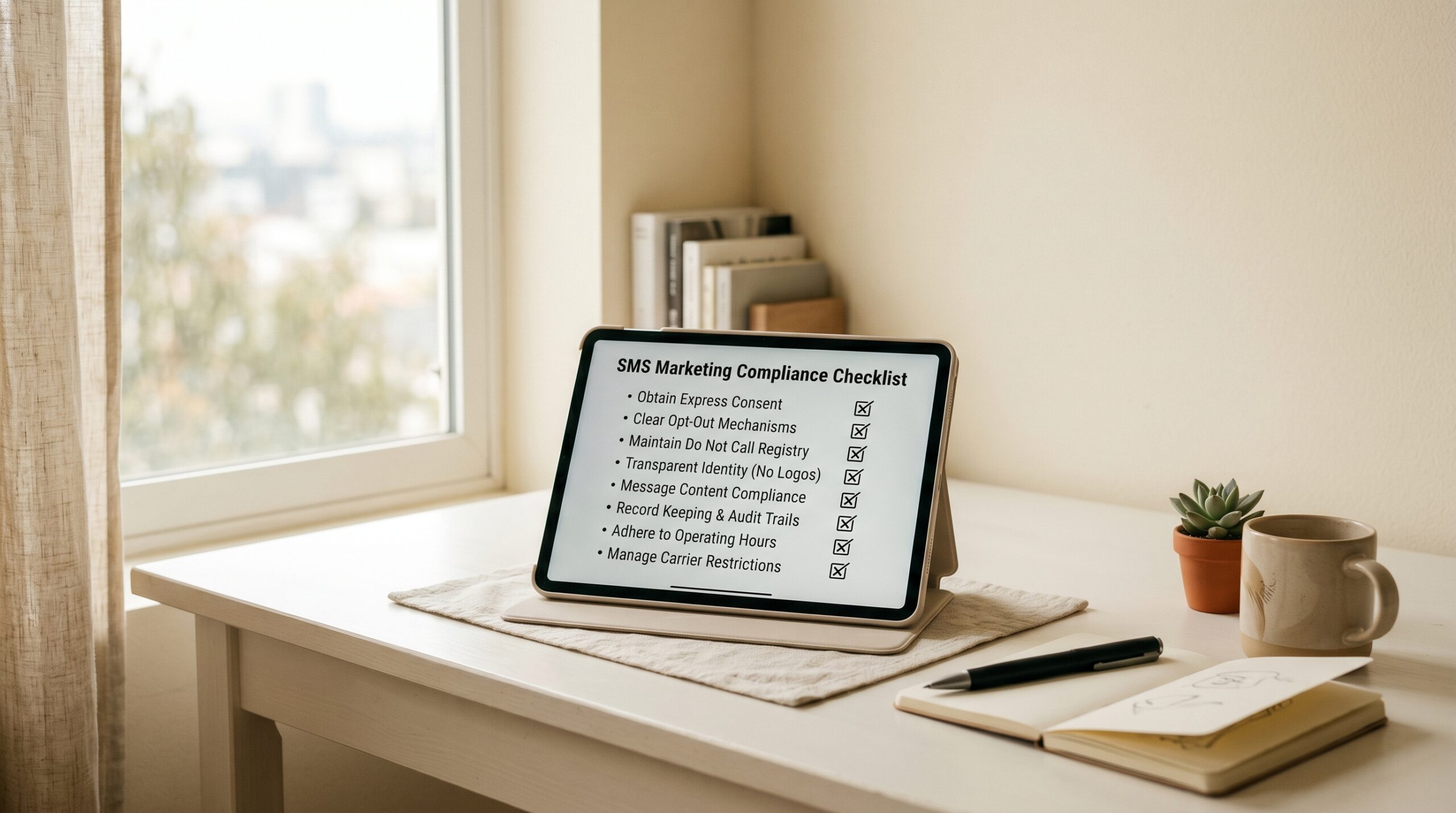
TCPA compliance in the US requires documented opt-in consent, compliant opt-out handling, and quiet hours enforcement. GDPR in Europe adds explicit consent requirements and the right to erasure. Platforms differ significantly in how much compliance infrastructure they provide versus how much responsibility they leave with the user. This topic deserves more attention than most buyer’s guides give it — see the compliance section below.
5. Support and onboarding quality
SMS marketing has a meaningful learning curve around list hygiene, send cadence, message length, and compliance. Platforms that provide strategic onboarding (Attentive, SlickText, ASM) tend to produce better early results than platforms that offer documentation and a chat widget. For teams without prior SMS marketing experience, the quality of onboarding support is a non-trivial differentiator.
SMS Marketing Compliance: TCPA, GDPR, and Consent
Any sms marketing software purchase must account for the regulatory environment. SMS marketing is the most heavily regulated digital marketing channel, and the consequences of non-compliance are among the most severe. The FCC’s TCPA guidelines allow fines of $500 to $1,500 per unsolicited message, and class action suits under TCPA have resulted in multi-million dollar settlements against brands that failed to maintain proper documentation.
The core compliance requirements for SMS marketing in 2026 are:
- Express written consent: Contacts must actively opt in to receive marketing messages. Pre-checked boxes do not qualify. The consent must be documented and retrievable.
- Clear opt-out handling: Every message must include an opt-out instruction (STOP to unsubscribe), and opt-out requests must be honored immediately. Continued messaging after an opt-out is one of the most common TCPA violations.
- Quiet hours: The TCPA prohibits messages before 8 AM or after 9 PM in the recipient’s local time zone. Platforms that do not automatically enforce time zone-aware quiet hours put this responsibility on the sender.
- Message identification: Promotional messages must identify the sending business by name.
- GDPR additions: European recipients require a legal basis for processing (typically explicit consent), the right to access their data, and the right to erasure. SMS platforms serving European audiences need to provide mechanisms for all of these.
The CTIA Messaging Principles and Best Practices document is the industry standard reference for compliant SMS program design. It covers short code vs. long code vs. toll-free number compliance, content filtering guidelines, and carrier-level requirements that apply regardless of which platform is used.
When evaluating platforms, ask specifically:
- Does the platform store consent records with timestamps?
- Does it enforce time zone-aware quiet hours automatically?
- Does it provide opt-out keyword handling out of the box (STOP, UNSUBSCRIBE, CANCEL, END, QUIT)?
- Does it support data deletion requests for GDPR compliance?
- What is the platform’s policy if a compliance violation occurs — does it provide legal indemnification or does the liability sit entirely with the account holder?
Most mid-tier platforms handle the basics. Enterprise platforms like Attentive have dedicated compliance teams. Developer tools like Twilio put the entire compliance responsibility on the implementing team. Integrated platforms like ASM build compliance into the automation layer so that opt-outs propagate across SMS and email simultaneously, reducing the risk of messaging a contact who has opted out of one channel but not another.
How Automated Sales Machine Handles SMS Marketing
ASM’s approach to SMS marketing is architecturally different from every standalone tool in this comparison. Rather than building SMS as an isolated campaign channel, ASM connects text messaging to the CRM contact record, the sales pipeline, the calendar, email campaigns, and the AI conversation layer in a single unified system.
In practical terms, this means:
- An SMS can be triggered when a lead moves into a specific pipeline stage, eliminating the need for a Zapier connection between the CRM and a separate SMS tool.
- Two-way SMS conversations can be handled by ASM’s AI bot, which qualifies leads, books appointments, and escalates to a human agent when needed — all within the same platform.
- Opt-outs from SMS automatically suppress the contact across the entire ASM platform, ensuring cross-channel compliance without manual list management.
- SMS performance data appears alongside email, funnel, and pipeline data in unified reporting, giving operators a complete revenue attribution picture.
For businesses evaluating whether to invest in a standalone SMS tool or consolidate into a platform that includes SMS natively, the ASM SMS marketing features page provides a detailed breakdown of capabilities. The comparison is particularly relevant for service-based businesses where the SMS use case is closely tied to appointment scheduling, lead follow-up, and reputation management — all of which ASM handles without additional tools.
For context on how SMS fits within a broader automated marketing strategy, the guide on reputation management software covers how review requests sent via SMS outperform email-only approaches by a significant margin in most service categories.
Industry-Specific SMS Marketing Use Cases
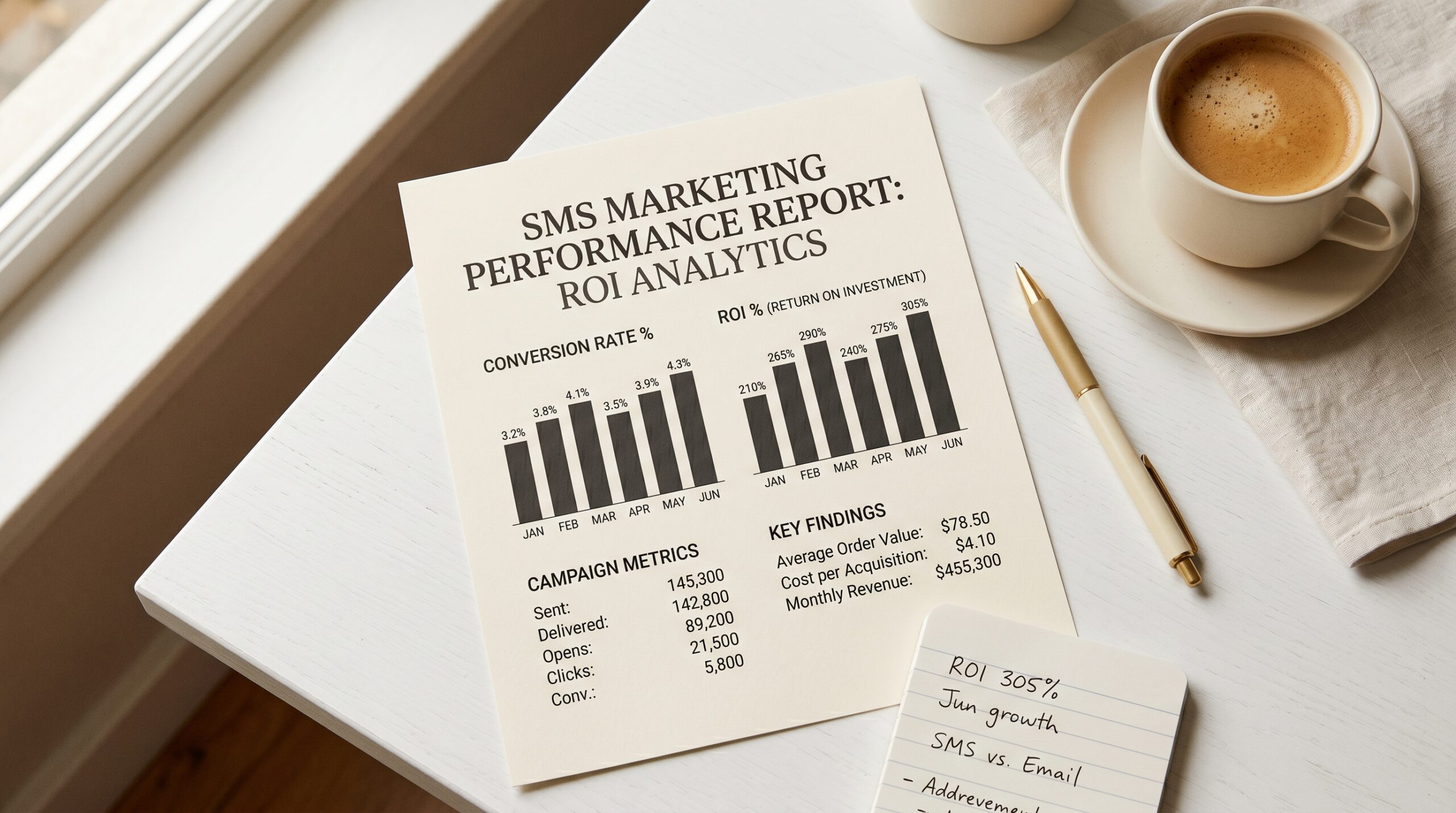
Platform capability looks different across industries, and the ROI case for sms marketing software varies by vertical. Here is how the channel performs in three high-value segments.
Retail and e-commerce
Flash sales and limited-time offers are the highest-ROI SMS use case in retail. A broadcast to an opted-in VIP list announcing a 4-hour sale window typically drives immediate conversion spikes that email campaigns cannot match on speed. Attentive, Postscript, and Klaviyo SMS are built for this pattern. Measured across multiple DTC brands, SMS-attributed revenue from flash sale campaigns averages 15-30% of total campaign revenue despite SMS lists typically being smaller than email lists.
Restaurants and hospitality
Reservation reminders, waitlist notifications, and loyalty program updates are the primary SMS use cases in food service. The operational value is measurable: restaurants using automated SMS reminders report no-show rates dropping from 20-25% to under 10% in most documented cases. Platforms with calendar integration and two-way messaging handle this use case better than broadcast-only tools. ASM’s combined calendar, automation, and SMS layer makes it well-suited for restaurants managing reservations alongside marketing campaigns.
Healthcare
Appointment reminders and follow-up messages are the dominant SMS application in healthcare. HIPAA considerations add a compliance layer beyond TCPA — platforms used for healthcare SMS must handle protected health information appropriately. Most general SMS marketing platforms are not HIPAA-compliant by default; healthcare organizations should confirm BAA availability before committing to any platform for patient-facing messaging. Transactional SMS (appointment confirmation, not promotional content) generally carries lower regulatory risk than marketing-focused campaigns in this vertical.
FAQ: SMS Marketing Software
What is the best SMS marketing software for small businesses?
For small businesses prioritizing simplicity and transparent pricing, SimpleTexting and SlickText are consistently strong choices. For small businesses that want SMS embedded inside a broader marketing and CRM system without paying for multiple tools, Automated Sales Machine provides a more complete solution. The right answer depends on whether SMS is the primary marketing channel or one component of a larger stack.
How much does SMS marketing software cost?
Entry-level standalone platforms start at $25-$29 per month for 500-1,200 messages. Mid-tier platforms with deeper automation run $100-$300 per month. Enterprise tools like Attentive use custom pricing that typically starts in the high hundreds per month. Pay-as-you-go options (TextMagic, Twilio) charge $0.005-$0.049 per message depending on volume and destination country. For businesses comparing SMS tools against all-in-one platforms, it is worth calculating the combined cost of all current point solutions before assuming a specialized SMS tool is cheaper.
What is the difference between SMS marketing and email marketing?
SMS delivers a 90%+ open rate versus roughly 20% for email. SMS messages are read within minutes; email open timing is spread over hours or days. SMS has a 160-character limit per segment and no visual design element. Email supports rich HTML, images, and long-form content. The two channels are complementary rather than competing — email for content and nurture, SMS for time-sensitive alerts and confirmations. For a detailed comparison, the email marketing software guide covers how platforms approach cross-channel sequencing. For platforms that handle both in one system, see the Brevo overview as one alternative model, and ASM for a fully integrated approach.
Is SMS marketing legal?
Using sms marketing software legally requires proper consent, compliant opt-out handling, and adherence to quiet hours requirements under the TCPA (US) and GDPR (EU). Illegal SMS marketing — sending to purchased lists, ignoring opt-out requests, or messaging without documented consent — carries significant legal liability. The compliance section above covers the key requirements in detail.
Can SMS marketing integrate with email marketing?
Most major sms marketing software platforms offer integrations with email marketing tools, but the quality of integration varies considerably. Klaviyo SMS and ASM offer native unified workflows where SMS and email share audience segments and can be sequenced in the same automation builder. Other platforms rely on Zapier or native integrations that sync contact data but do not unify the campaign management interface. For businesses where email and SMS are both core channels, a platform that handles both natively is worth evaluating seriously. The marketing automation software guide covers multi-channel sequencing in more depth. Also see how Mailchimp’s pricing compares when adding SMS to an existing email stack.
The Bottom Line on SMS Marketing Software
The sms marketing software market in 2026 is mature enough that the baseline — deliverability, opt-out compliance, broadcast scheduling — is table stakes across most platforms. The real differentiators are integration architecture, automation depth, compliance infrastructure, and total cost of ownership when factoring in all the tools a standalone SMS platform does not replace.
For e-commerce brands with Shopify at the center, Attentive, Postscript, or Klaviyo SMS are the natural fit. For businesses that need SMS as an integrated channel within a broader marketing and sales operation, fragmenting across five different tools is an unnecessary cost and operational drag. Platforms like Automated Sales Machine that embed SMS alongside CRM, pipelines, automations, and AI remove that drag entirely.
The decision is worth making carefully. SMS subscriber lists are harder to migrate than email lists, and the first platform becomes the default for longer than most buyers expect.
Ready to see how ASM handles SMS alongside every other marketing channel in one platform? Book a free demo at automatedsalesmachine.com/demo and see the complete system in action.