

Graphbit PRFlow — AI code reviewer that catches what others miss. #3 Product of the Day. 369 upvotes. View on Product Hunt.
Graphbit PRFlow is an AI code reviewer built on precision over noise. On Product Hunt today (May 11, 2026), it ranked #3 Product of the Day with 369 votes and 97 comments—not because it talks the loudest, but because it catches what competitors miss. Tested across 10 real projects, Graphbit PRFlow found 7 critical security issues where established alternatives found zero. It learns your team’s standards, improves with every review, and charges per review, not per developer. For teams tired of AI tools that block merges with false alarms, this one’s worth the fifteen minutes to test.
| 369 | Product Hunt Votes |
| #3 | Product of the Day Rank |
| 7x | Security Issues vs Competitors |
What Graphbit PRFlow Actually Does
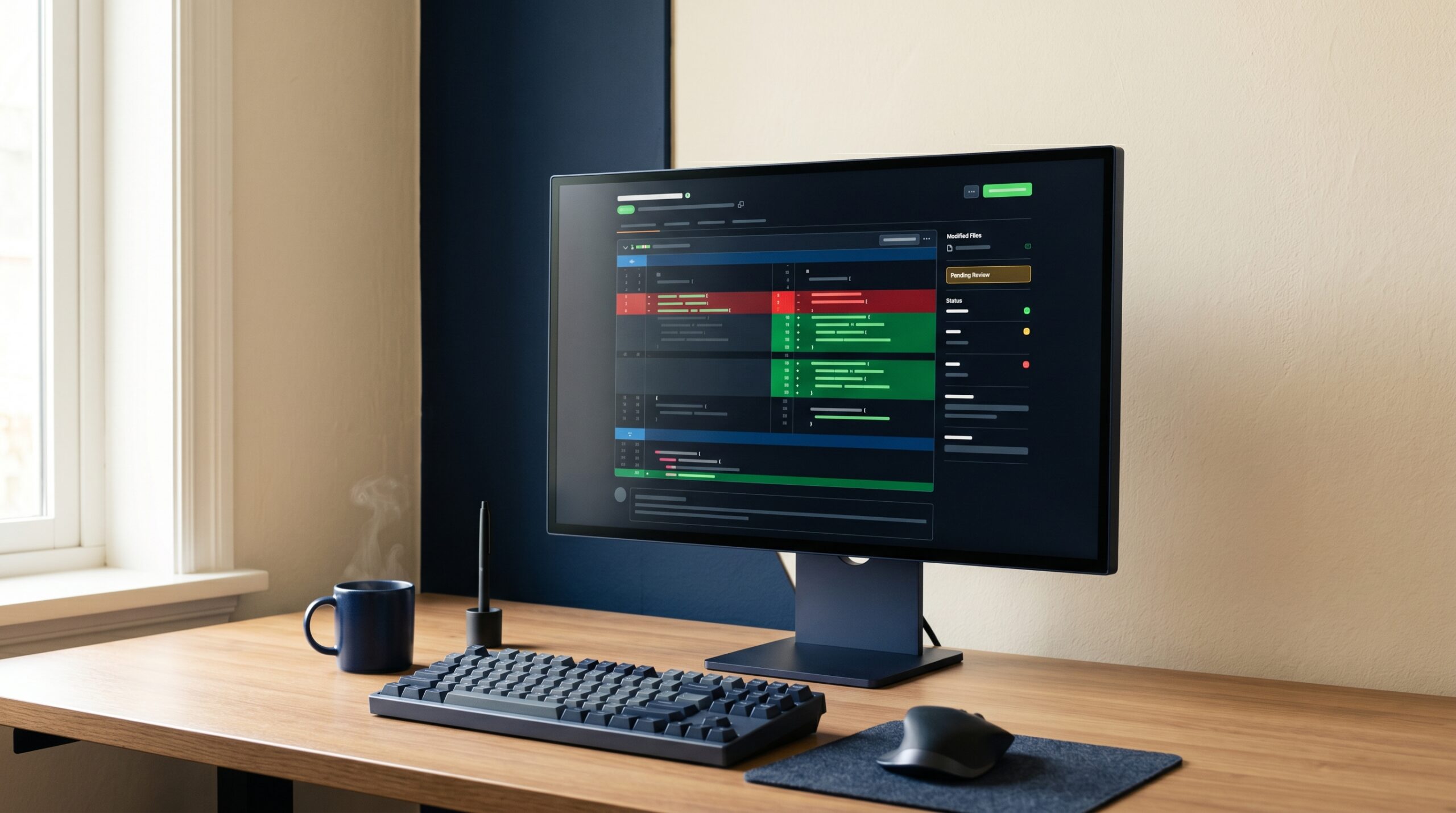
Graphbit PRFlow is an AI code review tool that runs on every pull request before it ships. It reviews diffs in your repository, identifies bugs, security gaps, performance issues, and compliance violations—then posts inline comments directly to GitHub. Unlike linters or static analysis tools, PRFlow uses deep codebase understanding to catch semantic errors, architectural inconsistencies, and business logic flaws that pattern-matching tools routinely miss. The platform learns your team’s coding patterns, architectural preferences, and security standards over time, tuning its feedback to reduce noise while surfacing real issues.
- AI-driven semantic code analysis across pull requests with line-by-line feedback
- Compliance checks built in: GDPR, SOC 2, OWASP Top 10 vulnerability detection
- Learning system that evolves with your codebase and team standards
Setup takes minutes: connect your GitHub account, authorize repository access, and PRFlow starts reviewing on the next pull request. You see results instantly as inline comments on the exact lines that need attention. The tool doesn’t require CI/CD pipeline changes or custom configuration—it works as a GitHub app. Pricing is per review, not per seat, so growing teams don’t trigger seat-based surcharges that plague SaaS code review tools.


What Makes Graphbit PRFlow Different
The headline from Graphbit’s own testing is stark: on 10 real-world projects, PRFlow found 7 critical security issues. Competitors found zero. That gap reveals the core difference: most AI code reviewers optimize for speed or ease of setup. Graphbit PRFlow optimizes for precision. It uses a Rust-based execution engine (the same infrastructure behind its GraphBit framework) to build deterministic, auditable code reviews. That means the same code snippet yields the same feedback every time—no hallucinations, no random noise, just consistent analysis.
Where other tools integrate AI into existing static analysis pipelines, Graphbit PRFlow treats code understanding as its foundation. The engine builds a semantic graph of your codebase—tracking data flows, control paths, and dependencies—so it can spot issues like “this function never validates untrusted input before passing it to an SQL query” or “this branch handles null but this one doesn’t.” Those are the bugs that slip through rule-based tools but cause production incidents. Graphbit PRFlow catches them because it reasons about code semantically, not syntactically.
The learning component is understated but powerful. PRFlow observes patterns in your codebase, your team’s code review comments, and how issues get fixed. Over time, it calibrates its feedback to match what your team actually cares about. A startup focused on speed might get different review priorities than a fintech firm that has to comply with SOC 2 and audit requirements. PRFlow adapts. You’re not fighting the tool’s generic defaults—you’re working with a reviewer that understands your context.
How It Works Under the Hood
Graphbit PRFlow is built on deterministic execution, a principle borrowed from GraphBit (Infinitibit’s broader agentic AI framework). When a pull request lands, PRFlow extracts the diff, loads context from your repository’s full codebase, and runs semantic analysis. The Rust core executes in-memory without storing your code externally. Results are computed once, cached, and reused—no token thrashing, no repeated LLM calls for the same code. That efficiency translates to speed (reviews complete in seconds) and cost control (per-review pricing stays predictable).
The platform integrates with GitHub Actions, monorepos, and multi-team workflows. If your team uses Slack, you can get notifications when PRFlow flags an issue. You can dismiss findings with explanations, and PRFlow logs those dismissals so it learns what your team considers false positives. Over time, feedback becomes more precise. The tool also supports custom rules—you can define architecture constraints, naming conventions, or security guardrails in plain language, and PRFlow enforces them consistently across all reviews.
Who Built It
Built by Musa Molla, Founder & CEO, Infinitibit.
Musa Molla founded Infinitibit in 2023 with a clear thesis: AI in enterprise needs to be auditable, deterministic, and secure. Graphbit PRFlow is part of a broader platform that includes GraphBit (a Rust-powered AI agent orchestration framework) and BitPulse (observability for LLM traces). The team bringing PRFlow to market includes Rahmat Ullah (Head of AI Labs), Dominik Hummel (Information Security Manager), and engineers from OpenAI, Scale AI, AWS, and Celonis—the kind of resume that signals both deep AI expertise and hard-won experience shipping production systems under compliance constraints.
Infinitibit’s positioning is enterprise-first. The company targets regulated industries (automotive, aerospace, fintech) where “good enough” AI isn’t good enough. Graphbit PRFlow reflects that ethos. It’s not a prototype or a side feature bolted onto a broader platform—it’s a purpose-built tool for organizations that need code review automation that they can audit, explain to a regulator, and trust in production. The fact that it caught 7 critical security issues on 10 test projects where competitors found zero isn’t a marketing fluke; it’s the result of designing for precision from the ground up.
5 Alternatives Worth Knowing
- Macroscope
- Kodus
- Qodo
- CodeCanary
- yfx
The Verdict
Graphbit PRFlow is built for teams that lose sleep over security and reliability. If your codebase handles sensitive data, undergoes compliance audits, or powers mission-critical systems, the precision advantage is worth testing. For early-stage startups moving fast and loose, a simpler tool might suffice. But the moment you scale—when code review becomes a bottleneck or a security risk—PRFlow’s deterministic, auditable approach pays for itself in avoided incidents.
Engineering teams building Automated Sales Machine automations to streamline their development workflows will find PRFlow a natural fit. Reliable code review is upstream of reliable automation. And for organizations already thinking about AI-powered business tools, PRFlow’s emphasis on auditability and compliance reflects the broader shift toward production-grade, trustworthy AI. Teams using Automated Sales Machine know that precision in your production pipeline compounds—what holds true for automations holds true for code.
The trade-off is real: PRFlow is not the fastest or cheapest option in the category. It’s the most precise. If you’re building for compliance, security, or high-stakes deployment, that precision becomes the main event. The learning system that evolves with your team, the semantic code analysis that catches what regex can’t, and the per-review pricing model that doesn’t penalize growth—those are features that compound over time. Worth a trial on your next five pull requests.
Frequently Asked Questions
How much does Graphbit PRFlow cost?
Graphbit PRFlow uses per-review pricing, not per-seat. Each review is billed individually, so a team of 50 engineers pays based on how many pull requests actually get reviewed, not on headcount. This model rewards productivity and avoids the seat-based cost explosion that catches teams off guard.
Does PRFlow store my source code?
No. The tool fetches code via GitHub API, analyzes it in-memory, and discards it immediately after the review is complete. For teams in regulated industries or with strict data residency requirements, this is critical. Graphbit built the platform on the assumption that your code is your intellectual property and should never be persisted elsewhere.
What languages does Graphbit PRFlow support?
The tool supports all major languages: JavaScript/TypeScript, Python, Go, Java, Rust, and more. Semantic analysis is language-agnostic at the graph level, so new language support is additive. Check the docs for the current full list, but the common stack (Node, Python, Go, Java) is fully covered.
How does PRFlow compare to GitHub Copilot or other AI assistants?
GitHub Copilot and similar tools assist *during* coding. Graphbit PRFlow reviews *after* the code is written and ready to merge. They’re complementary, not competitive. PRFlow is also purpose-built for security and compliance; Copilot’s strength is velocity. Many teams use both.
Can I set custom rules for my team’s code standards?
Yes. PRFlow lets you define custom rules in plain language—architectural patterns, naming conventions, security guardrails—and enforces them across all reviews. The learning system also adapts based on your team’s feedback and code patterns, so rules improve over time without manual tweaking.
Check out Graphbit PRFlow on Product Hunt or visit the official Graphbit PRFlow website to learn more.