

Mixpanel Headless: 3 Powerful Ways Devs Query Analytics
Mixpanel Headless is a Python SDK that makes product analytics fully programmable for developers and AI agents. Product analytics has long been a dashboard-first discipline. You log events, wait for data to populate, then click through charts in a browser. That workflow made sense when analysts were the primary consumers of that data. It makes less sense when the consumer is an LLM pipeline, a CI/CD job, or an autonomous agent that needs to reason about user behavior at runtime. Mixpanel Headless is a direct response to that shift.
Launched on Product Hunt on May 21, 2026, Mixpanel Headless earned #8 Product of the Day with 132 upvotes, signaling genuine developer interest rather than marketing-driven applause. The premise is straightforward: give developers and AI agents programmatic access to Mixpanel’s full product analytics surface through a Python SDK, so the data never has to leave the toolchain.
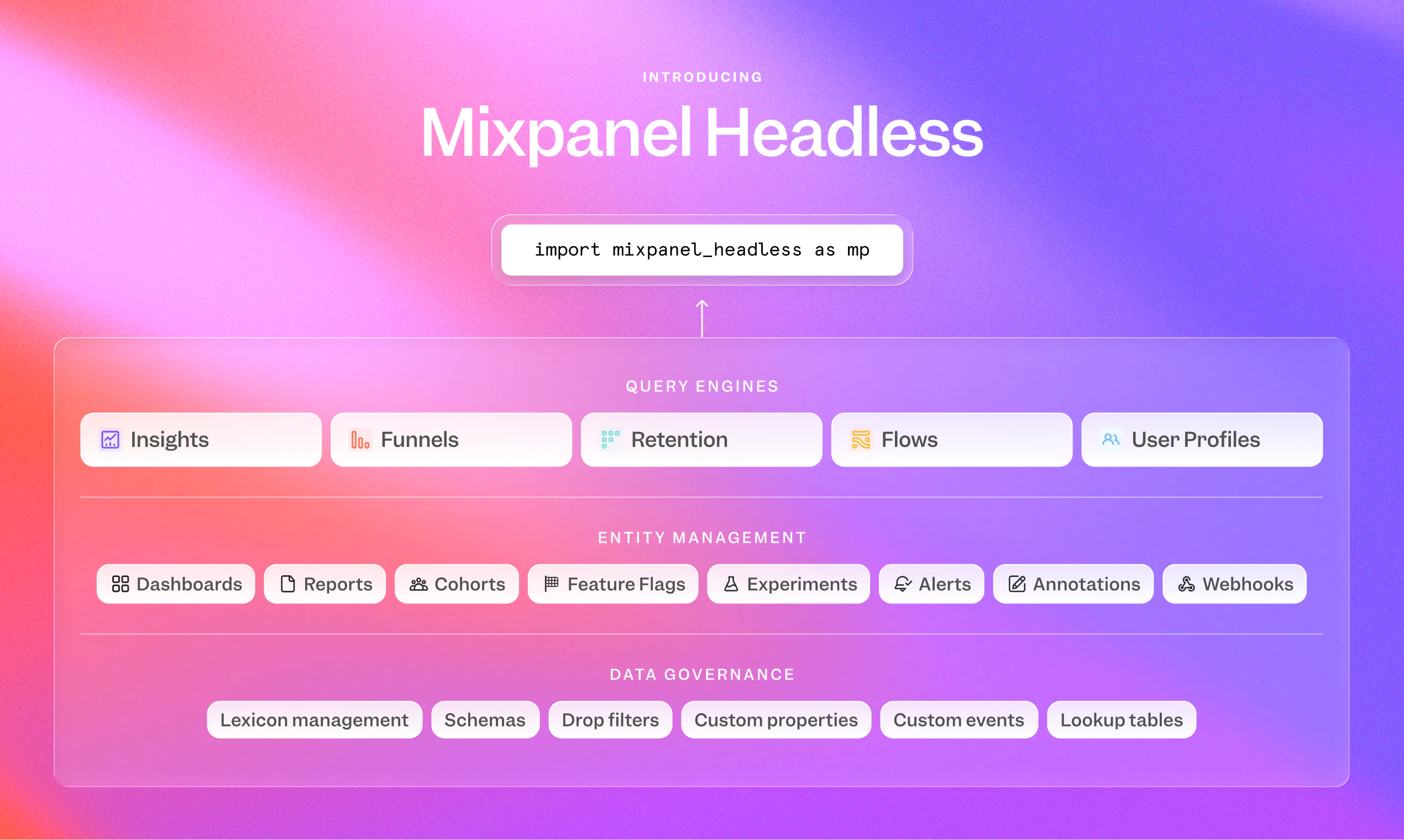
What Mixpanel Headless Is
Mixpanel Headless is a Python SDK that exposes Mixpanel’s product analytics capabilities as programmable functions. Rather than navigating a web interface to build funnels, retention curves, or segmentation reports, developers call methods directly in code. The SDK abstracts the underlying Mixpanel API into a more ergonomic interface designed for developers who live in editors, notebooks, and terminals.
The “headless” framing is intentional and timely. The broader software industry has spent the last several years decoupling front-ends from back-ends across content management (headless CMS), e-commerce (headless commerce), and now analytics. The pattern is the same: strip the opinionated UI layer, expose the underlying data and logic through an API or SDK, and let builders compose whatever interface or workflow they actually need.
This is not a wrapper around a single report export. The SDK is described as making the “entire product surface programmable,” which suggests access to the full range of Mixpanel’s analytical capabilities — events, funnels, retention, segmentation, and user-level queries — all available as Python calls rather than dashboard interactions.
What You Can Do with the Python SDK
The practical surface area of Mixpanel Headless opens up three categories of work that were previously awkward or impossible with the standard dashboard.
First, inline analysis during development. A developer building a new feature can query how a prior similar feature performed, pull retention data for a cohort, or check funnel conversion rates — all without switching context to a browser. The data surfaces in the same environment where the code lives.
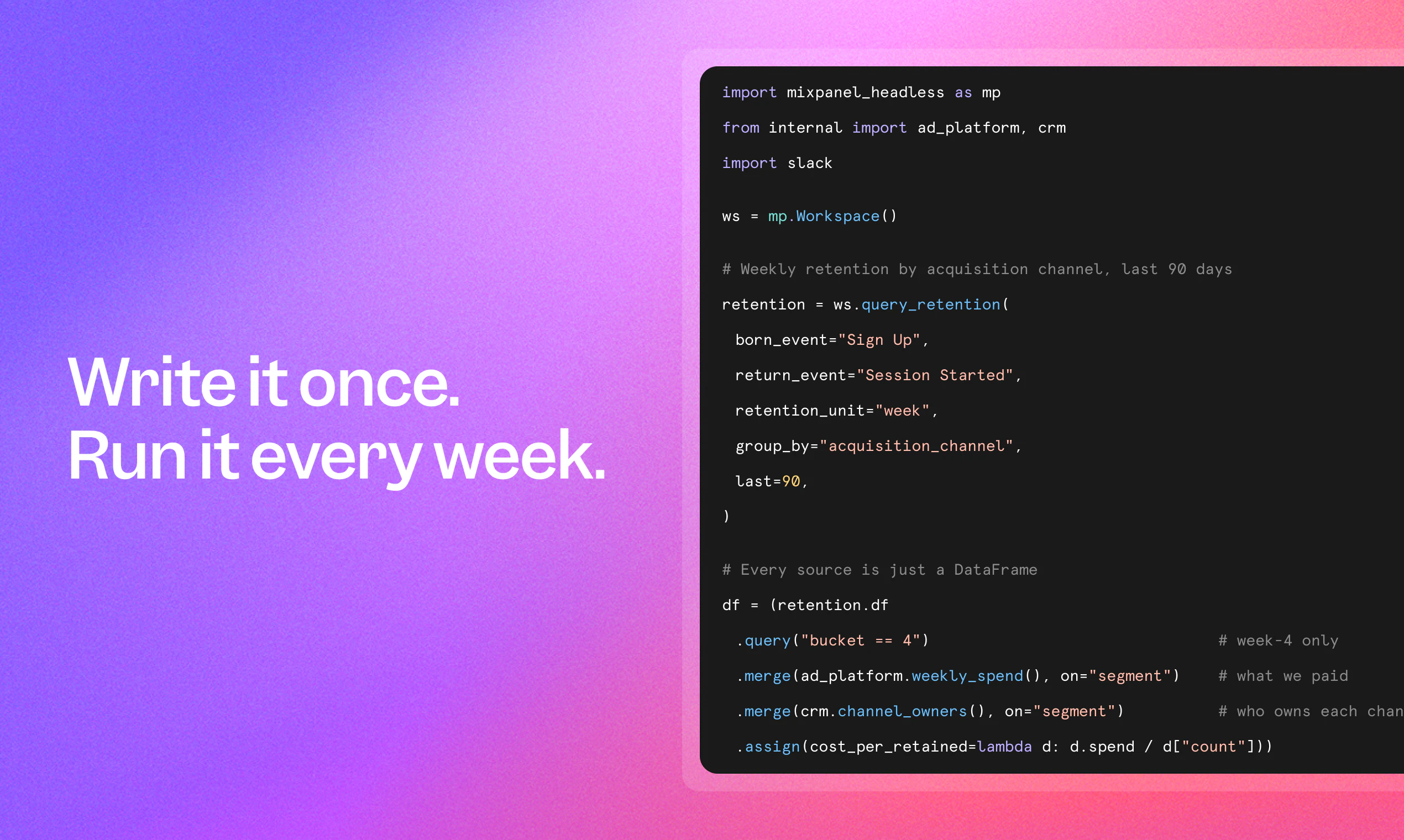
Second, automated reporting pipelines. Teams running weekly business reviews or monitoring dashboards can script Mixpanel queries directly into their data pipelines. A Python script scheduled in a CI/CD system can pull current metrics, format them, and push results to Slack, a database, or a reporting tool — no manual dashboard export required.
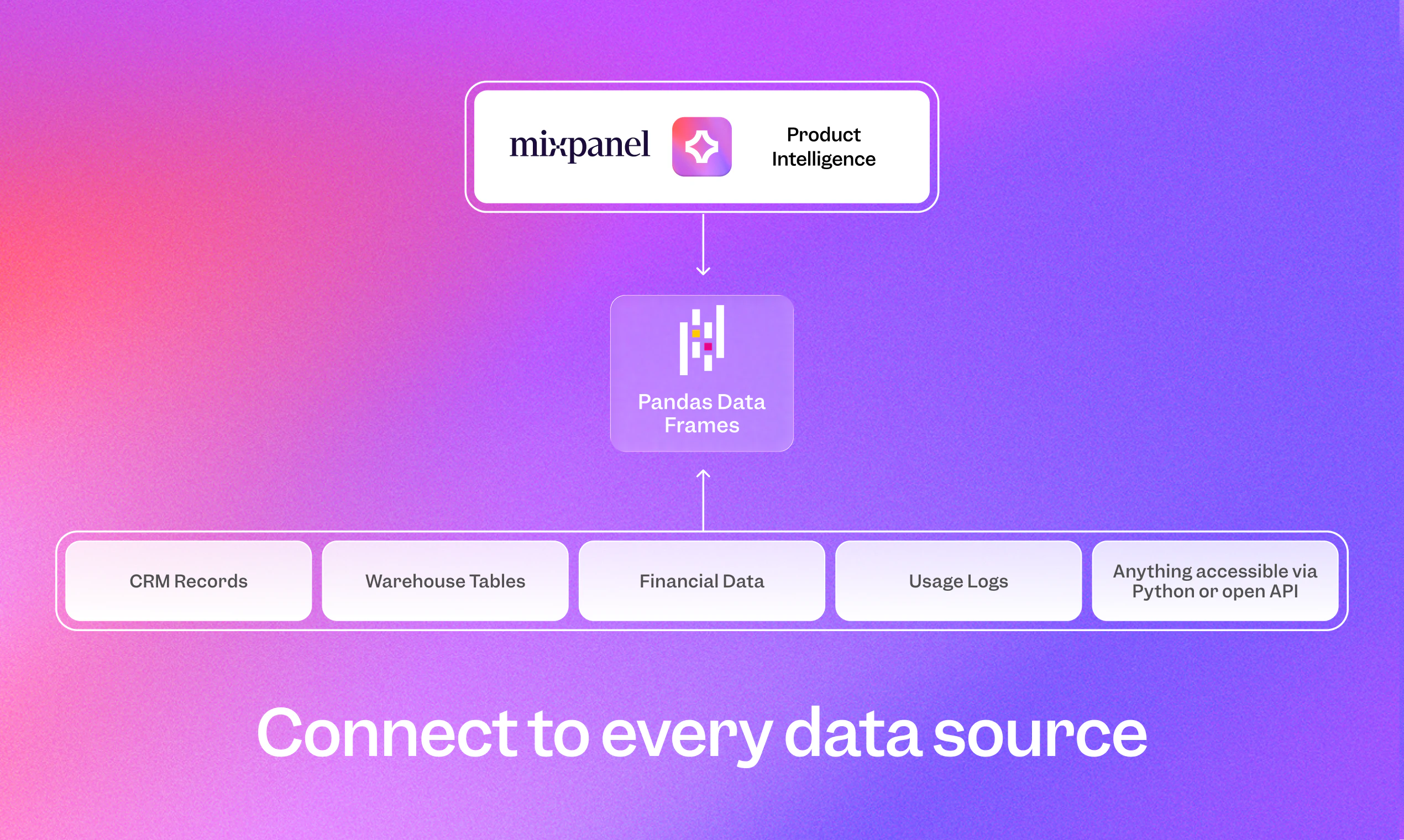
Third, LLM and agent integration. This is the use case that makes Mixpanel Headless distinctly relevant in 2026. AI agents that reason about product behavior need access to real usage data. With a headless SDK, an agent can query Mixpanel as a tool call, retrieve structured analytics, and incorporate that data into its reasoning or output. This closes a gap that previously required either complex API wrangling or manual data injection.
Pricing and Access
Specific pricing details for Mixpanel Headless were not disclosed in the Product Hunt listing. Access is likely tied to existing Mixpanel plans, though it is unclear whether the SDK is available on free tiers or requires a paid subscription. Developers interested in evaluating the SDK should check the Mixpanel website directly for current access requirements.
Alternatives Worth Considering
- Amplitude API: Amplitude exposes a robust REST API that covers dashboards, charts, cohorts, and user lookups. It requires more manual HTTP wrangling than a dedicated SDK but offers broad coverage. Teams already on Amplitude with engineering capacity to manage API integration may not need to migrate.
- PostHog SDK: PostHog is an open-source product analytics platform with Python, JavaScript, and other SDKs. It is self-hostable, which matters for data residency requirements, and its SDKs cover both ingestion and querying. For teams that prioritize open-source and control, PostHog is a credible alternative.
- Segment Functions: Segment’s Functions feature allows developers to write JavaScript that runs in response to events or on a schedule. It is not a query interface but does allow custom logic to be inserted into the data pipeline.
Mixpanel Headless differentiates on the combination of depth (full product surface) and ergonomics (Python SDK rather than raw API calls). For teams already on Mixpanel, the migration cost to programmatic access is low. The editorial team at Automated Sales Machine has been tracking the headless analytics trend for several quarters, and Mixpanel Headless is the most complete implementation of this pattern from a major analytics vendor to date.
Who Should Use It
Mixpanel Headless is well-suited for Python developers and data engineers who regularly work with product analytics and find the dashboard workflow to be a bottleneck. It is particularly relevant for teams building AI agents or LLM-powered tools that need real usage data as part of their reasoning loop. Product engineers running automated reporting or building internal tooling on top of analytics data will also find practical value here.
Teams without existing Mixpanel instrumentation will face a setup cost before the SDK delivers value. The headless layer sits on top of Mixpanel’s standard event tracking infrastructure, so the analytics foundation must already be in place.
Pros and Cons
- Pro: Reduces context switching for developers who work primarily in code editors and notebooks.
- Pro: Enables AI agents and LLM pipelines to query analytics as a native tool call.
- Pro: Familiar Python interface lowers the barrier to scripting automated reporting.
- Pro: Built on Mixpanel’s mature analytics infrastructure with a large existing user base.
- Con: Requires existing Mixpanel instrumentation — not a standalone analytics solution.
- Con: Pricing and tier availability were not clearly disclosed at launch.
- Con: Python-only at launch limits immediate applicability for teams working in other languages.
- Con: Community adoption and SDK maturity will take time to establish compared to the core Mixpanel product.
Verdict
Mixpanel Headless is a technically sound response to a real workflow problem. The analytics-as-dashboard model is increasingly misaligned with how modern development teams and AI systems actually consume data. By making the product surface programmable, Mixpanel positions itself as infrastructure rather than just a reporting tool. For teams already in the Mixpanel ecosystem who are building automated pipelines, internal tooling, or agent-based products, the SDK is worth evaluating immediately. For teams not yet on Mixpanel, the headless capability may not on its own justify the instrumentation investment, but it adds meaningful long-term optionality to a well-established analytics platform.