

Mintlify Workflows: 5 Smart Ways Teams Keep Docs Current
Documentation debt is a quiet tax on every software team. Features ship, APIs change, and user-facing knowledge bases silently fall behind — creating support tickets, frustrated developers, and eroded trust. Mintlify Workflows, which debuted as the #2 Product of the Day on Product Hunt on May 21, 2026, with 312 upvotes and 40 comments, proposes a structural answer to that problem: automate the maintenance layer entirely.
Topics: Notes, Developer Tools, Artificial Intelligence
What Mintlify Workflows Does
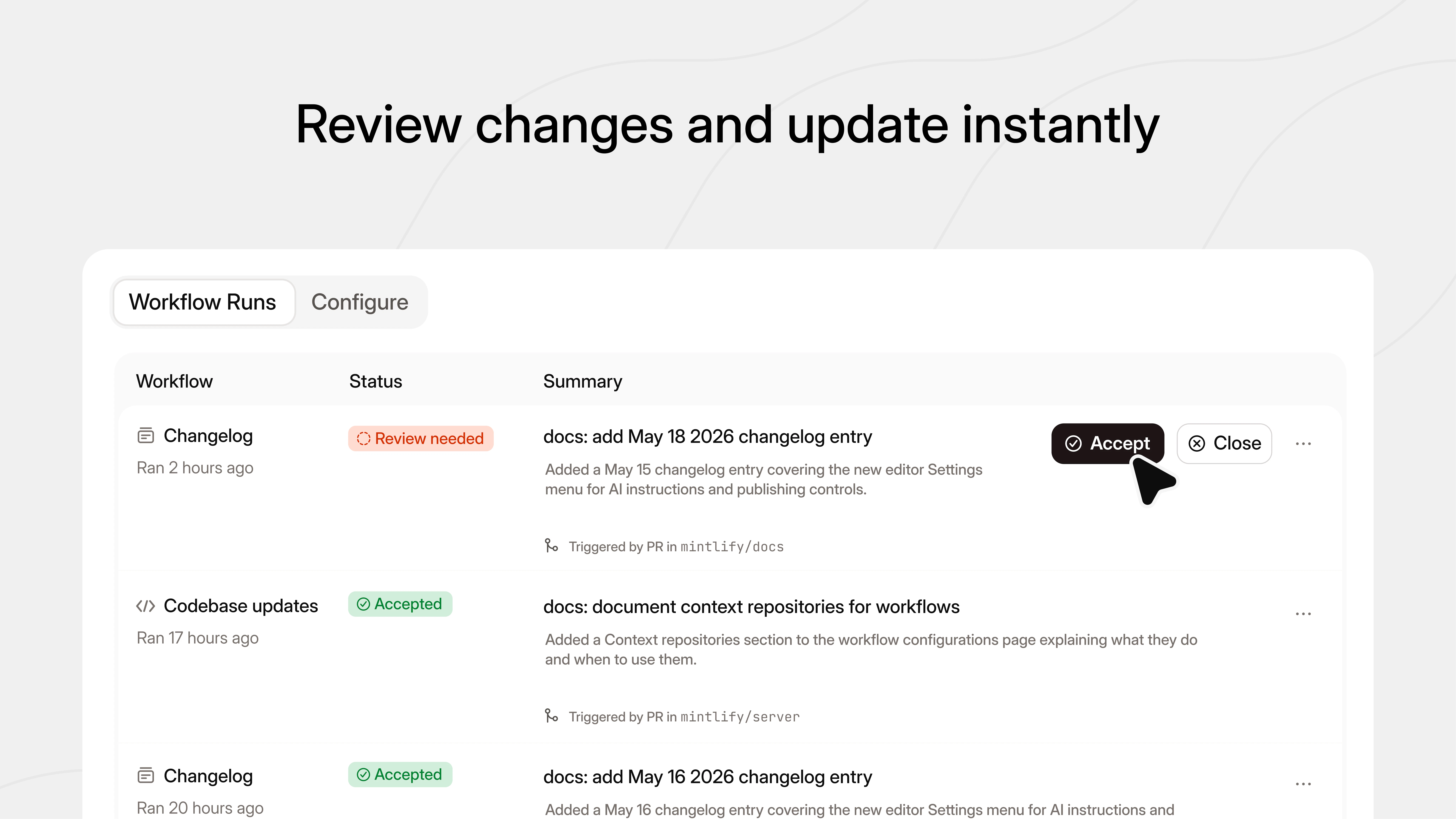
Mintlify has built a reputation as a developer documentation platform that prioritizes aesthetics and usability. Workflows extends that foundation into the operational layer. Rather than treating documentation as a static artifact that humans must remember to update, Workflows treats it as a living system that responds to triggers — code commits, product releases, API schema changes — and automatically executes pre-built automation tasks in response.
The core promise: set up a Workflow once, and Mintlify handles the repetitive documentation labor indefinitely. That includes updating knowledge base articles, generating changelogs, maintaining translated versions of content, and surfacing stale pages that need human review. For teams shipping fast, the value proposition is straightforward — documentation accuracy stops being a function of developer discipline and becomes a function of system design.
Key Features
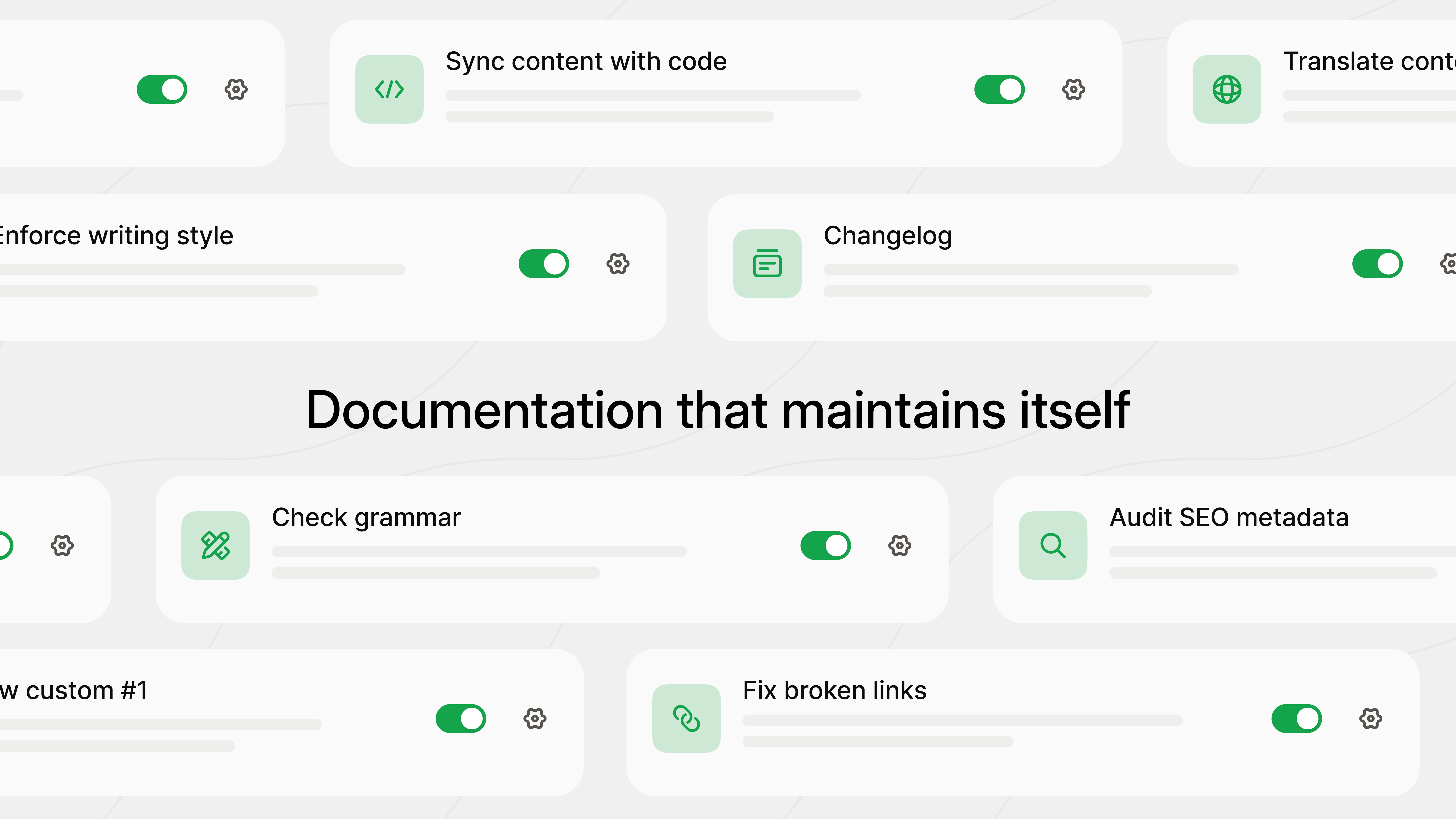
- Pre-built automation library: Teams do not need to engineer triggers from scratch. Mintlify ships a catalog of ready-to-activate Workflows covering the most common documentation maintenance scenarios.
- Changelog generation: Workflows can automatically produce and publish changelogs tied to release events, reducing the manual overhead that typically causes changelogs to lag behind actual product state.
- Translation maintenance: For teams operating across multiple languages, Workflows tracks when source content changes and queues or executes translation updates accordingly.
- Trigger-based execution: Automations fire on defined events rather than on schedules, meaning updates are contextually accurate rather than periodically approximate.
- Knowledge base synchronization: When underlying product data changes, connected knowledge base articles are flagged or updated, closing the gap between what ships and what users read.
Pricing
Mintlify has not published a standalone Workflows pricing tier at launch. The feature appears positioned as an extension of existing Mintlify plans, which range from a free developer tier to team and enterprise contracts. Prospective buyers should contact Mintlify directly or consult the pricing page at mintlify.com to understand how Workflows access maps to their current subscription. Enterprise teams with complex multi-language or high-frequency release cycles will likely find the most immediate return on investment, though the pre-built automation model is designed to be accessible without dedicated DevOps resources.
How It Compares to Alternatives
The documentation automation space is not empty. Tools like Notion AI, Confluence’s automation rules, and bespoke GitHub Actions pipelines offer partial solutions. The distinction Mintlify is drawing is depth of documentation-specific context. Generic workflow tools — Zapier, Make, or even internal scripts — can move data between systems, but they lack native understanding of documentation structure, versioning semantics, and translation workflows.
Competitors like ReadMe and GitBook have invested in developer experience at the content layer, but neither has shipped a comparable trigger-based automation system for maintenance tasks. Mintlify’s positioning is that automation should be native to the documentation platform rather than bolted on through third-party integrations.
For teams already evaluating the broader automation and AI tooling landscape, resources like Automated Sales Machine provide comparative context on how AI-driven workflow tools are reshaping operational efficiency across business functions — useful background for any team weighing documentation automation against competing priorities.
Who Should Use Mintlify Workflows
The clearest fit is engineering-led companies with frequent release cadences and documentation obligations to external developers or end users. API-first companies, developer tool vendors, and SaaS businesses with public knowledge bases stand to benefit most. Teams maintaining documentation in multiple languages — a genuinely labor-intensive task — will find the translation maintenance feature particularly relevant.
Smaller teams or early-stage startups with infrequent releases and minimal documentation surface area may find the overhead of configuring Workflows exceeds the time saved. The tool scales with complexity; simpler operations may not need it yet.
Pros and Cons
- Pro: Addresses a real and persistent operational problem rather than a cosmetic one.
- Pro: Pre-built automation catalog lowers the barrier to adoption for non-engineering stakeholders.
- Pro: Trigger-based execution produces contextually relevant updates rather than scheduled sweeps.
- Pro: Translation maintenance is a differentiated capability with limited competition.
- Con: Pricing transparency at launch is limited; total cost of ownership is unclear without a sales conversation.
- Con: Teams not already on Mintlify face a platform migration decision before accessing Workflows, which raises switching costs.
- Con: The pre-built library’s coverage depth is unverified at launch — teams with niche documentation stacks may find gaps.
- Con: Dependency on a single vendor for both documentation infrastructure and automation creates concentration risk for teams with long time horizons.
Verdict
Mintlify Workflows is a structurally sound response to a problem that most documentation platforms have left unsolved. The shift from manual maintenance to trigger-based automation is the right architectural direction, and Mintlify’s documentation-native context gives it a credible advantage over generic workflow tools attempting to solve the same problem from the outside in. The unknowns — pricing, library depth, edge-case coverage — are real but typical of a first public release. Teams with active documentation obligations and frequent release cycles should evaluate it seriously. Those without an existing Mintlify footprint should weigh the platform consolidation trade-off carefully before committing.
Also Launched Today on Product Hunt
Other notable products that launched alongside Mintlify Workflows on May 21, 2026: