



iPromise — Bring “Body Doubling” to your Mac notch
219 upvotes · #5 Product of the Day — View on Product Hunt
iPromise represents a fundamentally different approach to productivity software. Rather than fighting distraction with blocking features or habit-tracking dashboards, the app brings body doubling—a behavioral technique proven in ADHD research and executive coaching—directly to Mac users seeking sustained focus. This iPromise focus app transforms an accountability concept into a practical tool that lives in your Mac notch, watching and gently intervening when your attention drifts.
Topics: Mac, Productivity
What Is Body Doubling, and Why Does It Work?
Body doubling emerged from ADHD coaching literature: the presence of another person (or witness) in the same space dramatically improves task completion and sustained attention. Unlike willpower or motivation, which are finite, the simple act of being observed triggers a behavioral shift. Someone is watching. You’re accountable. This psychological pressure—when applied constructively—transforms procrastination into action.
The mechanism is straightforward. When alone, the brain’s reward systems favor immediate gratification: social media, email, context-switching. With a witness present, that calculation changes. Social cognition overrides the impulse toward distraction. You’re less likely to open Twitter if someone can see your screen. More importantly, the *expectation* of observation creates an internal anchor that persists even when the physical witness steps away.
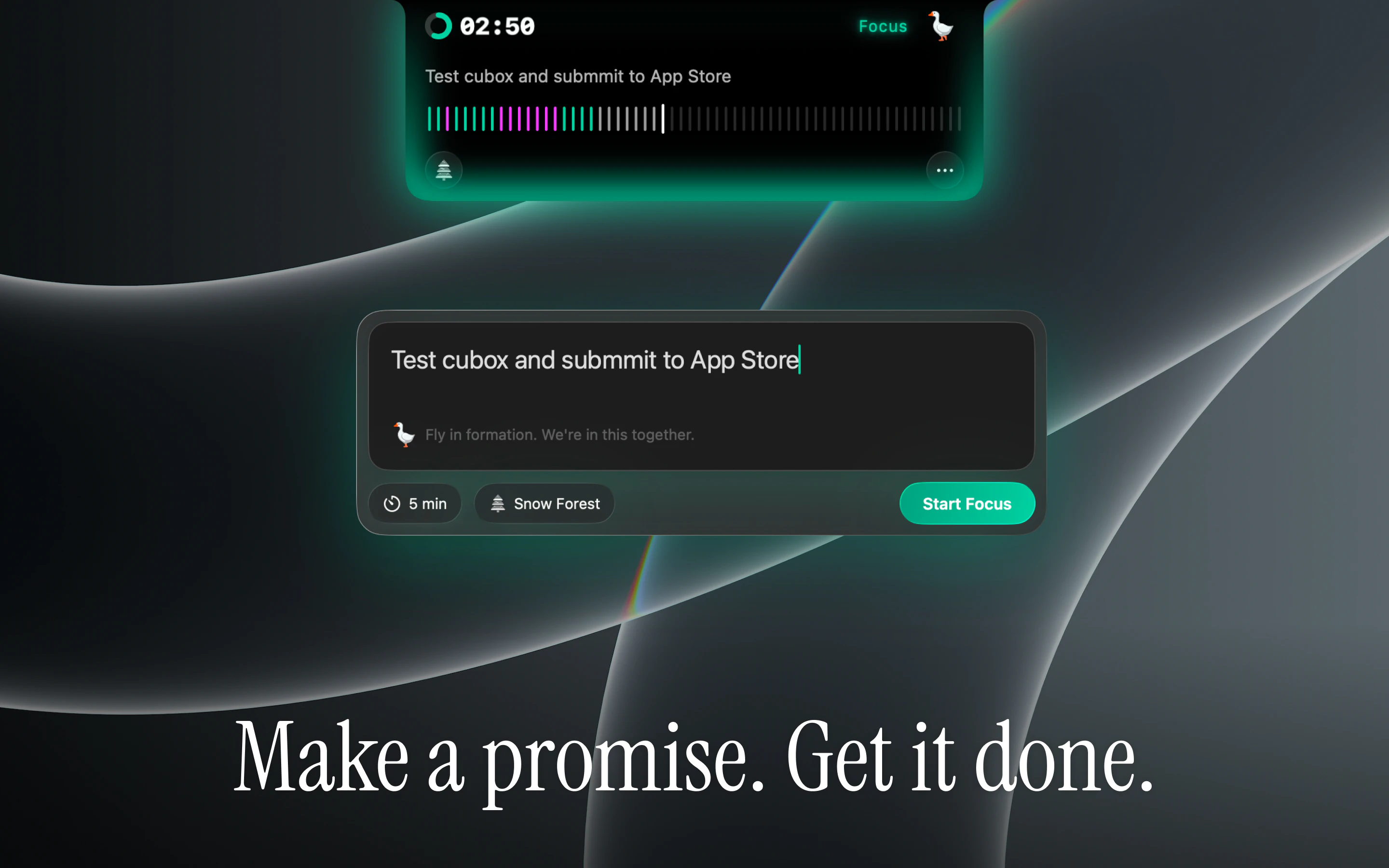
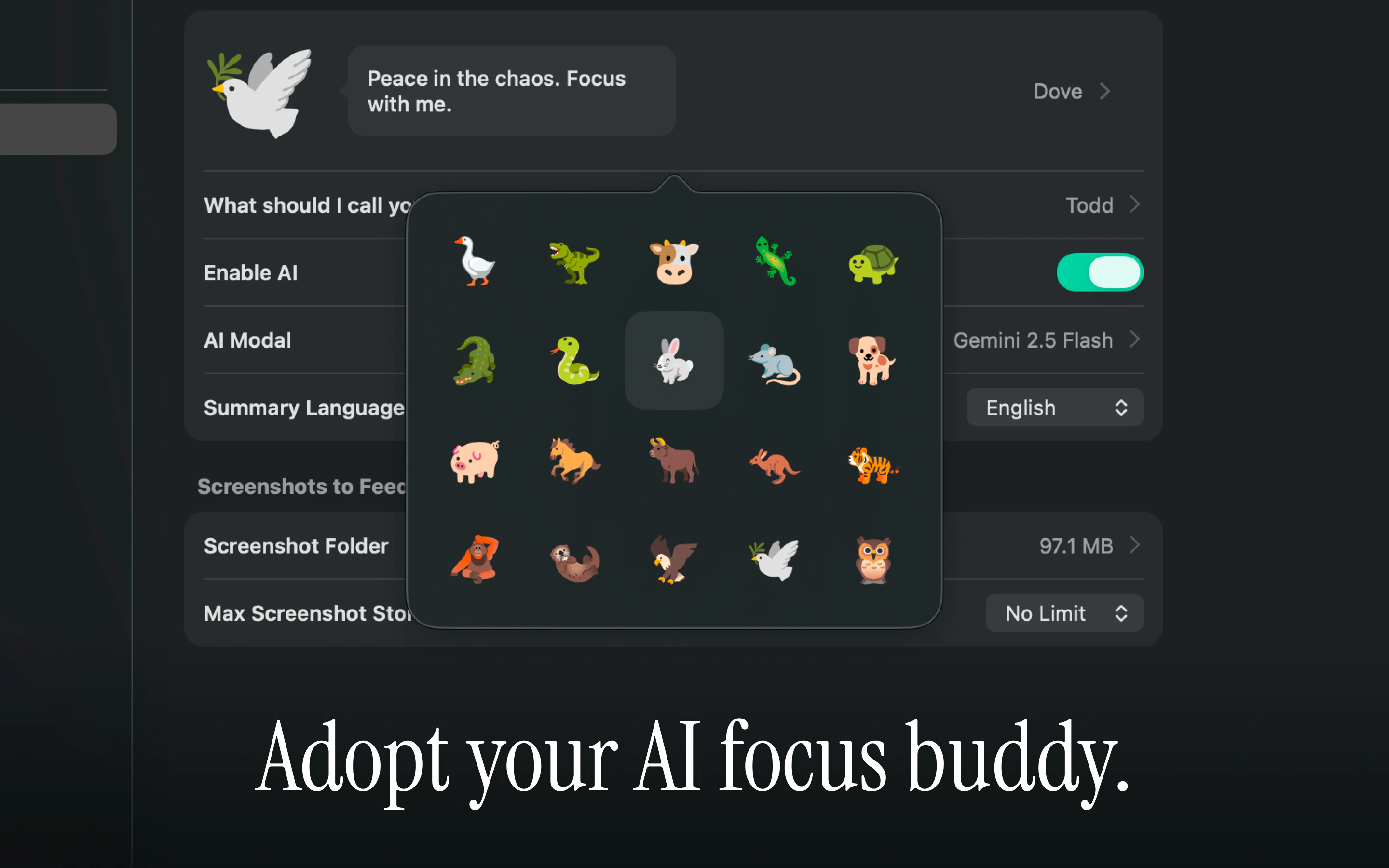
iPromise automates this psychology. The AI Buddy sits in your Mac notch—always visible, always present—and functions as a digital witness to your commitment. You set a goal (“Write project proposal”), and the app monitors your active window. When you drift into unrelated applications, the AI notices and nudges you back. It’s gentle accountability, not punitive blocking.
How iPromise Works: The Promise-Based System
The workflow is deliberate and minimal. Users begin by making a promise: defining what they’ll focus on and for how long. This isn’t a vague intention—it’s a public declaration to the AI Buddy. The app then tracks your active window in real time, understanding the context of your work.
When you stray into unrelated applications, iPromise doesn’t lock you out or nag aggressively. Instead, it gently reminds you of your promise. This intervention is crucial: it’s not blocking (which triggers rebellious behavior), but reminding (which triggers accountability). The distinction matters for long-term compliance and psychological sustainability.
The app leverages the notch—Apple’s design feature that many productivity tools have ignored—as a constant visual reminder of your commitment. This placement is intentional. The notch is in your peripheral vision but not intrusive; it’s always there without demanding attention until you need the nudge.
Key Features That Make iPromise Distinctive
- Window Context Awareness: iPromise understands what application you’re using, adapting its understanding of “focus” to your actual work context. A designer in Figma is working; a designer scrolling Instagram is drifting.
- Gentle Intervention Logic: Rather than hard blocks or time-outs, the AI offers contextual reminders tied to your stated promise, maintaining psychological safety while strengthening accountability.
- Notch Integration: The Mac notch becomes a physical anchor for your commitment, replacing generic app windows with always-present social pressure.
- Promise History: The app tracks completed promises, building a visible record of deep work sessions and cumulative focus time.
Who Benefits Most From iPromise
Remote Workers and Solopreneurs
Without office peers or managers, remote workers face acute accountability gaps. iPromise fills this by providing the psychological equivalent of a colleague working at the next desk. For solopreneurs managing multiple projects with minimal external structure, the promise-based system creates scaffolding that internal discipline alone may not provide.
Deep Work Practitioners
Professionals engaged in complex, cognitively demanding work—software development, writing, design, research—benefit disproportionately from body doubling. These tasks require extended periods of uninterrupted focus; the presence of a witness (even a digital one) provides the psychological conditions for flow state.
ADHD-Friendly Tool
Body doubling originated in ADHD contexts, and iPromise brings this evidence-based technique to digital work. The app’s non-punitive approach and emphasis on promise-based accountability align with how ADHD brains respond to external structure and social motivation.
iPromise Compared to Focus Alternatives
| App | Primary Method | Platform | Core Strength | Best For |
|---|---|---|---|---|
| iPromise | Body Doubling (AI accountability) | Mac only | Psychological accountability via witness effect | Remote workers, deep workers, ADHD management |
| Focusmate | Live human accountability sessions | Web/cross-platform | Real human witnesses and community | Social motivation, structured sessions |
| Forest | Gamification (virtual tree growth) | Cross-platform | Fun, metaphorical approach | Casual focus, younger users |
| Cold Turkey | Hard blocking (nuclear option) | Windows/Mac | Complete distraction elimination | Extreme focus, crisis mode |
| RescueTime | Passive tracking and analytics | Cross-platform | Detailed behavior insights | Productivity auditing, long-term trends |
Unlike Focusmate, iPromise requires no human scheduling; unlike Forest, it doesn’t rely on gamification; unlike Cold Turkey, it doesn’t use aggressive blocking. The trade-off is focus: iPromise targets a specific mechanism (body doubling accountability) rather than attempting broad functionality.
Real-World Screenshot: How It Works in Practice
Limitations Worth Acknowledging
Mac-only: iPromise currently runs exclusively on macOS. Windows users and cross-platform teams cannot use the app, significantly limiting its addressable market.
Early-stage product: As an emerging tool, iPromise lacks the polish and feature depth of established alternatives. Integration ecosystem, mobile companion apps, and team collaboration features remain absent.
Behavioral dependency: Like all accountability tools, iPromise only works if users genuinely commit to the promise-making process. Users who resist external structure or ignore gentle nudges won’t benefit.
Pros and Cons at a Glance
Pros: Innovative use of Mac notch; evidence-based body doubling method; non-punitive intervention; particularly suited for remote workers and ADHD-friendly workflows; minimal overhead compared to scheduled sessions or complex rule-setting.
Cons: Mac-only limitation; early-stage feature set; requires genuine commitment to promise protocol; no team or collaborative features; no analytics or historical trend analysis compared to RescueTime or similar tools.
When iPromise Is the Right Tool
iPromise excels for a specific user archetype: Mac-based professionals—remote workers, solopreneurs, deep workers—who struggle with accountability and benefit from external structure. It’s particularly valuable for those already familiar with Automated Sales Machine concepts around intentional productivity systems, where deliberate process beats reactive optimization.
If you’re managing team productivity systems or CRM tools at scale, iPromise won’t directly integrate with your workflow. But for individual practitioners seeking to reclaim focus, the promise-based body doubling approach offers psychological backing that most focus apps lack.
The Verdict: A Niche Tool with Sound Science
iPromise doesn’t attempt to be a universal productivity platform. It’s built on a single, evidence-based behavioral mechanism: that observed accountability improves focus and task completion. Unlike broader platforms that layer features onto generic time management, iPromise commits to depth over breadth.
For Mac users ready to structure their focus around deliberate promises—and who value psychological accountability over blocking or gamification—iPromise represents a thoughtfully designed alternative to standard focus apps. The notch integration is clever, the body doubling principle is sound, and the non-punitive intervention style respects user autonomy.
The primary question is whether Mac-only positioning will constrain growth. For now, the app serves a clear market: those already invested in Apple hardware and seeking behavioral accountability mechanisms beyond marketing automation and productivity tools can offer in team contexts.
iPromise is worth evaluating if sustained focus and accountability through digital witnessing aligns with your work style. It’s not a replacement for discipline, but it may provide the external anchor that makes discipline sustainable.
Check out iPromise on Product Hunt or visit the official iPromise website to learn more.